Justine Knows
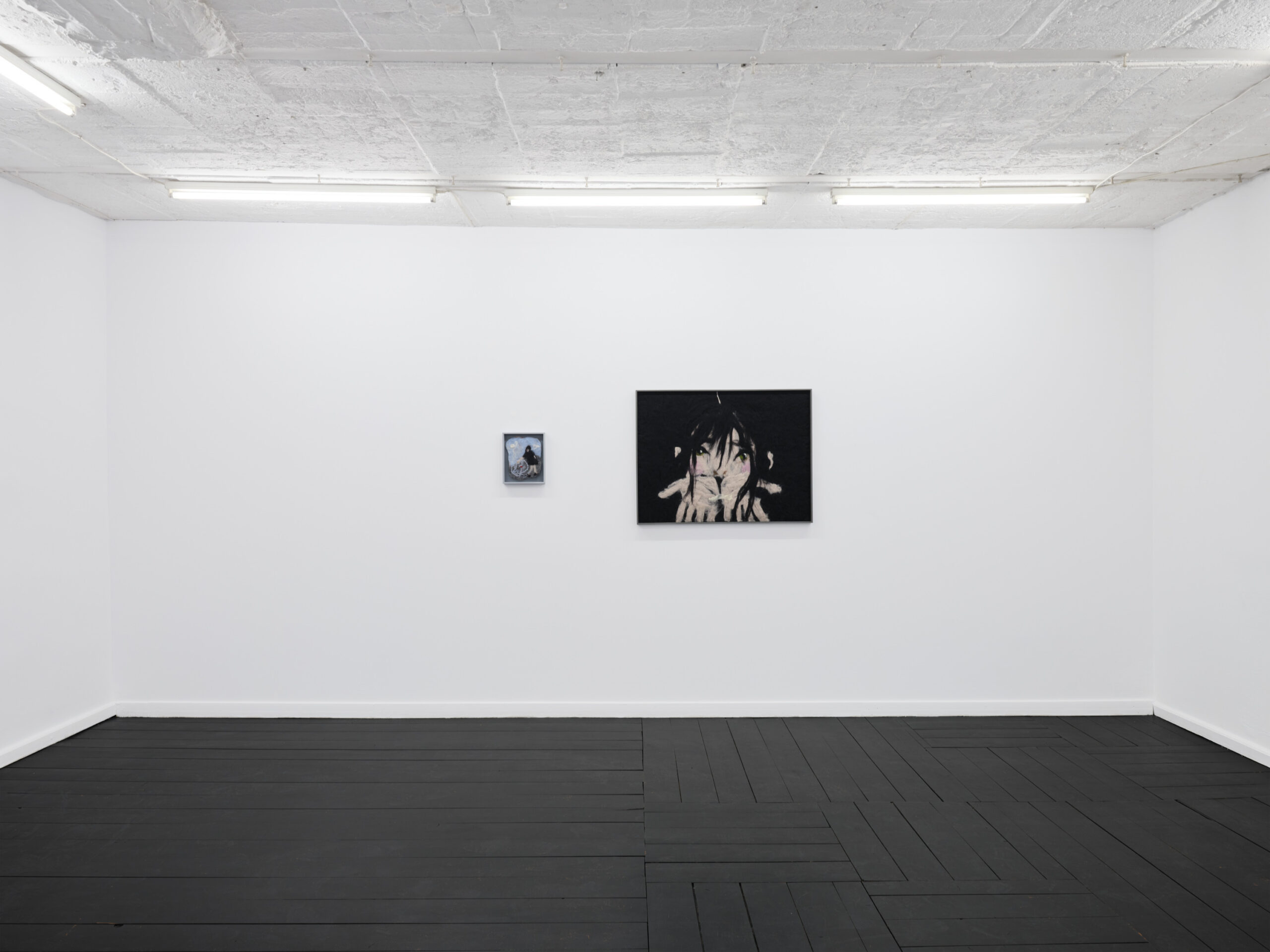
Fabric, even before it became an artistic medium, is an experience. We wear it, sleep surrounded by it, and wrap ourselves in its fibres. Before we learn to read an image, we already know how to recognise what scratches, warms, weighs upon us, or allows us to breathe. Fabric belongs to that rare category of materials with which we have an embodied, pre-reflective familiarity from birth. It reaches the skin before it reaches the eye. It is from this deep-seated intimacy that Mrozia draws in her work with felt. Her works evoke this tactile memory while simultaneously shifting it into the realm of representation.
Painting and textile operate within different regimes of sensation. Historically, the former has functioned within an economy of the image and the gaze, while the latter evokes tactile memory rooted in the intimate experience of the body and the history of domestic practices — encompassing both everyday closeness and familial intimacy. Painting can evoke touch; textile already carries within itself a tactile experience, a memory of the warmth of a childhood room.
Although textile is one of the most symbolically charged materials — an instrument of tradition, transmission and, at times, social resistance — Mrozia activates neither its political dimension nor a nostalgia for craftsmanship. She does not position felt as a manifesto, nor does she invoke any decorative or political genealogy. Where other artists have used textiles to render social or political struggles visible, she instead explores inner dynamics. Her works take the form of paintings on easels, explicitly asserting their presence within the visual field. Yet the material from which they are made — colourful, dense, woolly felt — introduces a different logic of the surface. Whereas painting traditionally constructs the picture-surface, organised around visibility and representation, textile functions as a contact-surface, carrying the memory of the body and of haptic experience, evoking a desire to touch and a recollection of physical contact. Depending on the context, the surface may be perceived as painterly or craft-based, intimate or spectacular, fragile or powerful. Its meaning shifts with the gaze, like interwoven, intersecting and sometimes contradictory threads.
The works exist precisely within this tension between the picture-surface and the contact-surface. Their format makes them appear, at first glance, to be paintings: composed scenes intended to be viewed, situated within the history of painting. Yet the figures, landscapes cleaved by lightning, intimate situations and scenes of chaos do not unfold merely as images for contemplation. They emerge from a material already experienced, touched and inhabited. In this context, the themes Mrozia explores — fragility, inner tensions and invisible forces — find a particular resonance in textile. The affects coursing through the images, like the fibres that constitute the material, converge momentarily, forming something the eye attempts to decipher. Fragility, stereotypically associated with femininity, is presented here neither as the opposite of strength nor as its positive reinterpretation. Rather, it allows us to move beyond the paradigm of strength itself, affirming exposure as a condition of existence.
In exposing oneself to these invisible forces, inherited tensions and inner dualities, felt — through its softness and absorbency — becomes a material equivalent of this state: a sensitive surface that receives, retains and cushions without neutralising. At the centre of these compositions appears a recurring female figure who resembles the artist but is not a portrait. She is an alter ego, a figure of displacement. Most often depicted in motion, she traverses scenes in which intimacy and cataclysm coexist.
At times, she sits on the lap of a male counterpart — an inverted, almost mirror-image version of herself — seemingly suspended in an ambiguous relationship between protection and dependence. At other times, she stands isolated in a landscape intersected by high-voltage power lines struck by lightning, or beside a burning car, becoming an anchoring point within a larger chaos. Elsewhere, she moves through the city breathing fire like Godzilla. This transformation embodies the power of the shadow: that unconscious part of the self which, once brought to light, ceases to be merely a burden and becomes a source of strength, creative energy and the capacity to act. Fire and destruction are no longer simply expressions of chaos; they articulate vitality and an active force that emerges when inner energies find an outlet.
The visual world Mrozia evokes is not one of apocalyptic activism, but of an inner climate. It recalls the suspended atmosphere of Lars von Trier’s Melancholia, in which cosmic catastrophe functions less as a spectacular event than as a revelation of a psychological state. Here, too, storms, fire and destruction are not warnings of the end of the world. They are metaphors for inner forces, repressed drives and contained affects that demand to be brought to the surface.
Yet this inner power is not exclusively individual. The high-voltage lines cutting across the landscapes suggest another constellation: family inheritance. Loyalties, patterns of repetition and emotional burdens flow through us, belonging to us without being entirely our own. They circulate like electricity, silently and unconsciously, until a flash of lightning reveals them. Lightning gives material form to these sudden transmissions, to emotional discharges originating in a history that precedes us.
Before it reaches the eye, textile reaches the skin, and it never belongs entirely to a single category. It is neither pure art nor craft, neither decoration nor a mere vehicle for meaning. It occupies an unstable space and carries within it the memory of domestic life, everyday uses and gestures passed down through generations — none of which are either affirmed or rejected here. The works do not seek to overturn the hierarchy between fine art and so-called lesser practices; rather, they circumvent it. The format of the painting on an easel reinforces their place within the history of painting, while the textile material introduces a different economy of value, one associated with care, time and repetition.
The image thus emerges from the overlapping of these perceptual economies. The artist’s proposition does not consist in overturning categories, but rather in creating an asterism — a matrix in which different values, domestic and symbolic, tactile and visual, personal and mythical, circulate simultaneously. Textile is not an argument; it is an environment receptive to fragility. It makes it possible to perceive transitions, tensions and continuities between spheres that art history has long kept apart, much as the exhibition’s narrative brings together the intimate and the spectacular, the fragile and the powerful, allowing them to permeate and respond to one another.
The artist’s alter ego appears to confront cataclysms with a stoic calm, far removed from indifference to the suffering of the world and of others. This apparent equilibrium is not passivity, but a way of bringing inner forces to light and giving them form. Through the language of images and the textures of felt, Mrozia’s works allow us to confront tensions that continue to operate within us, demanding that we pull at a thread and follow it to the heart of the questions: to what extent do we attempt to change the world, and to what extent does it continually shape us?
Text: WHOISPOLA
Tkanina — jeszcze zanim stała się medium artystycznym — jest doświadczeniem. Nosimy ją, śpimy wśród niej, otulamy się jej włóknami. Zanim nauczymy się czytać obraz, potrafimy rozpoznać to, co drapie, ogrzewa, obciąża lub pozwala oddychać. Tkanina należy do tej rzadkiej kategorii materiałów, których fizyczną, przedświadomą znajomość posiadamy od urodzenia. Dociera do skóry, zanim dotrze do oka. To właśnie z tej głębokiej bliskości Mrozia czerpie, pracując z filcem. Jej prace przywołują tę pamięć dotykową, przesuwając ją równocześnie w obszar reprezentacji.
Malarstwo i tkanina funkcjonują w różnych reżimach wrażeniowych. Pierwszy historycznie działa w ekonomii obrazu i spojrzenia, podczas gdy druga przywołuje pamięć dotykową związaną z intymnym doświadczeniem ciała i historią praktyk domowych — zarówno codziennej bliskości, jak i bliskości rodzinnej. Malarstwo może przywołać dotyk; tkanina już w sobie niesie doświadczenie dotykowe, pamięć ciepłego pokoju dzieciństwa.
Choć tkanina jest jednym z materiałów najbardziej naładowanych symbolicznie — instrumentem tradycji, przekazów, czasem społecznych oporów — Mrozia nie aktywuje tu ani wymiaru politycznego, ani nostalgii rzemieślniczej. Nie ustanawia filcu jako manifestu, nie powołuje się na żadną dekoracyjną czy polityczną genealogię. Tam, gdzie inni artyści używali tkanin, by uczynić widocznymi walki społeczne lub polityczne, ona eksploruje raczej wewnętrzne dynamiki. Jej prace przyjmują format obrazu na sztaludze, wyraźnie afirmując swoją obecność w polu wizualnym. Ale materiał, z którego są wykonane — kolorowy filc, gęsty i wełnisty — wprowadza inną logikę powierzchni. Tam, gdzie malarstwo tradycyjnie buduje powierzchnię-obrazu, zorganizowaną pod kątem widoczności i przedstawienia, tkanina działa jak powierzchnia-kontakt, niosąca pamięć ciała i haptyki, wywołująca pragnienie dotyku i wspomnienie kontaktu. W zależności od kontekstu powierzchnia może być odbierana jako malarska lub rzemieślnicza, intymna lub widowiskowa, krucha lub potężna. Jej znaczenie przesuwa się wraz ze spojrzeniem, jak splatające się, krzyżujące i czasem sprzeczne nici.
Prace znajdują się dokładnie w tym napięciu między powierzchnią-obrazu a powierzchnią-kontaktu. Format sprawia, że z pozoru są obrazami: komponowanymi scenami przeznaczonymi do oglądania, wpisanymi w historię malarstwa. Ale figury, krajobrazy przecinane przez pioruny, sytuacje intymne czy sceny chaosu nie rozwijają się tylko jako obrazy do kontemplacji: wydobywają się z materii już doświadczonej, dotykanej, zamieszkanej. W tym kontekście tematy, które artystka eksploruje — kruchość, napięcia wewnętrzne i niewidzialne siły — znajdują w tkaninie szczególny rezonans. Afekty przepływające przez obrazy, podobnie jak włókna tworzące materiał, łączą się na chwilę, tworząc coś, co oko stara się odczytać. Kruchość, stereotypowo kojarzona z kobiecością, nie jest tu przeciwieństwem siły ani jej pozytywną reinterpretacją. Pozwala raczej wyjść poza sam paradygmat siły, wartościując wystawienie się jako warunek istnienia.
Wystawienie się na te niewidzialne siły, odziedziczone napięcia, wewnętrzne dwoistości: filc, dzięki swojej miękkości i absorpcji, staje się materialnym odpowiednikiem tego stanu — wrażliwą powierzchnią, która przyjmuje, zatrzymuje, amortyzuje — nie neutralizując. W centrum tych kompozycji pojawia się powtarzająca się postać kobieca, przypominająca artystkę, lecz nie będąca portretem. To alter ego: figura przesunięcia. Postać, najczęściej w ruchu, przemierza sceny, w których intymność i kataklizm współistnieją.
Czasem siedzi na kolanach męskiego odpowiednika — wersji odwróconej, niemal lustrzanej samej siebie — zdając się być zawieszona w relacji niejednoznacznej, między ochroną a zależnością. Innym razem izoluje się w krajobrazie przeciętym liniami wysokiego napięcia uderzonymi piorunem lub stoi przy płonącym samochodzie, stając się punktem kotwiczącym większy chaos. Jeszcze indziej przemierza miasto, ziejąc ogniem niczym Godzilla: ta przemiana ucieleśnia moc cienia — tej części siebie nieświadomej, która ujawniona, przestaje być tylko
ciężarem, a staje się siłą, energią twórczą i zdolnością do działania. Ogień i destrukcja nie są już jedynie chaosem; wyrażają witalność i aktywną moc, która pojawia się, gdy siły wewnętrzne znajdują ujście.
Wizualny świat, który przywołuje artystka, nie jest apokaliptycznym aktywizmem, lecz klimatem wewnętrznym. Przypomina zawieszoną atmosferę Melancholii Larsa von Triera, gdzie kosmiczna katastrofa działa bardziej jako ujawnienie stanu psychicznego niż spektakularne zdarzenie. Podobnie tu, burza, ogień i destrukcja nie są ostrzeżeniem przed końcem świata: są metaforą sił wewnętrznych, tłumionych popędów i utrzymywanych afektów, które domagają się ujawnienia.
Ale ta wewnętrzna moc nie jest wyłącznie indywidualna. Linie wysokiego napięcia przecinające krajobrazy sugerują inną konstelację: dziedzictwo rodzinne. Przepływają przez nas lojalności, powtarzalności, obciążenia emocjonalne, które nie należą w pełni do nas. Krążą jak prąd — cicho, nieświadomie, aż błyskawica je ujawni. Piorun materializuje te nagłe przekazy, wyładowania emocjonalne pochodzące z dawnej historii.
Już zanim dotrze do oka, tkanina trafia do skóry i nigdy nie należy całkowicie do jednej kategorii. Nie jest ani czystą sztuką, ani rzemiosłem, ani dekoracją, ani prostym nośnikiem. Zajmuje niestabilną przestrzeń i niesie w sobie pamięć domową, codzienne użycia, przekazywane gesty — tu nie są ani afirmowane, ani odrzucane. Prace nie próbują obalać hierarchii między sztukami pięknymi a tzw. praktykami niższego rzędu; raczej ją omijają. Format obrazu na sztaludze umacnia wpisanie w historię malarstwa, podczas gdy materiał tekstylny wprowadza inną ekonomię wartości, związaną z troską, czasem i powtarzalnością.
Obraz rodzi się wówczas z nakładania się tych ekonomii percepcyjnych. Propozycja artystki nie polega na obaleniu kategorii, lecz na asteryzmie — macierzy, w której różne wartości — domowe i symboliczne, dotykowe i wzrokowe, osobiste i mityczne — krążą jednocześnie. Tkanina nie jest argumentem; jest środowiskiem podatnym na kruchość. Umożliwia zobaczenie przejść, napięć i ciągłości między sferami, które historia sztuki długo utrzymywała oddzielnie, tak jak w narracji wystawy, gdzie wymiary intymne i widowiskowe, kruche i potężne, wzajemnie się przenikają i odpowiadają.
Alter ego artystki zdaje się stawiać czoła kataklizmom ze stoickim spokojem, daleko od obojętności wobec cierpienia świata i innych ludzi. Ta pozorna równowaga nie jest biernością, lecz sposobem ujawnienia i uporządkowania sił wewnętrznych: w języku obrazów i faktur filcu prace artystki pozwalają konfrontować się z napięciami, które nadal działają w nas, wymagając, by pociągnąć za nitkę i dotrzeć do sedna pytań: w jakiej mierze próbujemy zmienić świat, a w jakiej on nieustannie kształtuje nas.
Tekst: WHOISPOLA
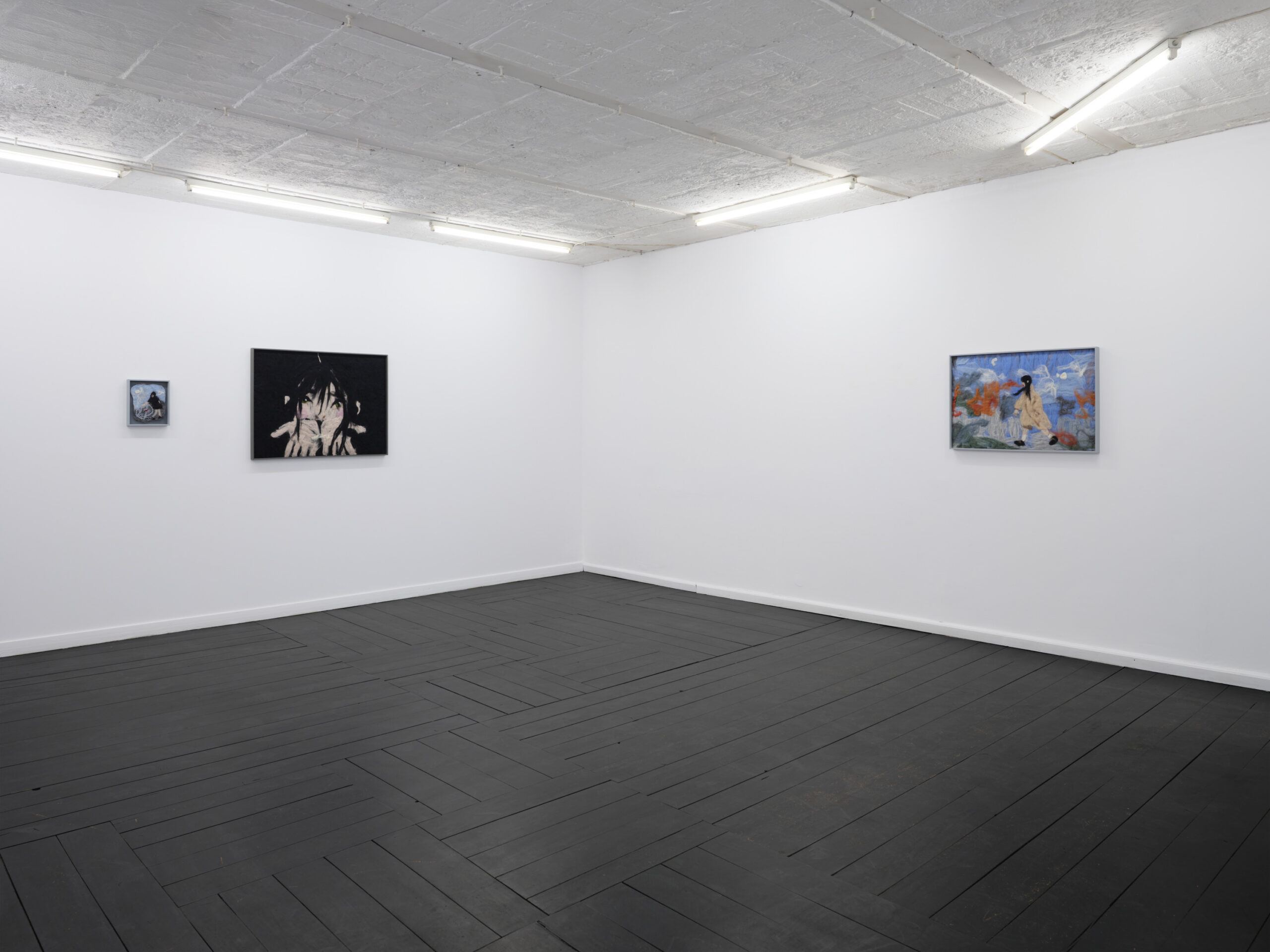
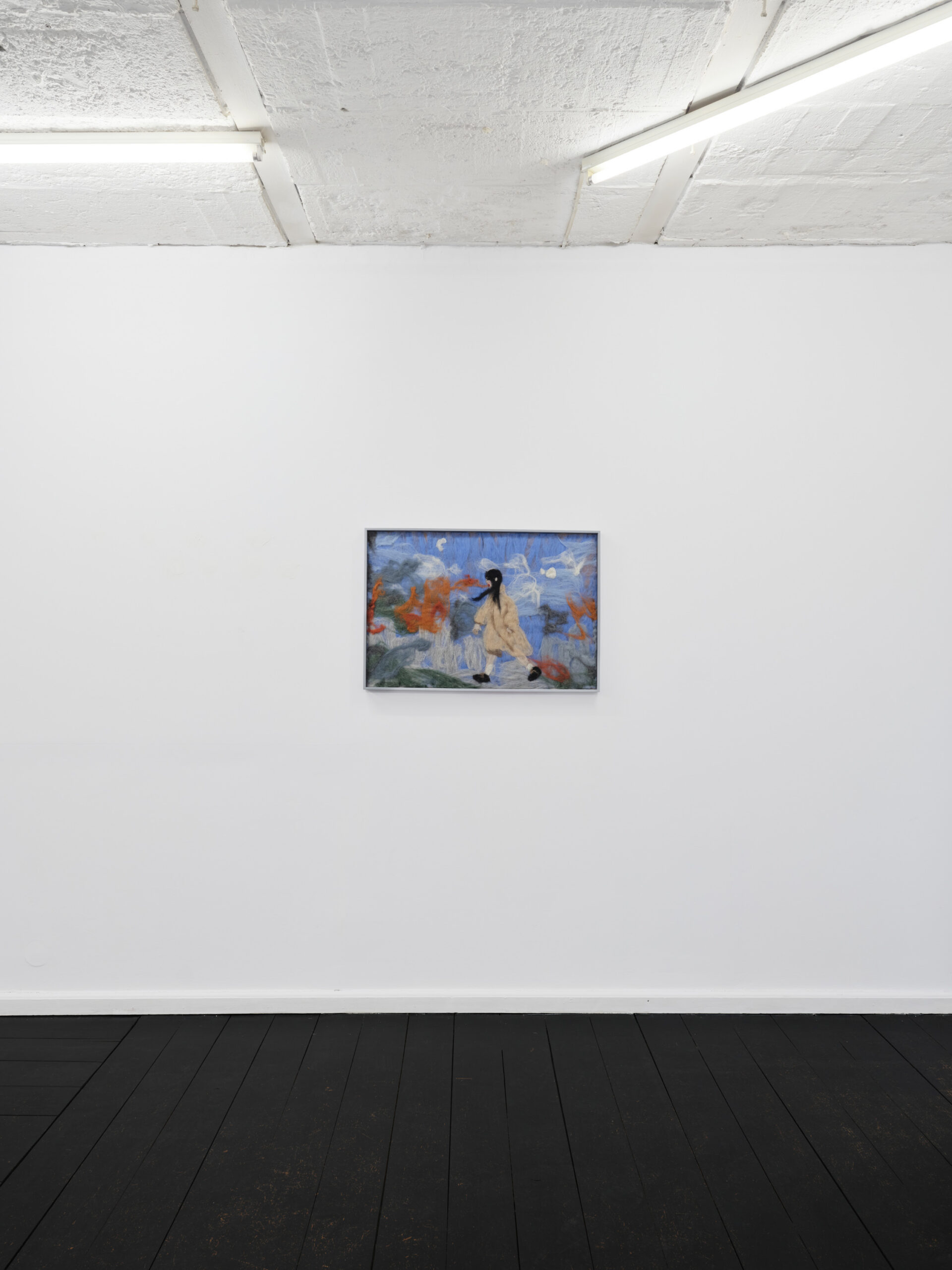
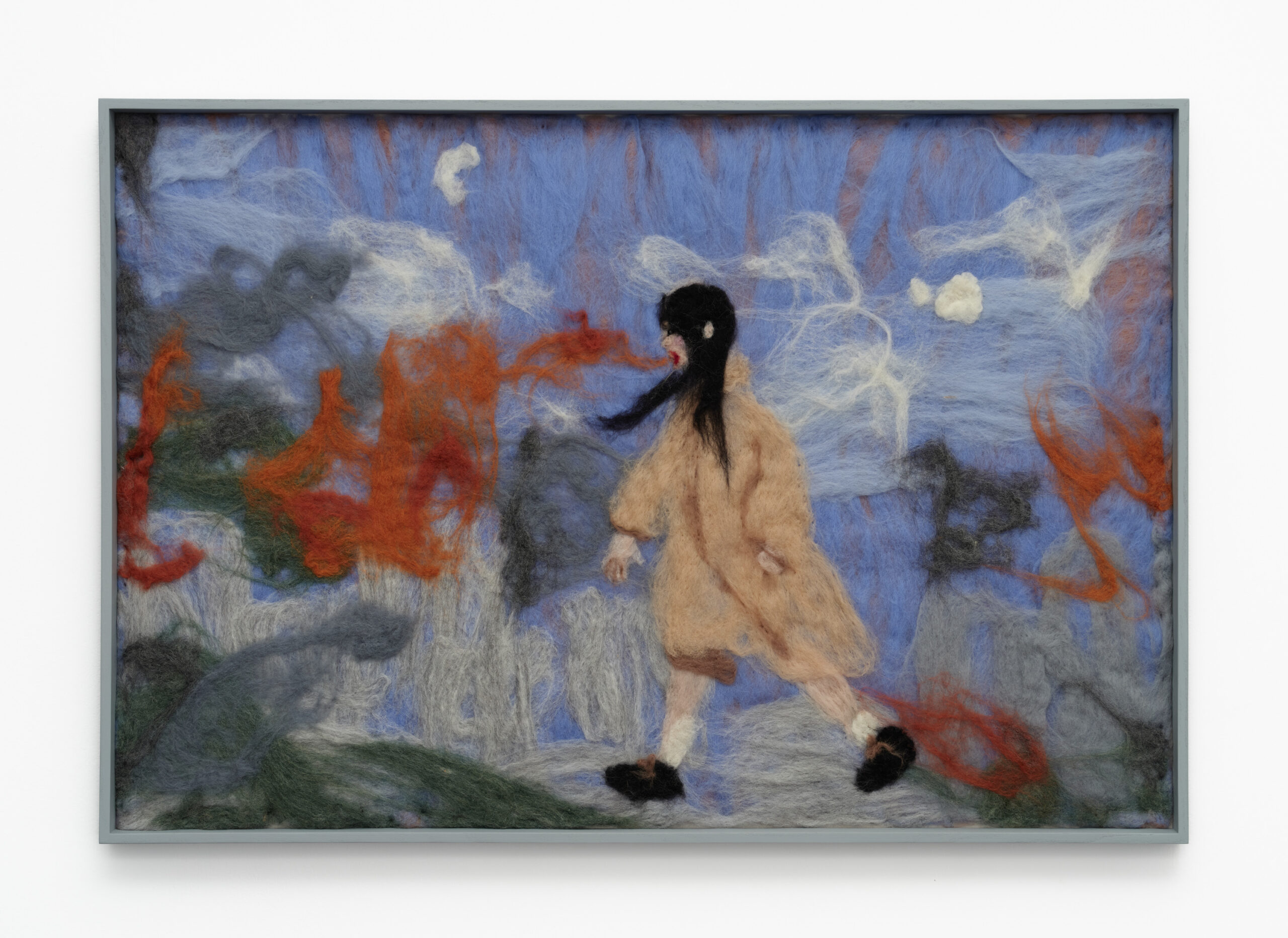
I’m a Dragon!, 2026 – Felted wool, 55 x 81 cm
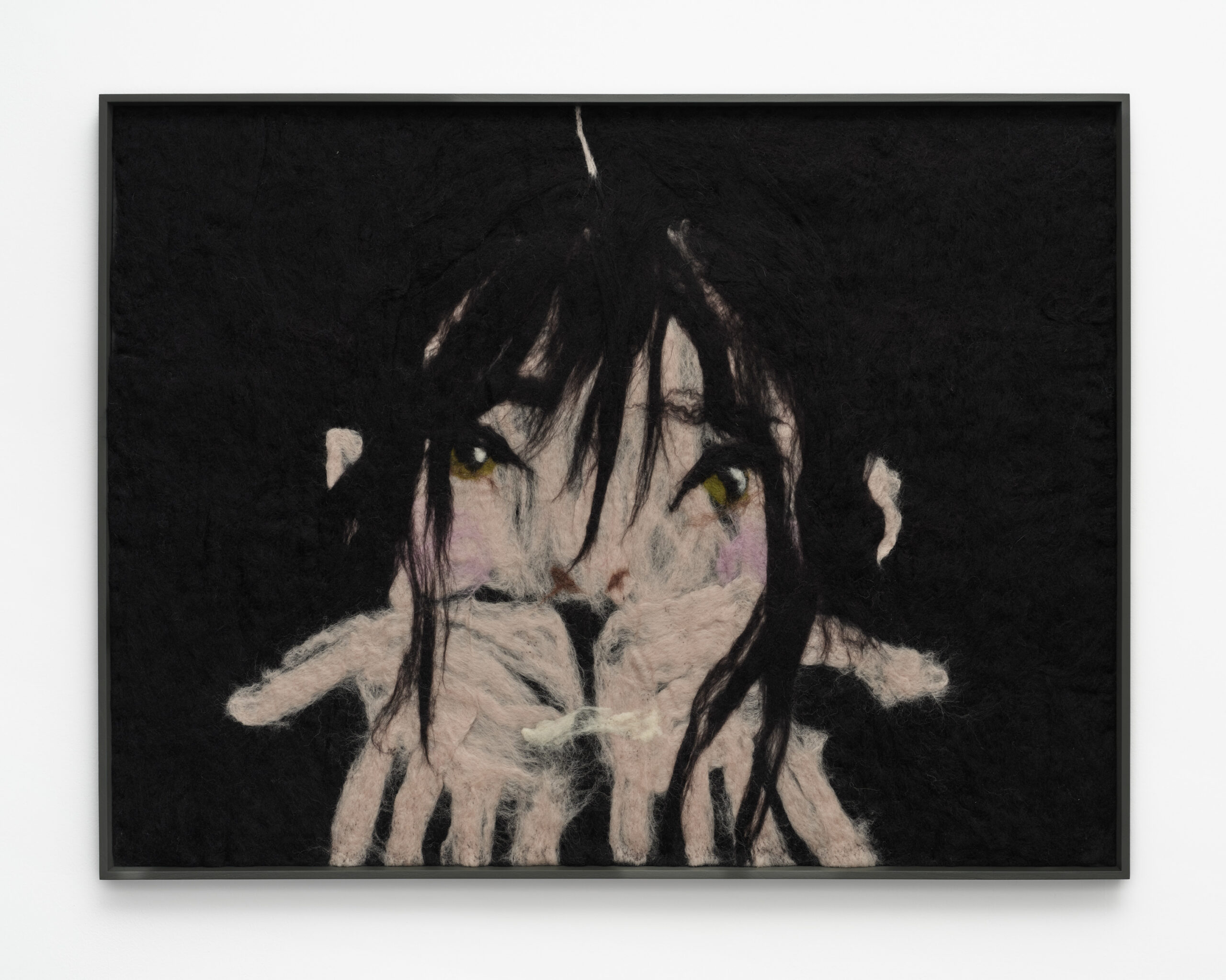
Dream #1, 2026 – Felted wool, 73 x 96 cm
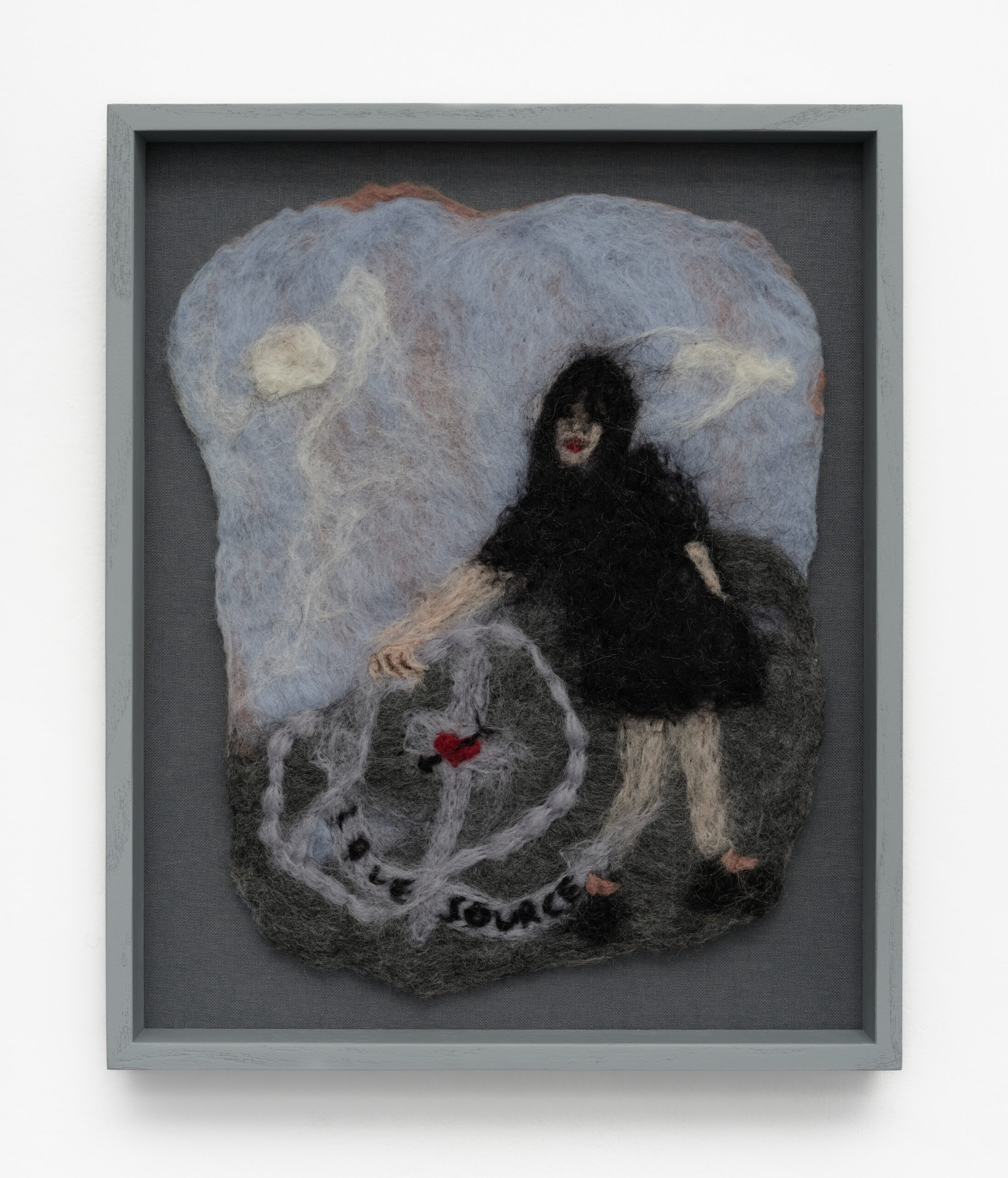
Love Source, 2026 – Felted wool, 27 x 22 cm
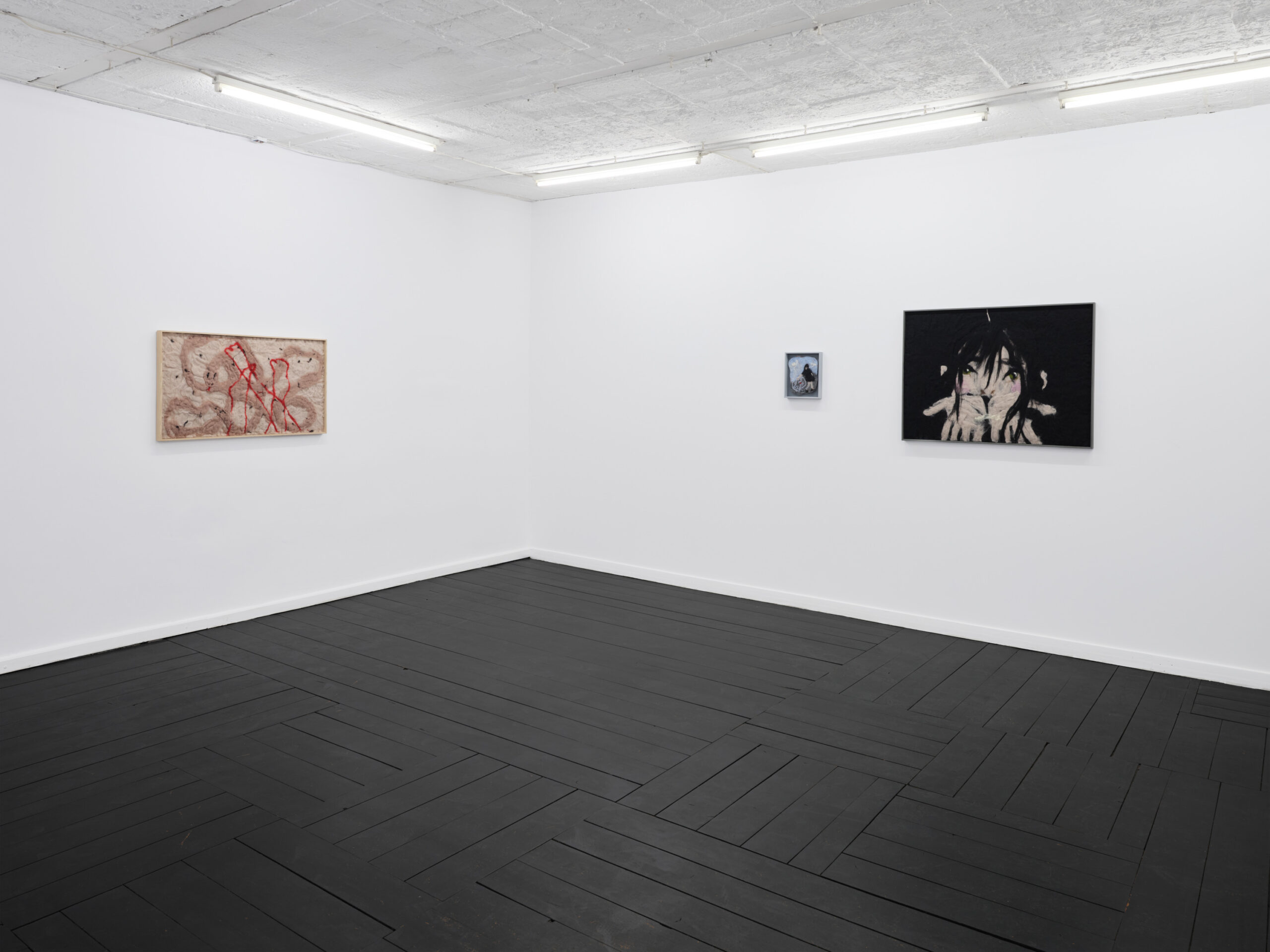
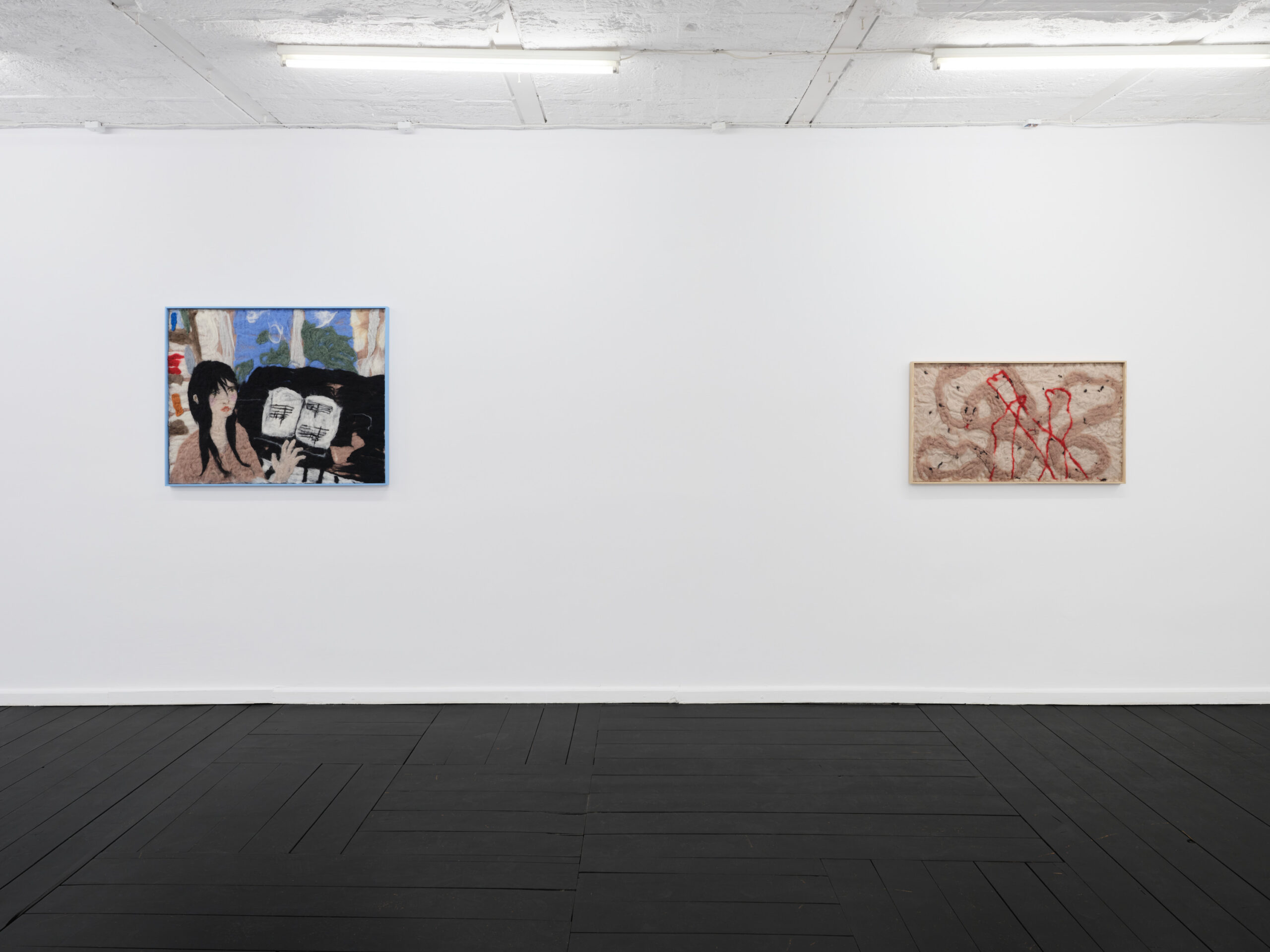
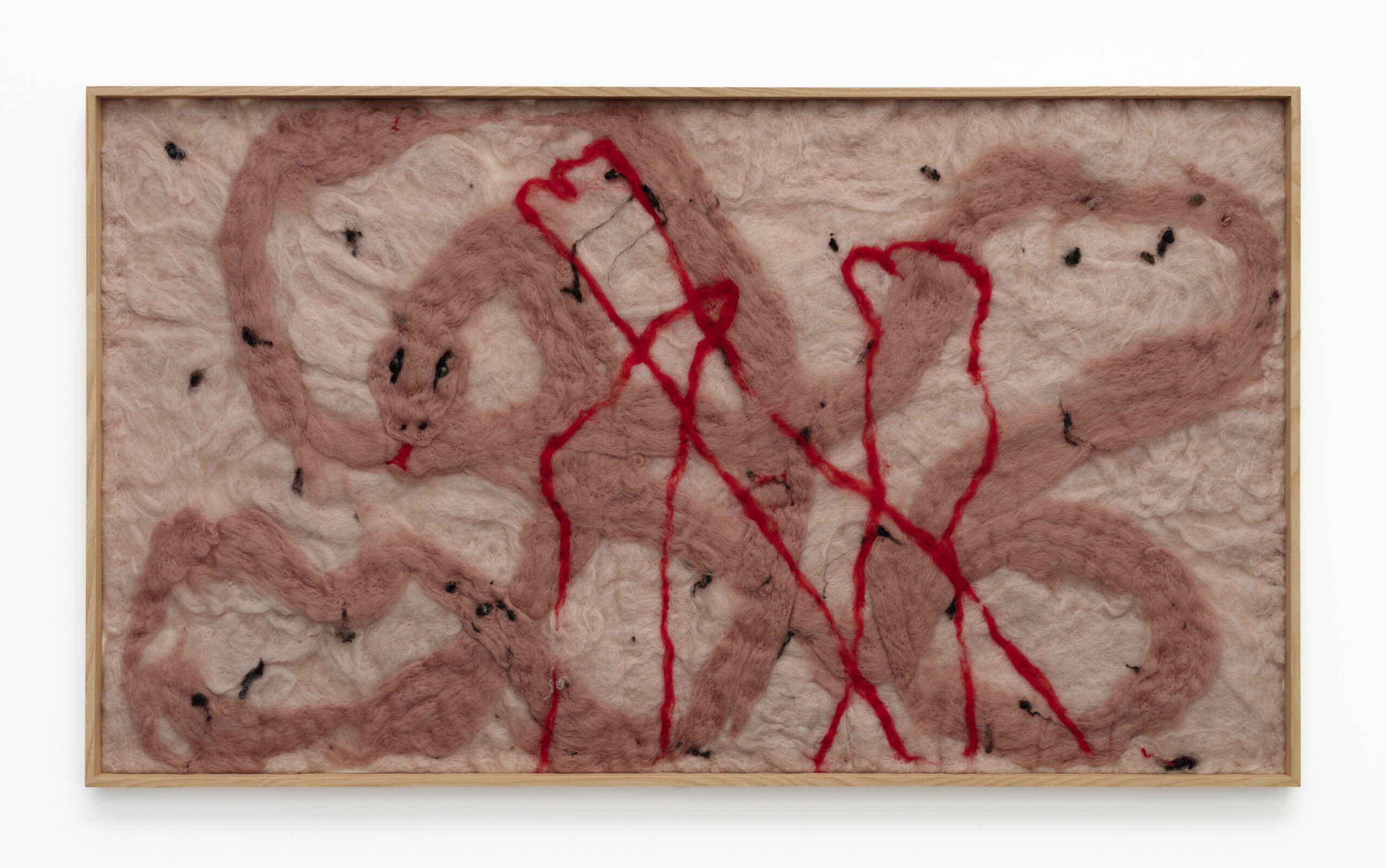
Harmless, 2026 – Felted wool, 55 x 96 cm
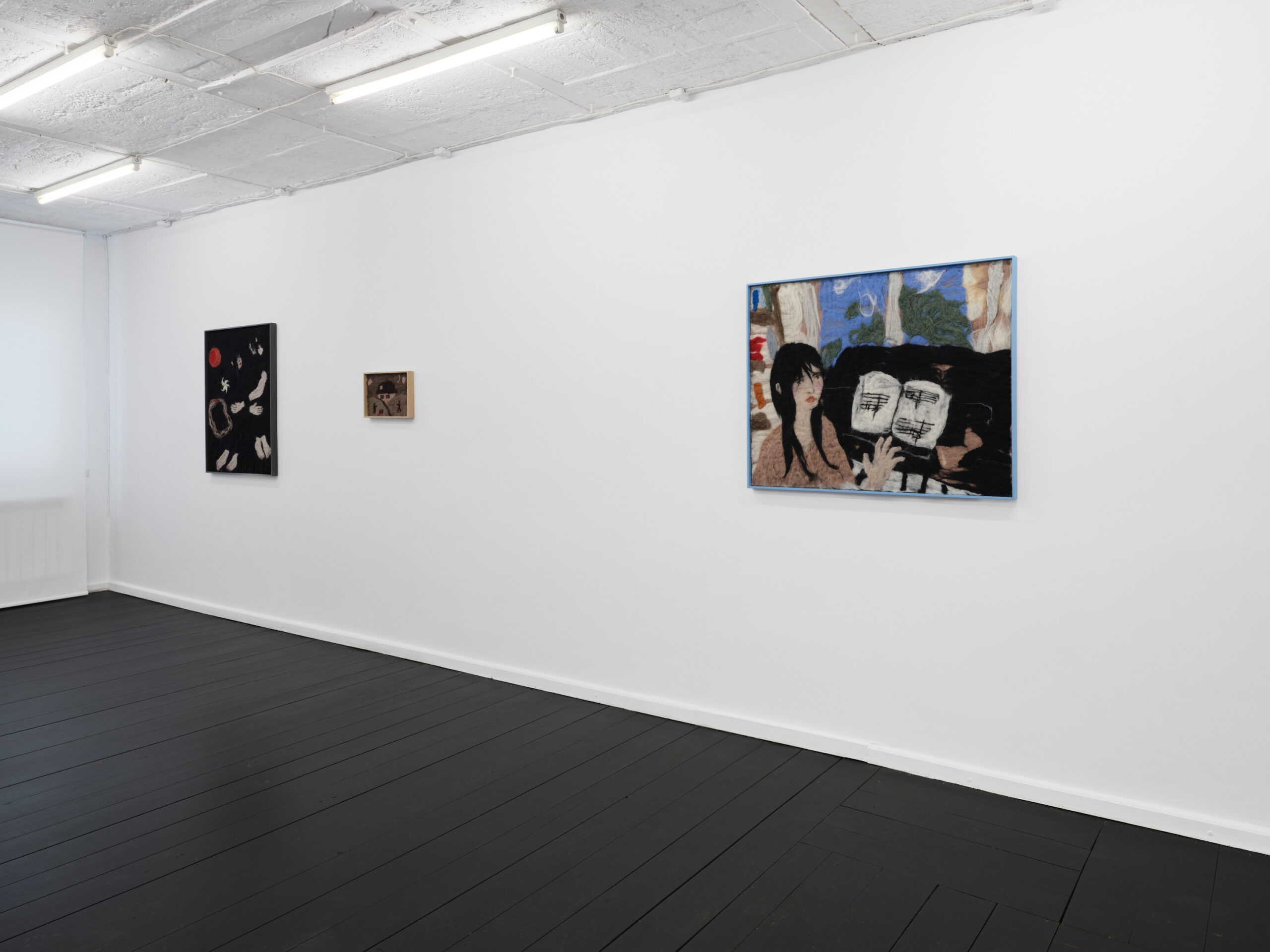
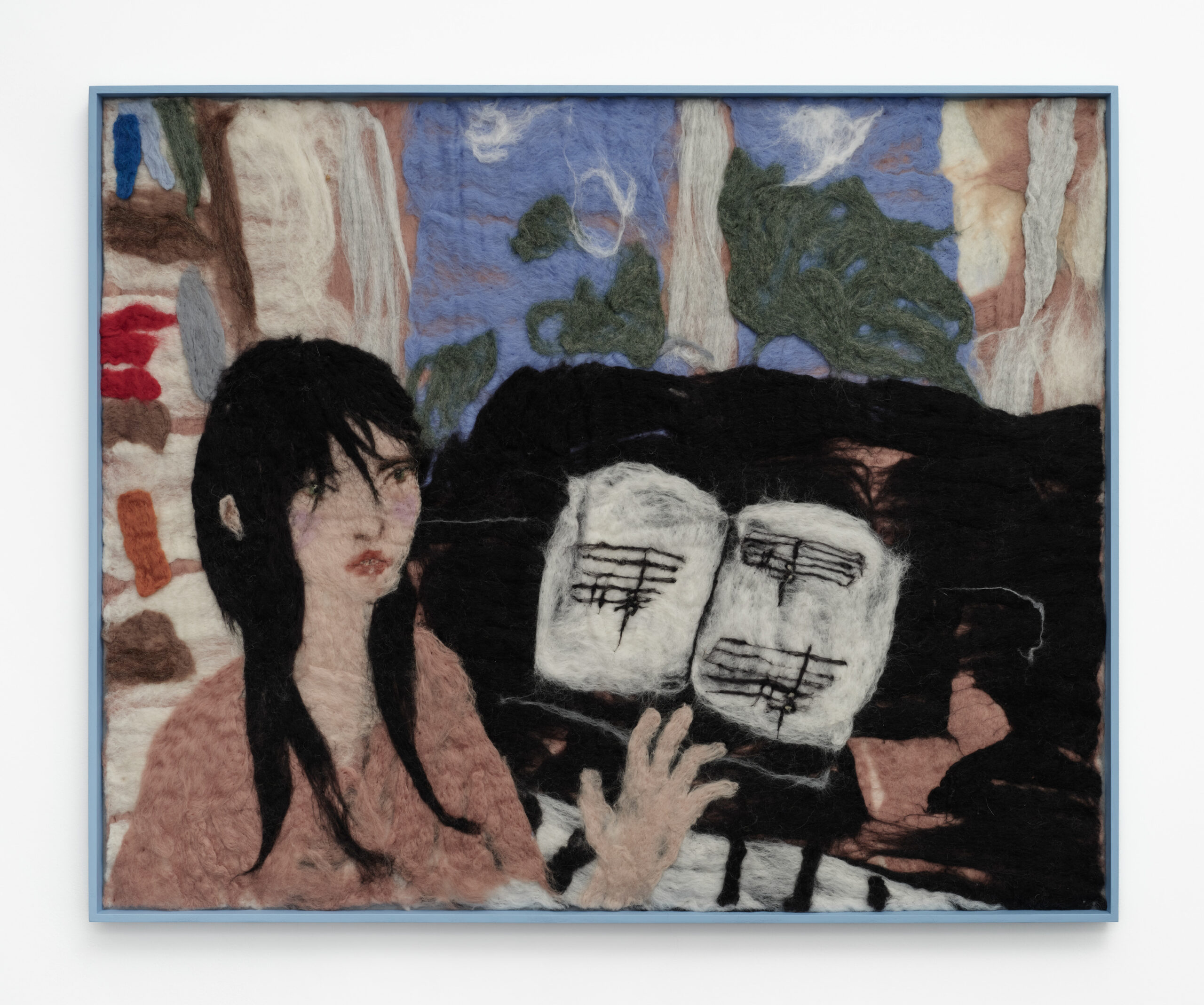
Looney Tunes, 2026 – Felted Wool, 81 x 100 cm
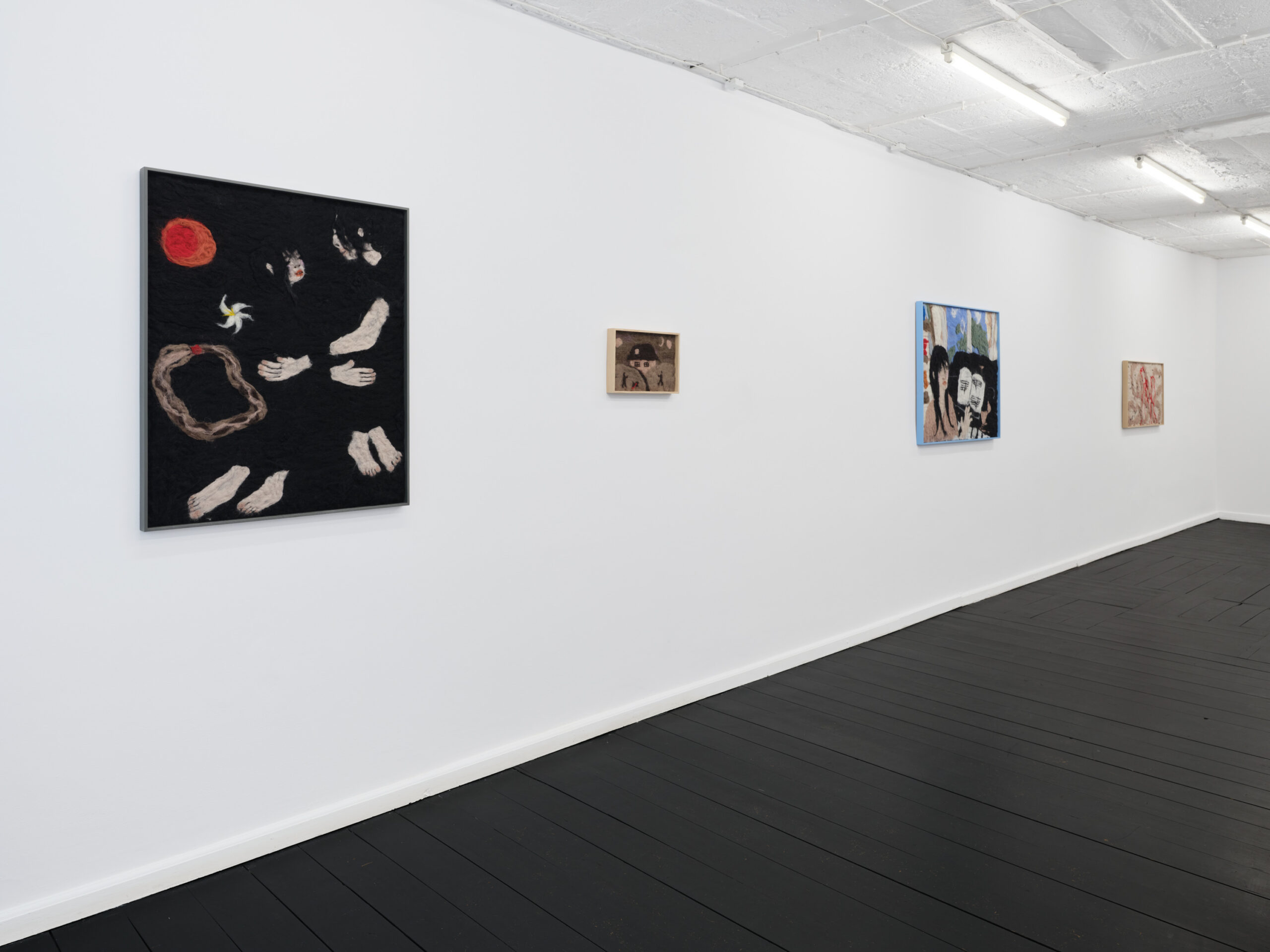
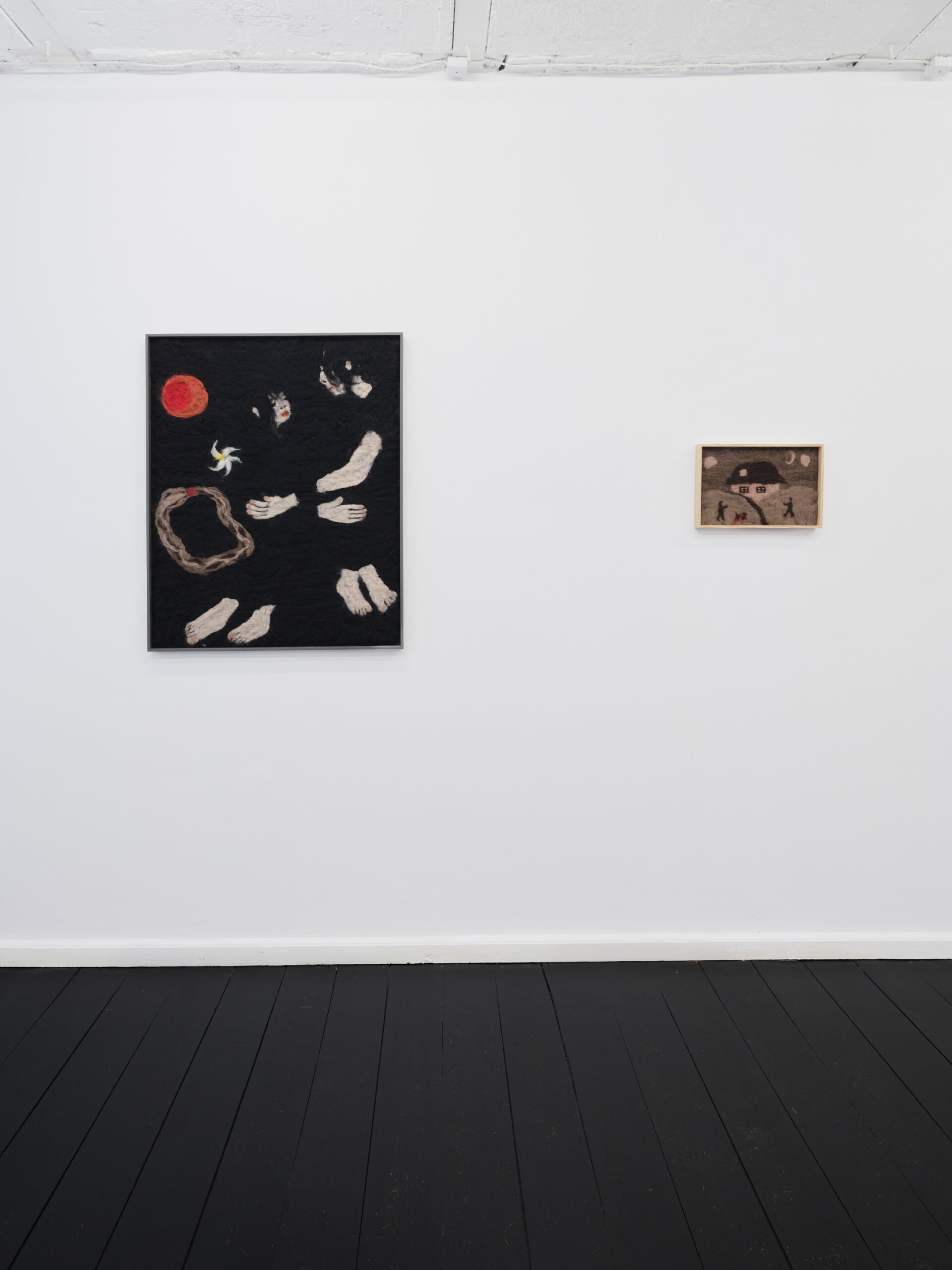
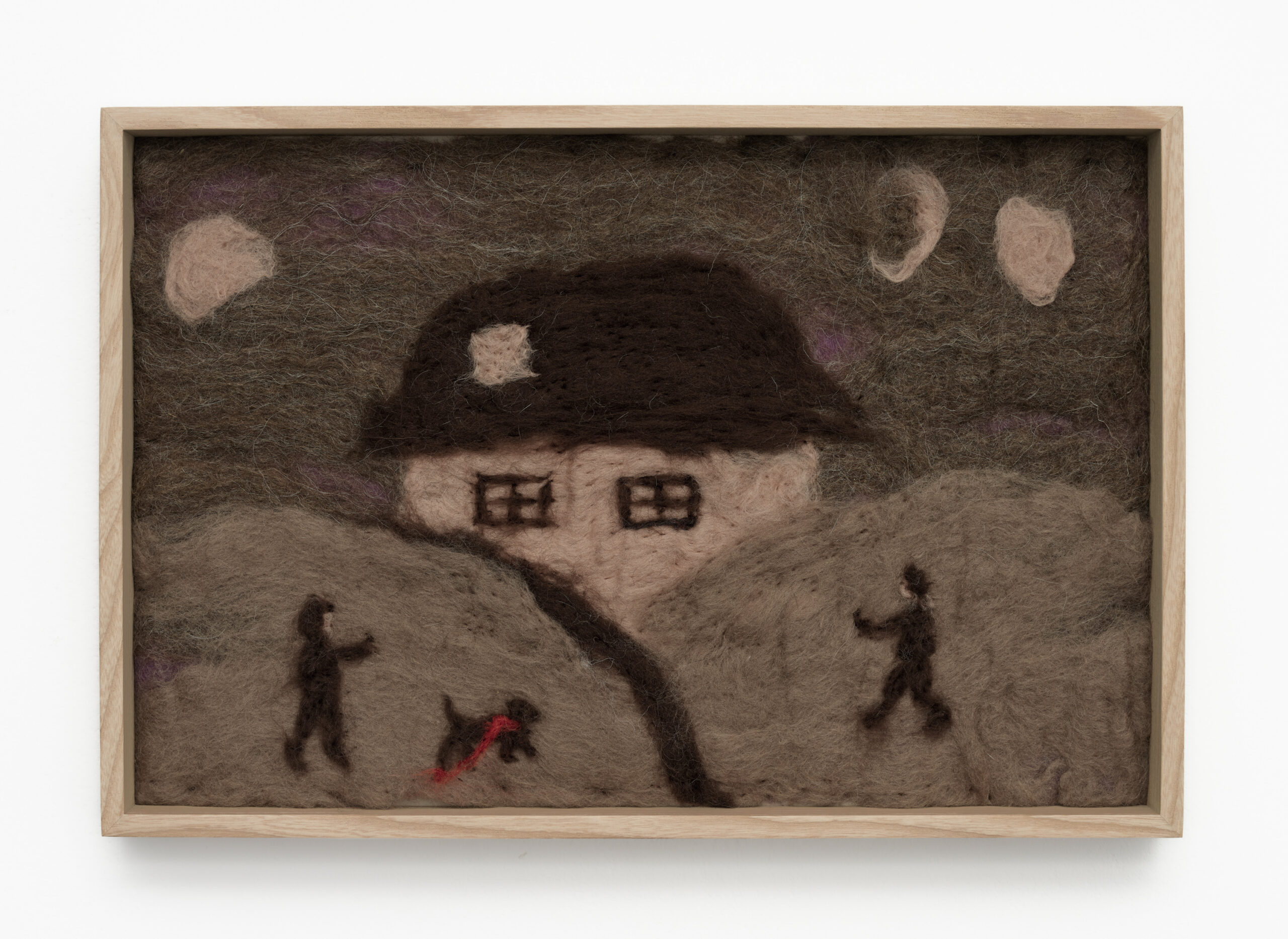
House of the Rising Sun, Moon and some Asteroid, 2026 – Felted wool, 24 x 37 cm
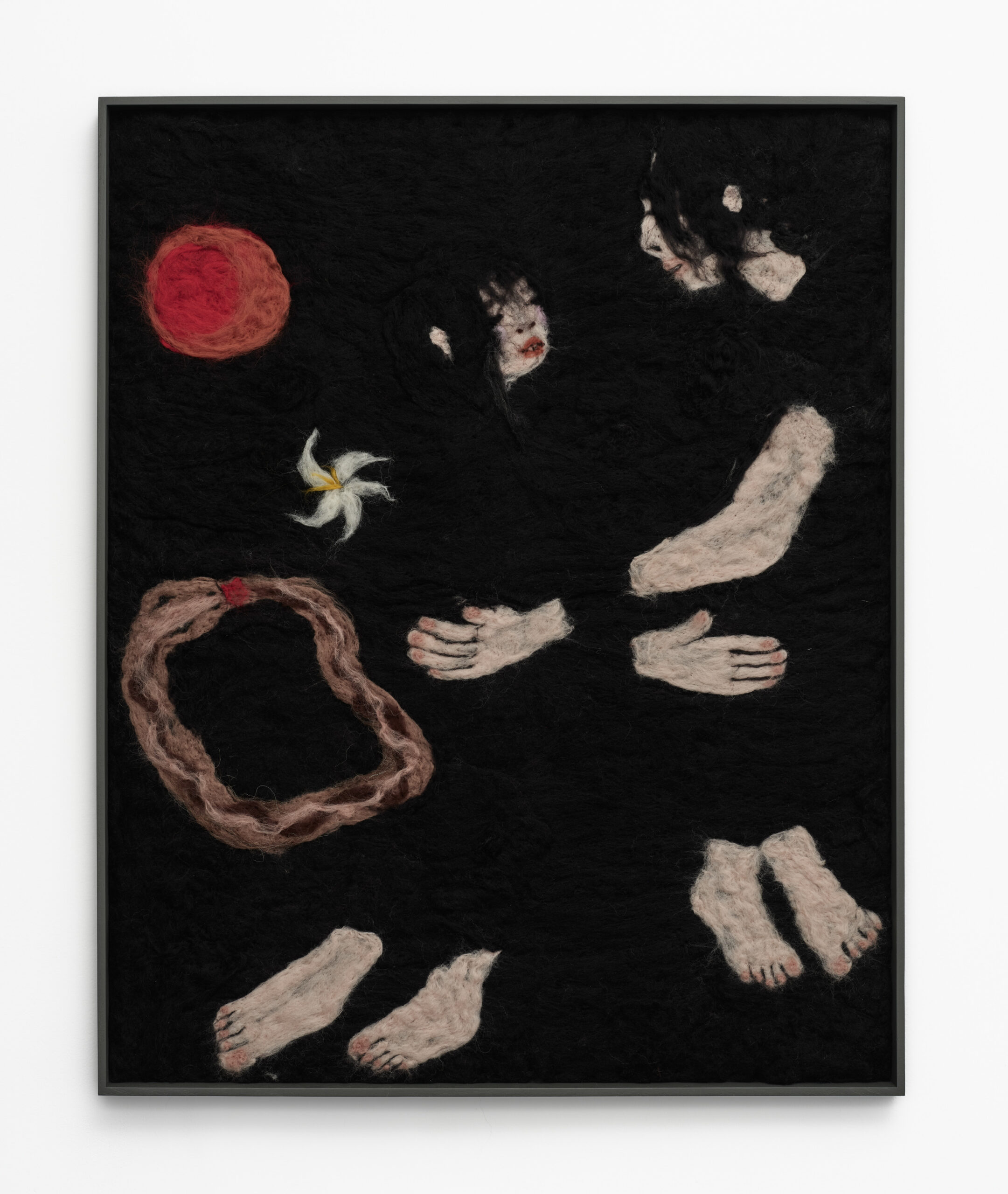
Siblings / Body Electric, 2026 – Felted wool, 93 x 75 cm
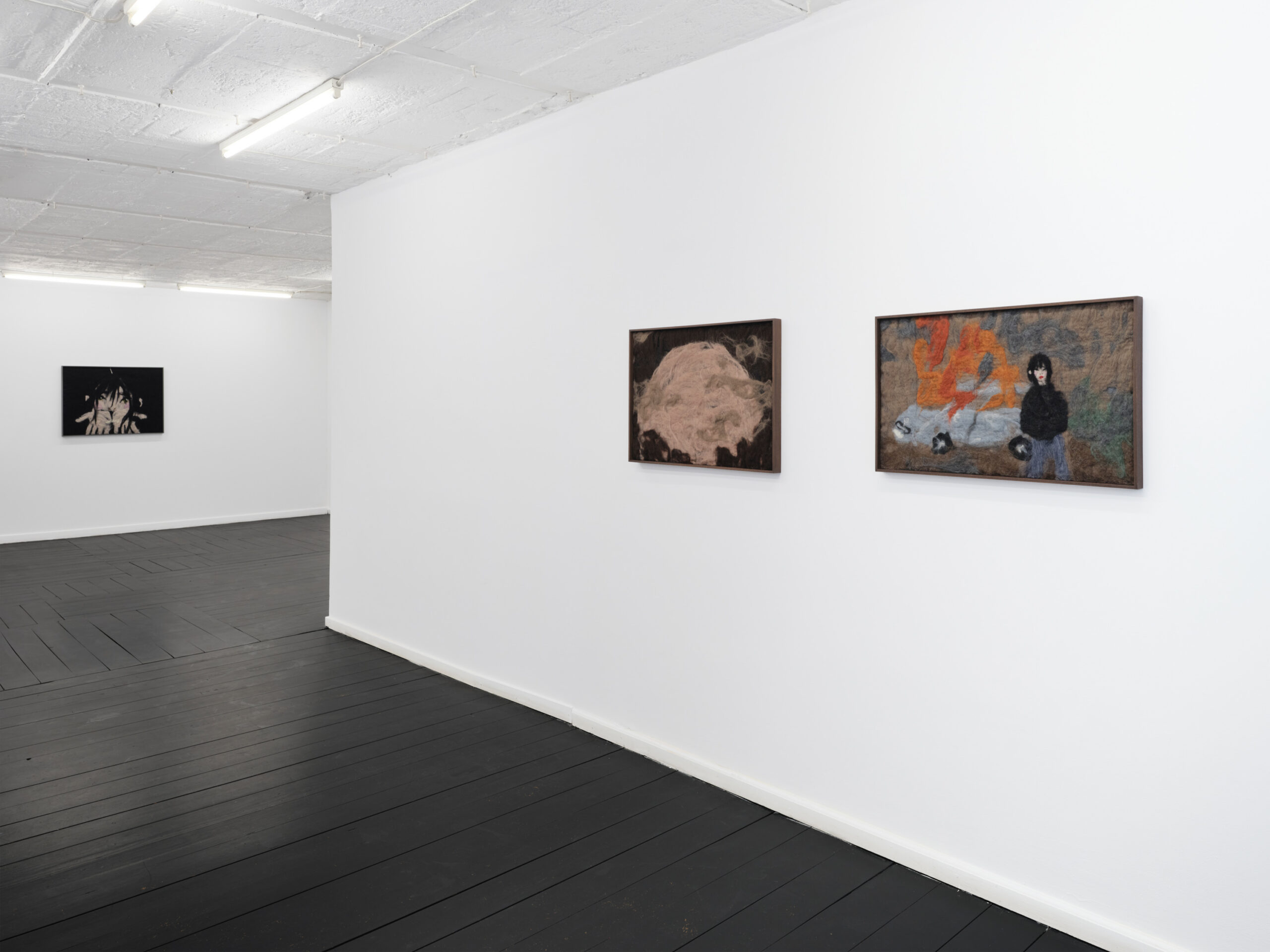
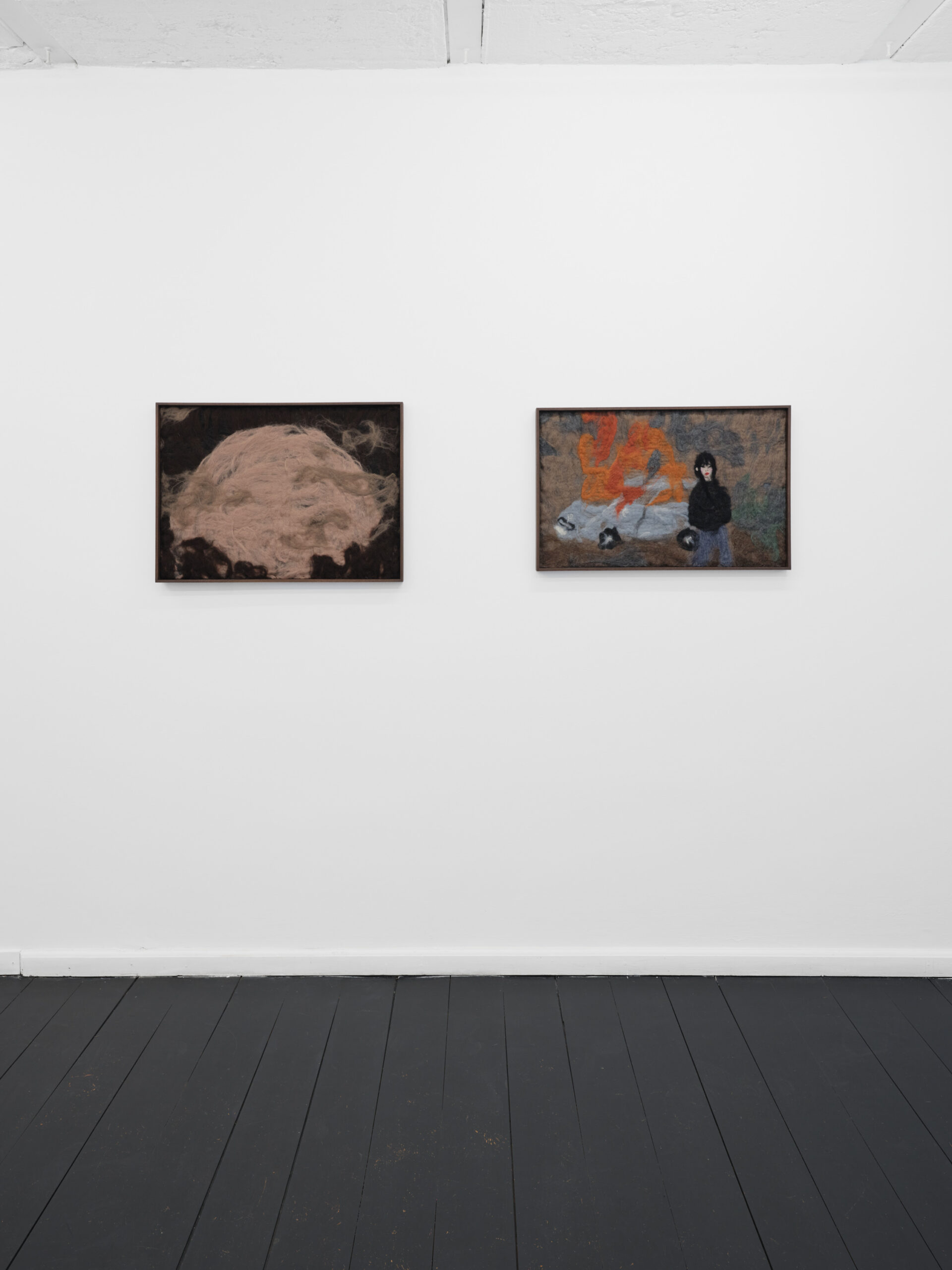
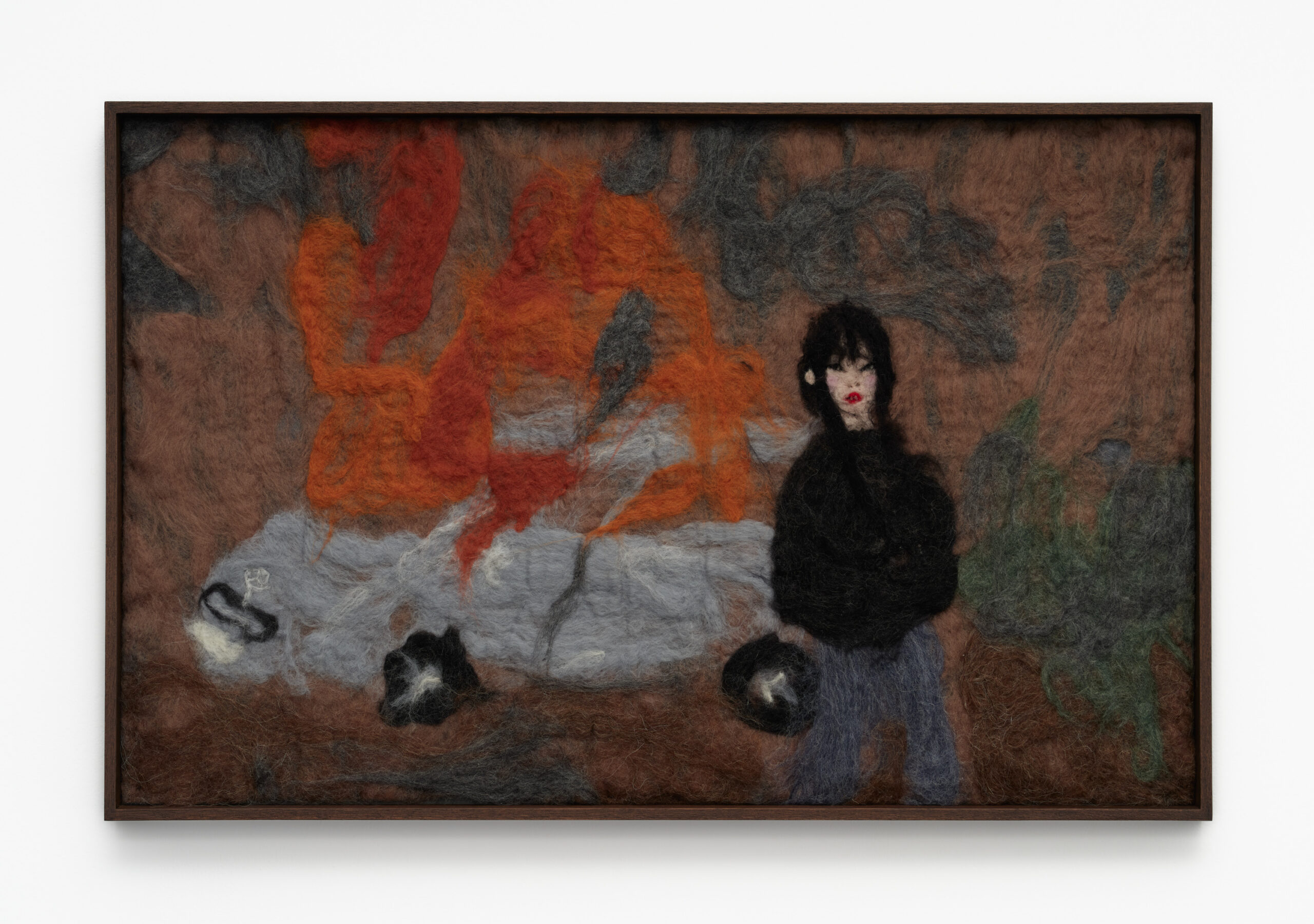
The Fire Next Time, 2026 – Felted wool 47 x 73 cm
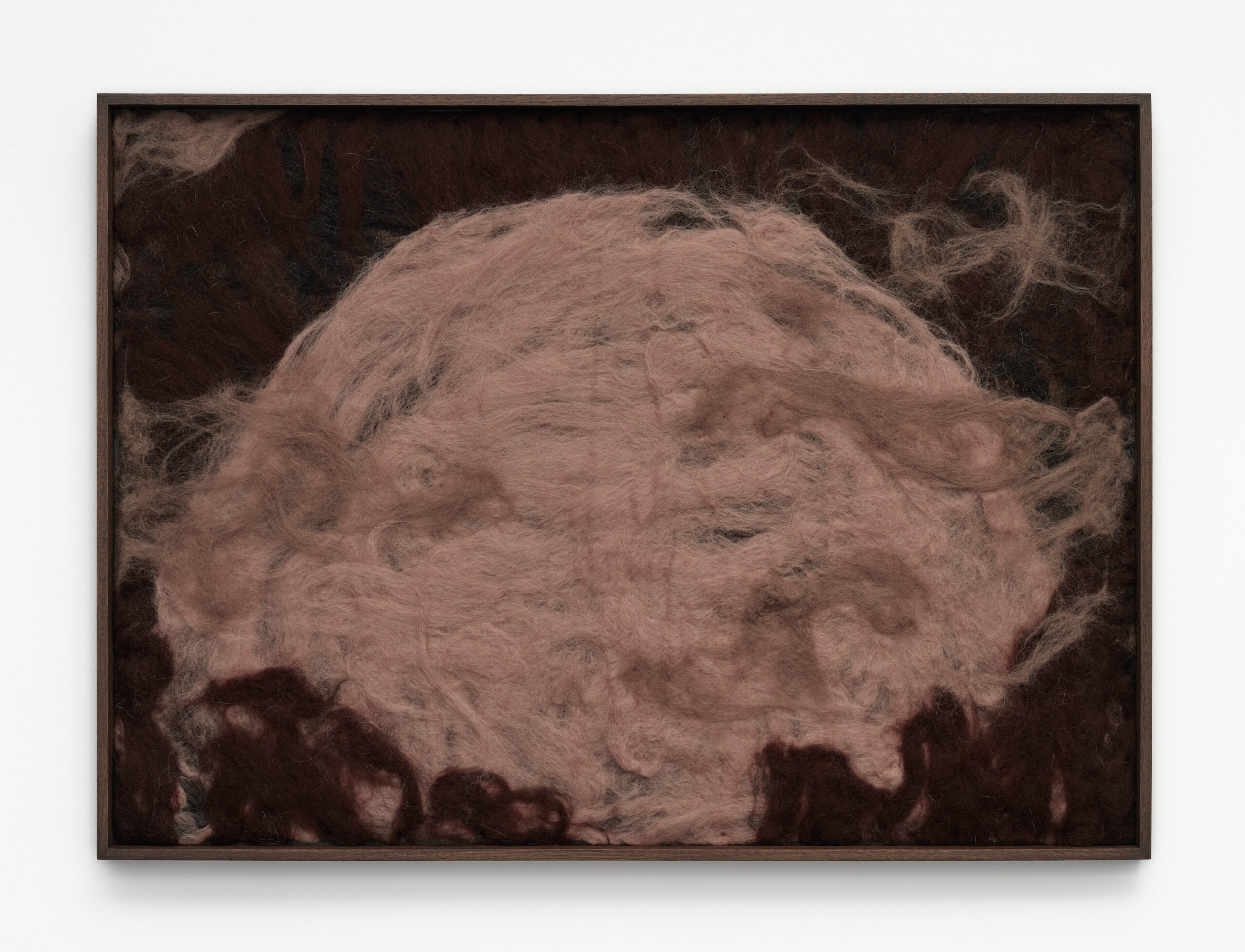
Melancholy Gonna Pass Right in Front of Us And It’s Gonna Be the Most Beautiful Sight Ever, 2026 – Felted wool, 53 x 72 cm
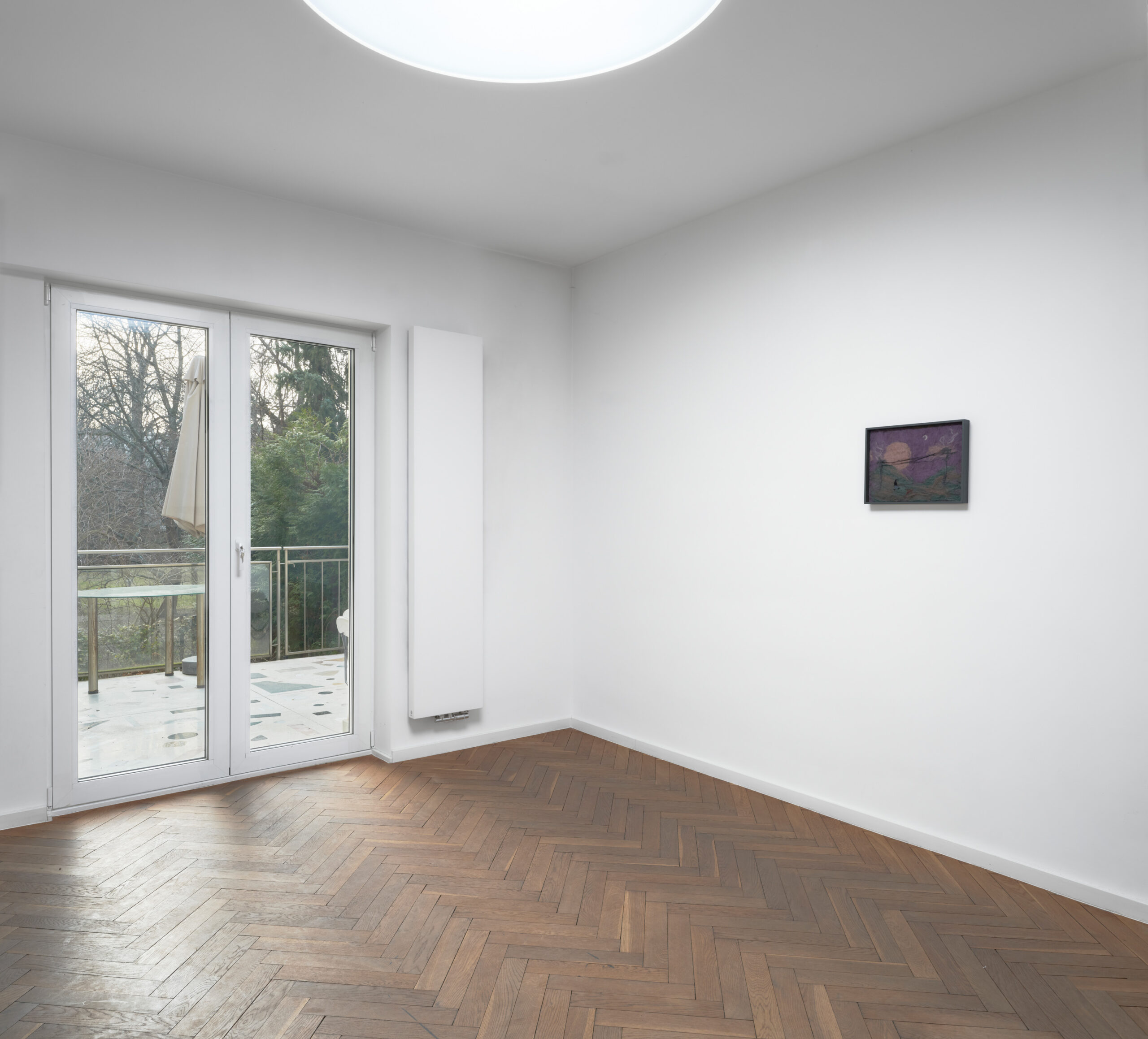
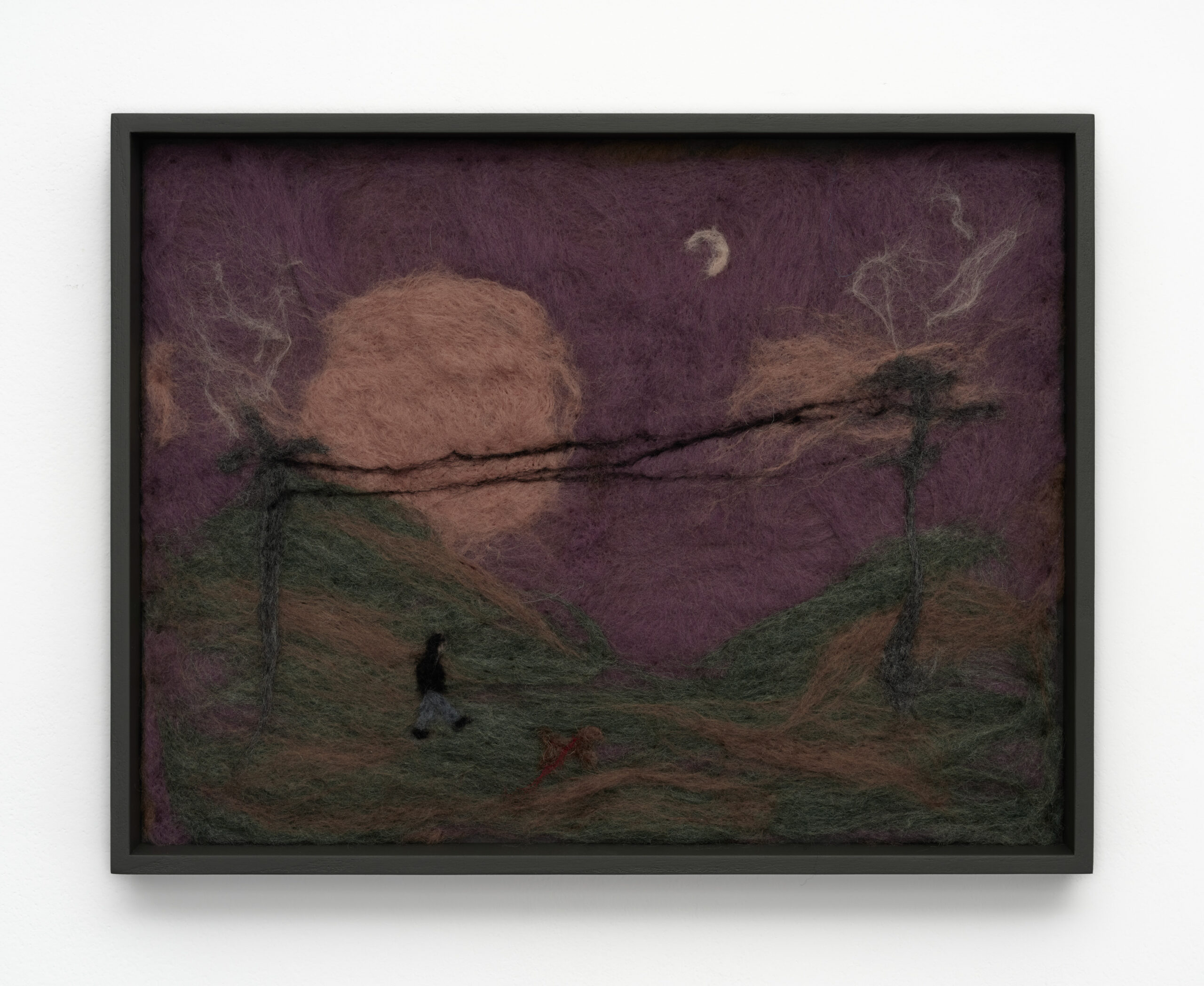
It’s Too Much Tension, Get the Fuck Out of Here, 2026 – Felted wool, 30 x 39 cm
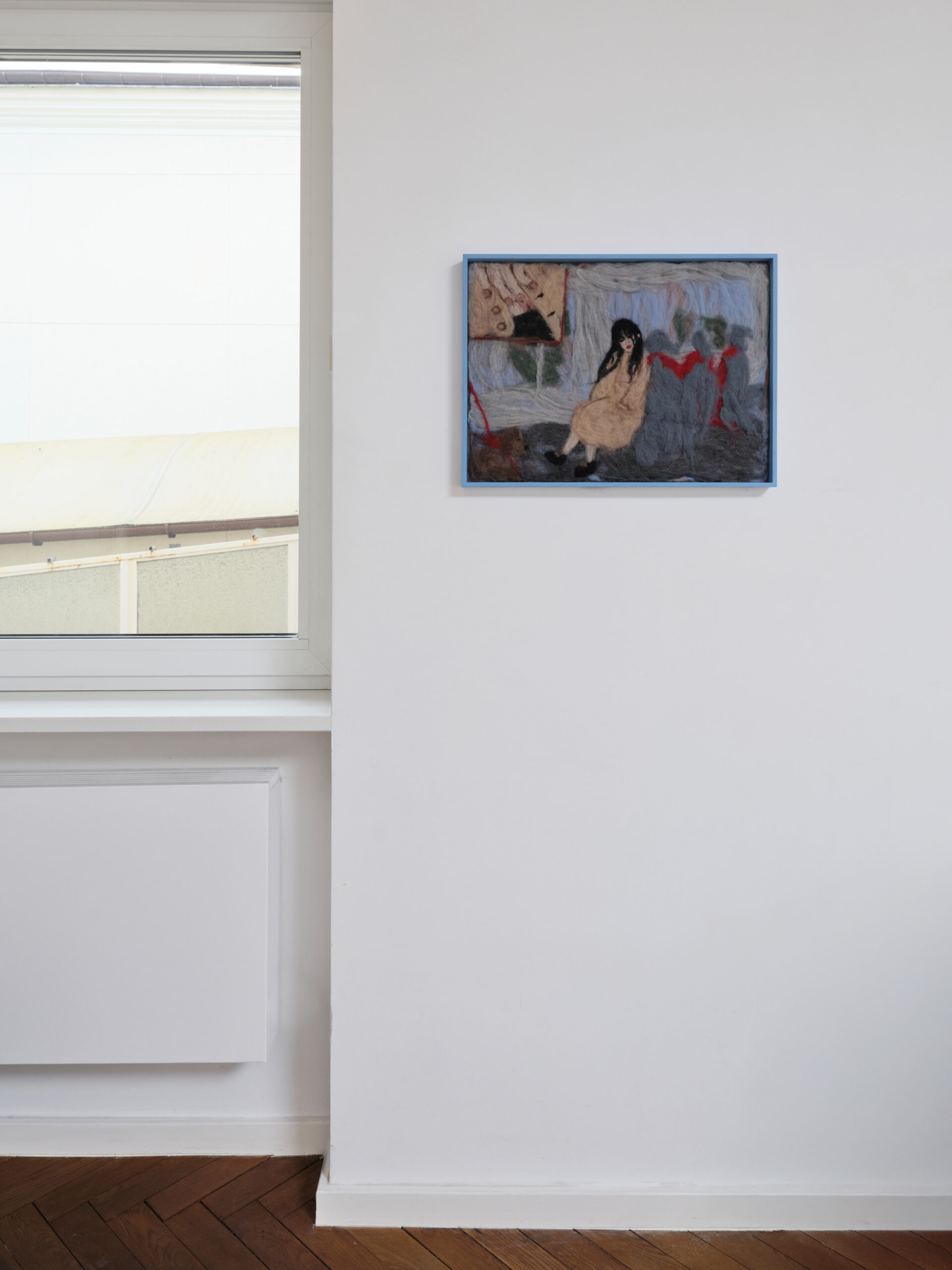
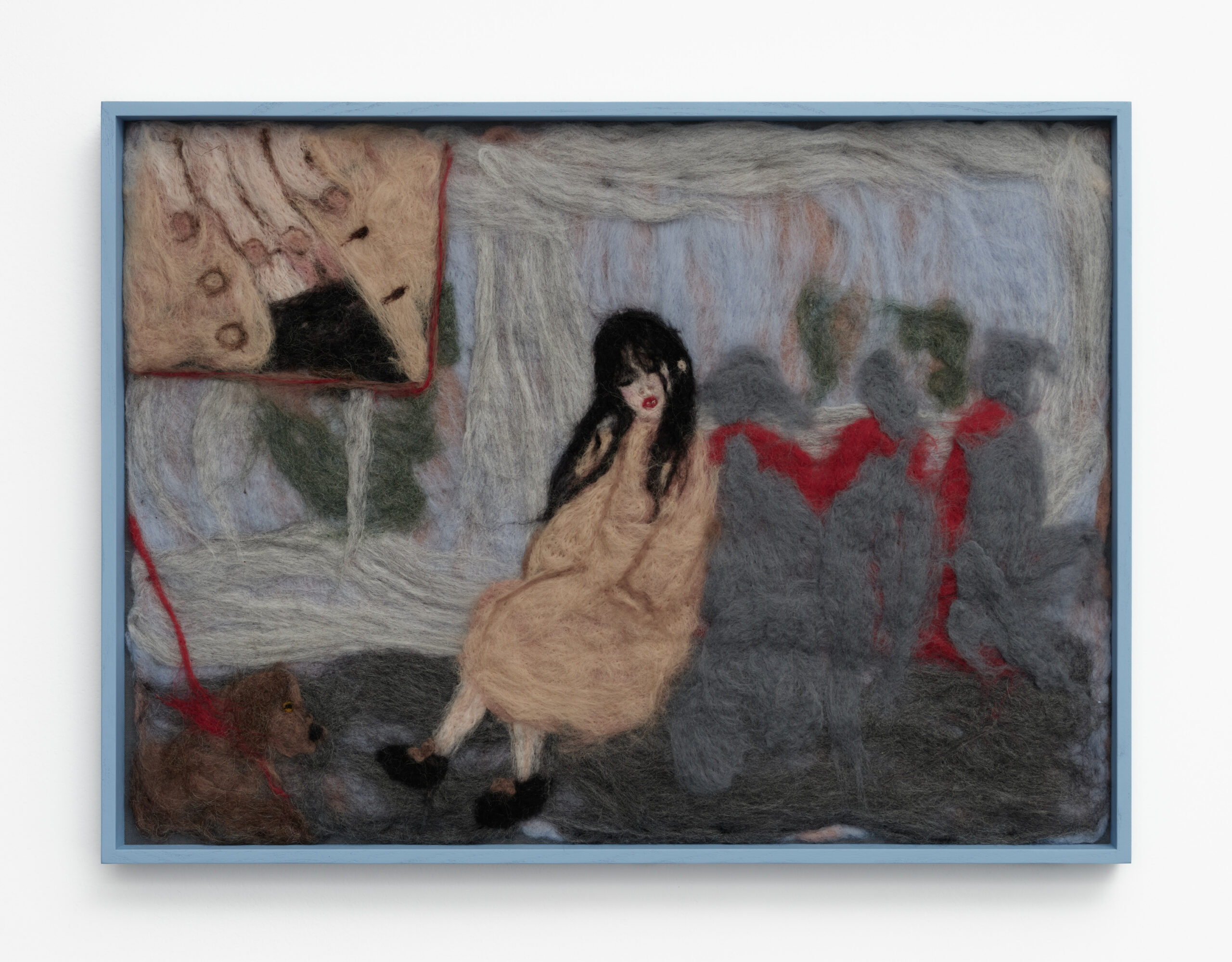
Nymphomaniac, 2026 – Felted wool, 40,5 x 55 cm