Offspring
The exhibition Offspring by Marianna Rodziewicz presents a universe in which the body ceases to be a stable form and instead becomes matter in continuous mutation, permeated by desire, fear, memory, and violence. Based on 3D prints and subsequently manually transformed, her sculptures create a tension between technical and bodily aspects of creation, portraying technology not as a cold tool of reproduction but as an organic extension of the body. For Rodziewicz, the production process itself carries symbolic meaning: the machine functions as a maternal figure, a “mechanized womb,” in which her critical reflections on the definition of the body take material form. 3D printing becomes a kind of birth process — long and demanding — where the materialization of form is partially unpredictable and prone to error, and filament remnants resemble bodily fluids. The transition from digital concept to physical form allows the artist to enter into a direct relationship with the sculpture, to touch it, and continue its manual transformation.
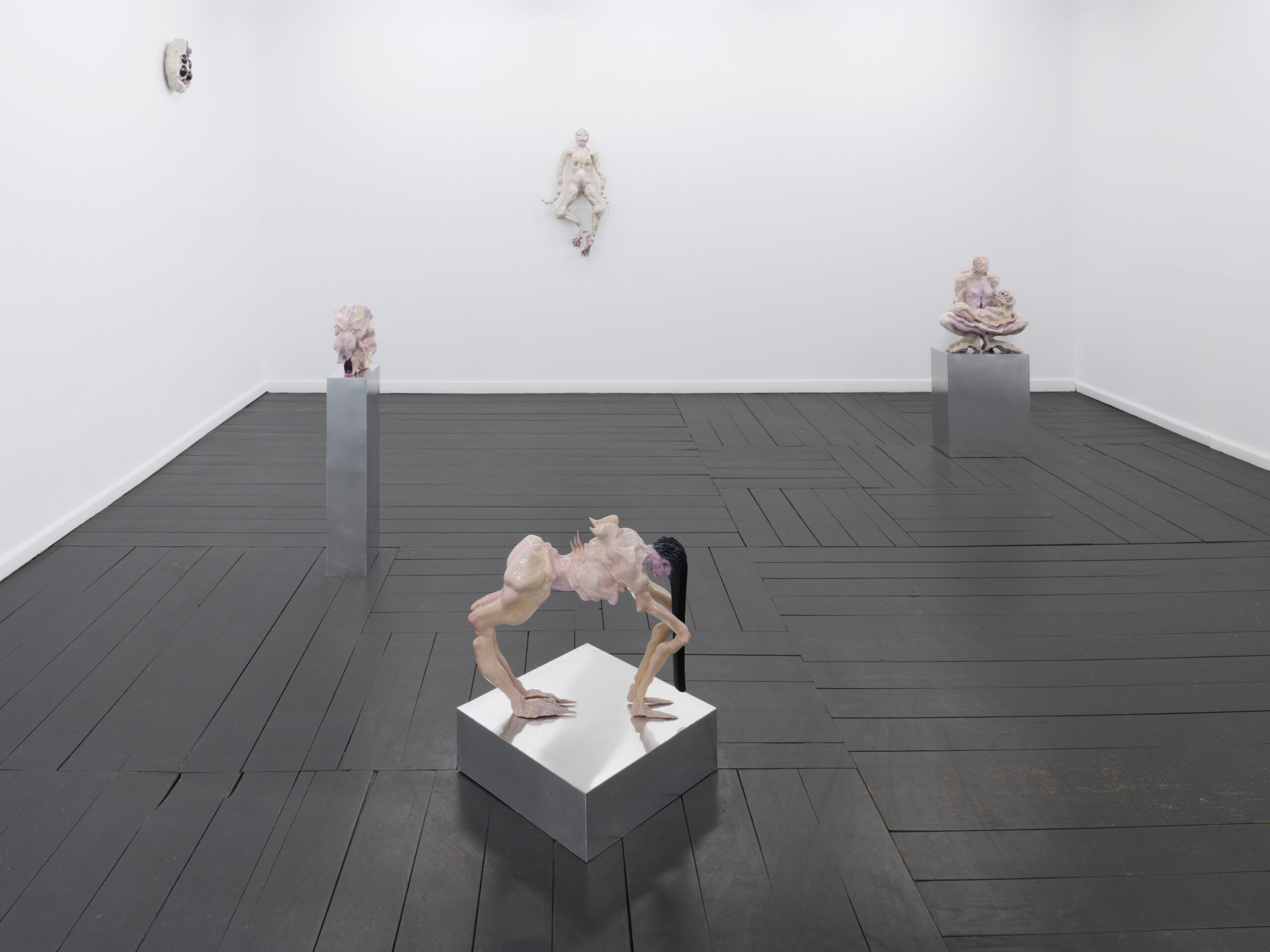
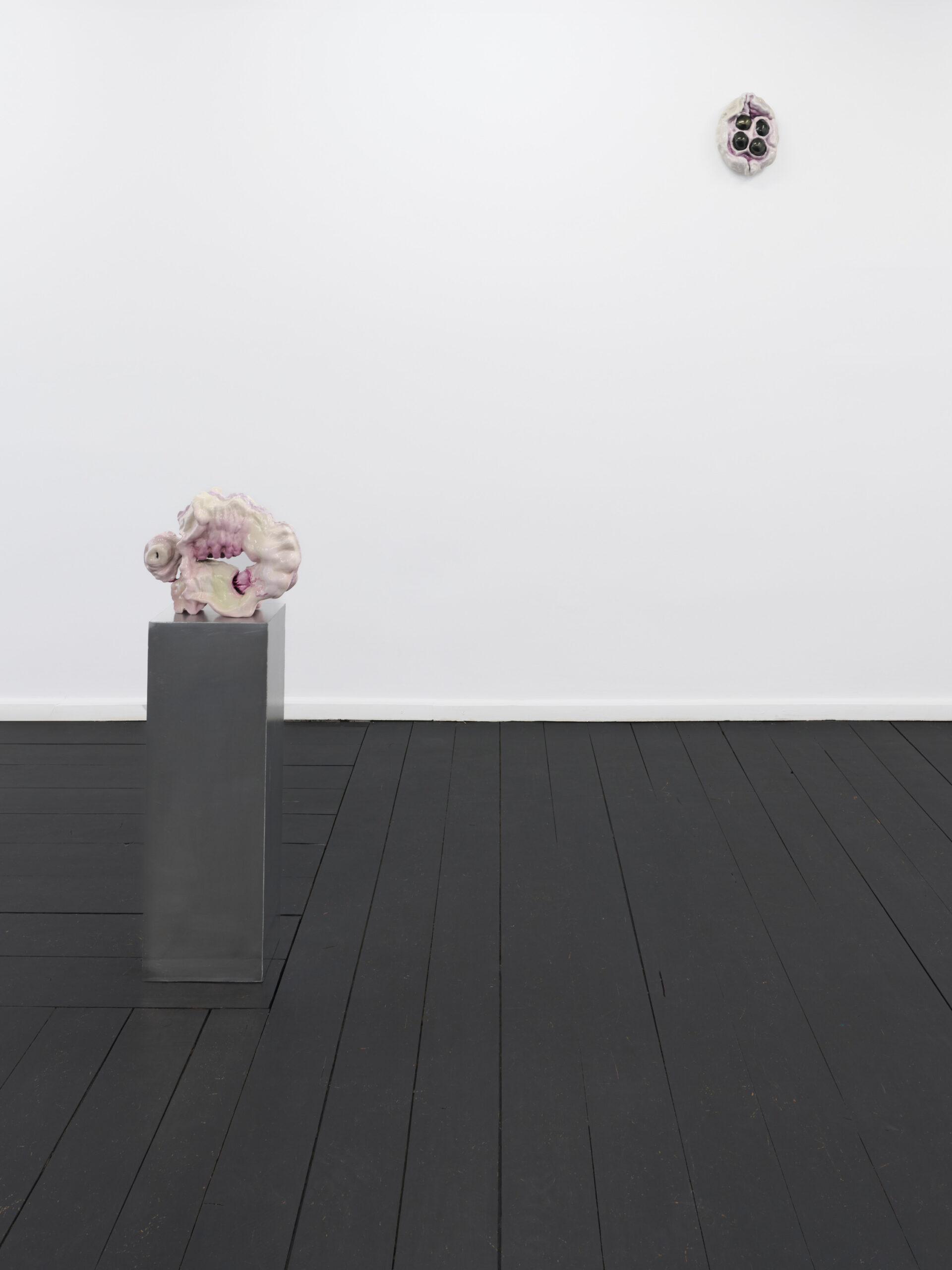
The sculptures belong to a world populated by hybrid creatures that are both vulnerable and threatening. Let My Hair Down depicts a semi-human, semi-animal figure with an emaciated skeletal structure, its head drooping under the weight of long black hair, still wet as if just taken from a ritual bath. In Consuming My Love, two zoomorphic bodies merge in a scene where sexuality and cannibalism become inseparable; desire appears as a force of mutual consumption.
In these works, hybridization is not merely a formal motif but reveals a unstable subjectivity whose logic is based less on identity and more on the interpenetration of forms. The figure of the monster becomes a way of reconfiguring the body as a space of transition and subversion against the rules shaping subjectivity. For Rodziewicz, the monster is not only a disturbing form but a figure that destabilizes models of subjectivity based on representation and identity.
Her sculptures do not depict the “abnormal” body in a descriptive sense, but rather bodies in the process of becoming and disintegration, where hybridization, deformation, and ambivalence critique the rules of subjectivity, especially in relation to the female body. The monster belongs less to the realm of exception and more to a regime of becoming. It is not the opposite of the subject — it reveals the mechanisms through which the subject is formed and opens the possibility of imagining other bodily configurations.
Autobiographical embodiment also plays a central role. Fetal Dance to the Rhythm of a Lullaby, created from a scan of the artist’s own body, presents a deformed tissue full of cracks and openings, as if the body stored a physical memory of psychological tensions. This intimate perspective does not merely function as self-portraiture but as a way of thinking about the body as an archive of constraints and transformations at the intersection of the material and the symbolic.
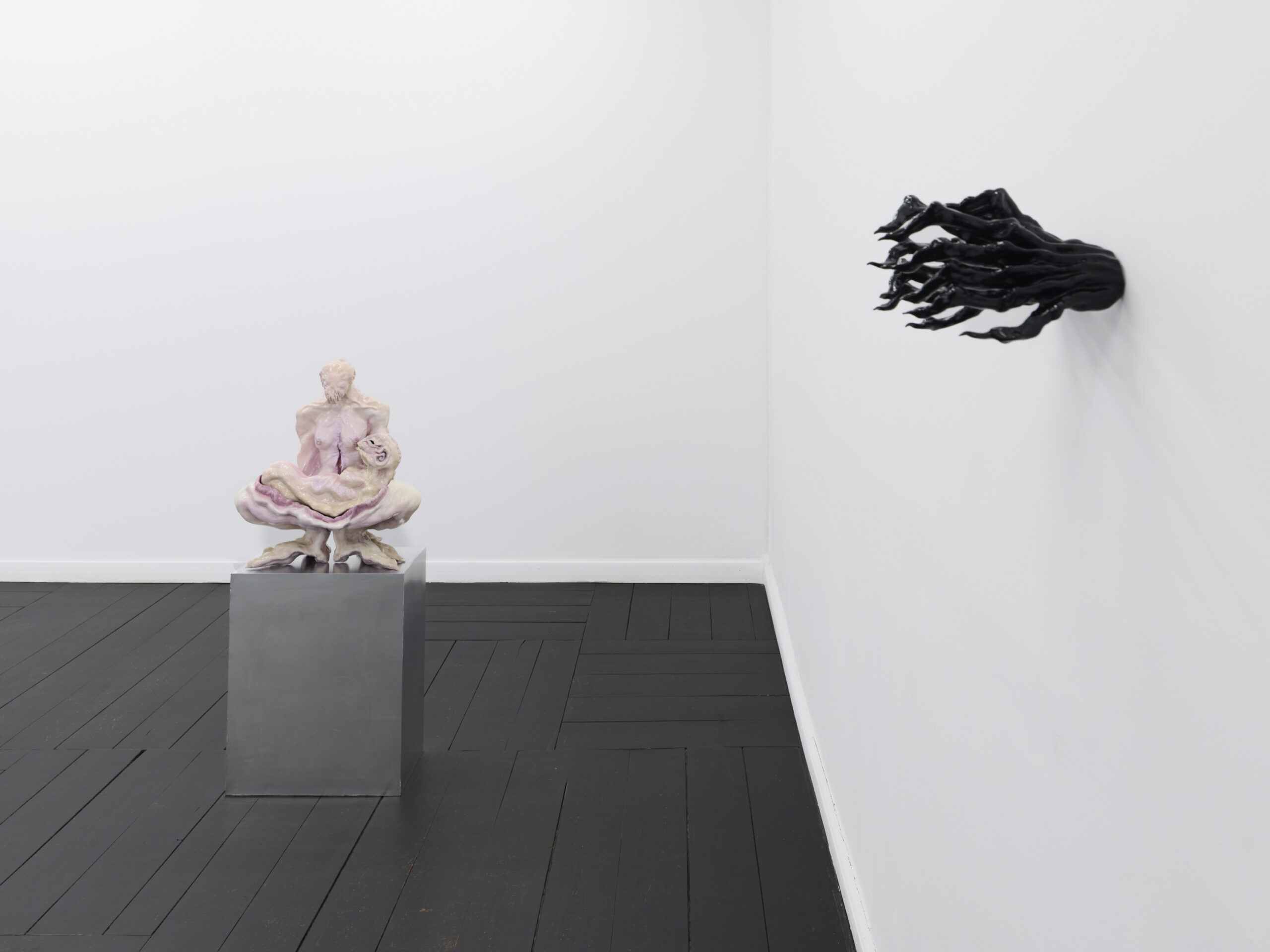
Sucked Out With My Mother’s Milk blurs the boundaries between mother and child, masculinity and femininity, protection and domination. Rodziewicz does not treat motherhood as an ideal form, but as an ambivalent relational regime — a space of transmission that can be both violent and fusional.
Several works also draw on imagery of monstrosity to examine mechanisms of social regulation and the gradual acceptance of violence. Boiled Over Low Heat, shaped like a frog, refers to violence that becomes normalized slowly until it is accepted. This motif of normalized violence runs throughout the exhibition. In Curiosity of Destruction, a young woman with claws holds a dead oyster, her deformed legs and long black hair forming a figure that is both melancholic and predatory. Predatory Manicure, with black claw-like fingers, transforms a traditional symbol of femininity into a potential weapon.
Rodziewicz’s works do not treat the monster as a spectacular figure but as a revelation of the mechanisms through which the subject becomes recognizable: what counts as an acceptable body, what gender it should take, how it desires, presents itself, reproduces, or controls. These rules are not merely illustrated — they are disrupted from within by mutant, ambivalent, and indeterminate bodies.
The exhibition is permeated by imagery related to water and embryonic states. Black Devil Bait evokes an abyssal creature emerging both from ocean depths and from an archaic time before human social structures existed. The Nest gathers four opalescent green eggs embedded in soft organic matter resembling tissue or muscle. These forms remain in a permanent state of gestation, as if something is about to hatch. Suspended high, the eggs suggest protective distance, yet their orbital configuration can also be read as an organic surveillance device — threatening and watchful, evoking political management of life and the vulnerability of bodies under invasive, continuous observation.
Overall, the exhibition shows bodies suspended between emergence and regression. Rodziewicz’s work is about becoming: her sculptures do not merely depict hybrid or “strange” bodies but question the very idea of a body stabilized by identity, gender, maternal function, or sexuality. The body becomes a site of ontological experimentation in which technology, corporeality, and life are entangled within the same regime of metamorphosis, and both digital and manual processes participate in the continuous emergence of new forms. The exhibition does not celebrate monstrosity; rather, it critiques forms of subjectivity, turning disruption into a mode of resistance against fixed identities.
WHOISPOLA
Wystawa Offspring Marianny Rodziewicz przedstawia uniwersum, w którym ciało przestaje być formą stabilną, stając się materią w ciągłej mutacji, przenikaną przez pragnienie, strach, pamięć i przemoc. Realizowane na podstawie wydruków 3D, a następnie ręcznie przekształcane, jej rzeźby stawiają w napięciu techniczne i cielesne aspekty tworzenia, ukazując technologię nie jako zimne narzędzie reprodukcji, lecz jako organiczne przedłużenie ciała. Proces wytwarzania ma dla Rodziewicz wymiar symboliczny: maszyna działa jak figura matki, „zmechanizowane łono”, w którym krytyczne refleksje artystki nad definiowaniem ciała znajdują swój materialny wyraz. Druk 3D to czas narodzin – długi i wymagający, w którym materializacja formy jest częściowo nieprzewidywalna i obarczona ryzykiem błędu, a resztki filamentu przypominają płyny ciała. Przejście od cyfrowej koncepcji do formy fizycznej pozwala artystce wejść w bezpośrednią relację z rzeźbą, dotykać jej i kontynuować przekształcanie ręczne. Rzeźby te wpisują się w perspektywę, w której ciało jest miejscem zacierania granic między naturą a kulturą, człowiekiem a nie-człowiekiem, a nie jednostką zamkniętą.
Prezentowane figury zdają się należeć do świata pełnego hybrydowych stworzeń, zarówno wrażliwych, jak i groźnych. Let My Hair Down przedstawia sylwetkę pół-ludzką, pół-zwierzęcą, o szkielecie wychudłym, której głowa opada pod ciężarem długich, czarnych włosów, wciąż wilgotnych, jakby wyjętych z rytualnej kąpieli. W Consuming My Love dwa ciała zoomorficzne zlewają się w scenie, w której seksualność i kanibalizm stają się nierozdzielne. Pragnienie ukazuje się tu jako siła wzajemnego pożerania.
W tych pracach hybrydyzacja nie jest jedynie motywem formalnym: ujawnia niestabilną podmiotowość, której logika opiera się mniej na tożsamości, a bardziej na wzajemnym przenikaniu form. Figura potwora staje się sposobem rekonfiguracji ciała jako przestrzeni przejścia i subwersji wobec reguł kształtujących podmiotowość. Dla Rodziewicz potwór to nie tylko forma niepokojąca, lecz figura destabilizująca modele podmiotowości oparte na reprezentacji i tożsamości.
Jej rzeźby nie przedstawiają ciała „nienormalnego” w sensie opisowym, lecz ciała w procesie stawania się i rozpadu, gdzie hybrydyzacja, deformacja i ambiwalencja krytykują reguły podmiotowości, zwłaszcza w odniesieniu do ciała kobiecego. Potwór należy więc mniej do wyjątku, a bardziej do reżimu stawania się. Nie jest przeciwieństwem podmiotu – ujawnia mechanizmy, poprzez które podmiot jest formowany, i otwiera możliwość rozważenia innych konfiguracji ciała.
Ciało autobiograficzne zajmuje również centralne miejsce. Fetal Dance to the Rhythm of a Lullaby, wykonane na podstawie skanu własnego ciała artystki, ukazuje zdeformowaną tkankę, pełną szczelin i otworów, jakby ciało przechowywało fizyczną pamięć napięć psychicznych. Ta intymna perspektywa nie odnosi się jedynie do autoportretu, lecz do myślenia o ciele jako archiwum ograniczeń i transformacji, na przecięciu materialnego i symbolicznego.
Sucked Out With My Mother’s Milk zaciera granice między matką a dzieckiem, męskością a kobiecością, ochroną a dominacją. Rodziewicz nie traktuje macierzyństwa jako idealnej formy, lecz jako ambiwalentny reżim relacyjny – przestrzeń transmisji, czasem przemocowej, czasem fuzjonalnej.
Kilka prac sięga również po wyobrażenia potworności, by badać mechanizmy społecznej regulacji i stopniowej akceptacji przemocy. Boiled Over Low Heat, przyjmując formę żaby, odnosi się do przemocy, która instaluje się stopniowo, aż staje się akceptowalna. Ten motyw normalizacji przemocy przenika całą wystawę. W Curiosity of Destruction młoda kobieta z pazurami trzyma martwą ostrygę, a jej zdeformowane nogi i długie czarne włosy tworzą figurę jednocześnie melancholijną i drapieżną. Predatory Manicure, z czarnymi palcami zakończonymi pazurami, przekształca tradycyjny symbol kobiecości w potencjalną broń.
Prace Rodziewicz nie traktują potwora jako spektakularnej figury, lecz jako ujawnienie mechanizmów, poprzez które podmiot staje się rozpoznawalny: co jest akceptowalnym ciałem, jaką powinno przyjąć płeć, w jaki sposób pragnie, prezentuje się, reprodukuje lub kontroluje. Te reguły nie są jedynie zilustrowane – zostają zakłócone od wewnątrz przez mutantyczne, ambiwalentne i niewyraźne ciała.
Wystawę przenikają wyobrażenia związane z wodą i zarodkami. Black Devil Bait przywołuje stworzenie abisalne, wyłaniające się zarówno z głębin morskich, jak i z archaicznego czasu, w którym człowiek i jego konstrukcje społeczne jeszcze nie miały miejsca. The Nest gromadzi cztery opalizujące zielone jaja, umieszczone w miękkiej materii przypominającej tkanki organiczne lub mięśniowe. Formy te pozostają w permanentnym stanie gestacji, jakby coś wciąż miało się wykluć. Zawieszone wysoko, jaja sugerują pierwotnie dystans ochronny, lecz ich czteroorbitalna morfologia może być odczytywana jako organiczne urządzenie nadzoru, groźne i obserwujące, przywodzące na myśl polityczne zarządzanie życiem i podatność ciał na inwazyjną, nieustanną obserwację.
Całość pozwala zobaczyć ciała zawieszone między wykluciem a regresją. Przekaz Rodziewicz dotyczy stawania się: jej rzeźby nie służą jedynie pokazaniu ciał hybrydowych lub „dziwnych”, lecz podważają samą ideę ciała ustabilizowanego przez tożsamość, płeć, funkcję macierzyńską czy seksualną. Ciało staje się miejscem eksperymentu ontologicznego, w którym technika, cielesność i życie splatają się w tym samym reżimie metamorfozy, a cyfrowe i manualne aspekty uczestniczą w permanentnym powstawaniu nowych form. Wystawa nie celebruje potworności, lecz krytykuje formy podmiotowości, czyniąc z zakłócenia sposób oporu wobec utrwalonych tożsamości.
WHOISPOLA
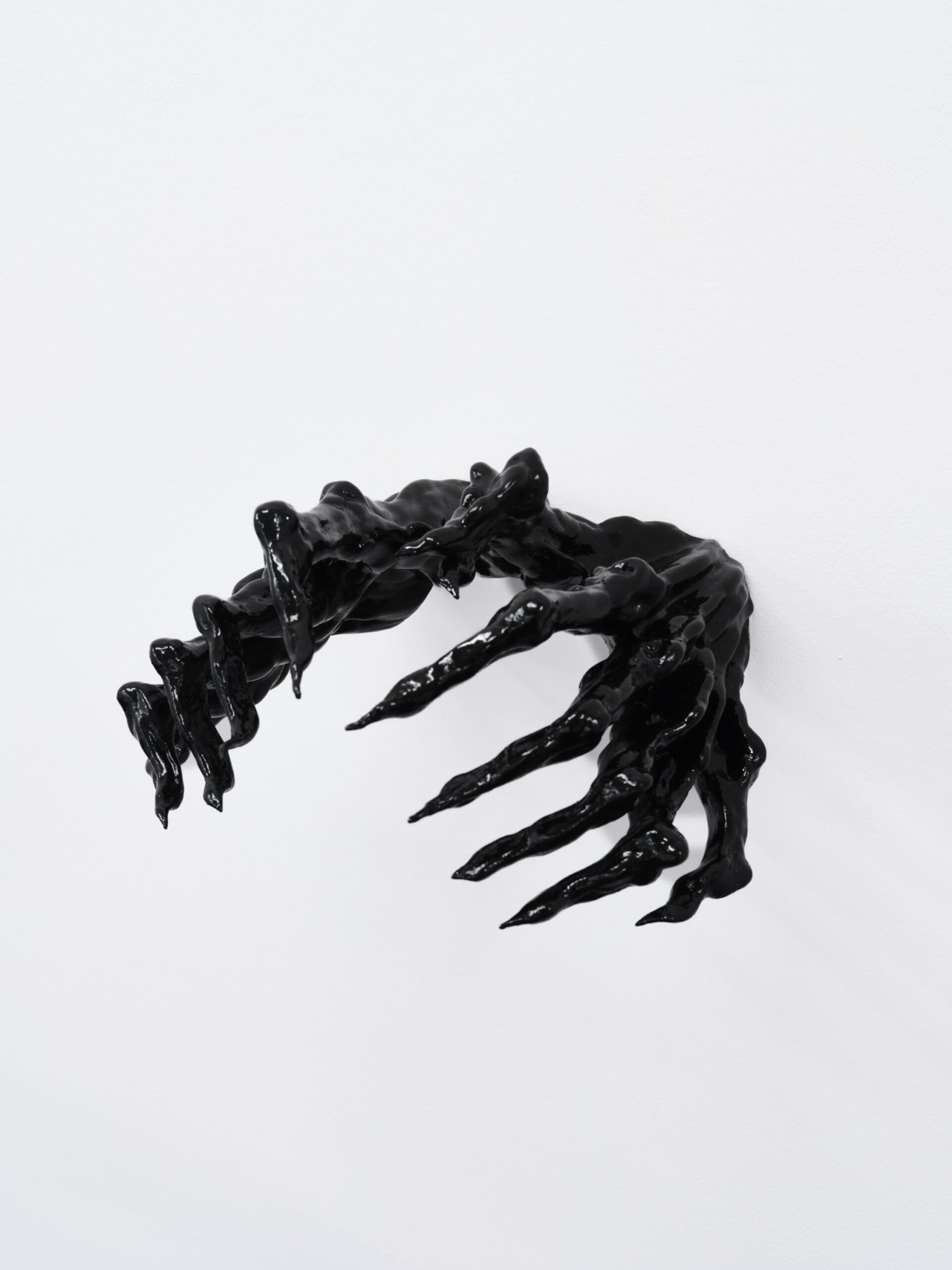
Predatory Manicure, 2026 – Hand-painted acrylic on 3D-printed PETG, 10 x 24 x 29 cm
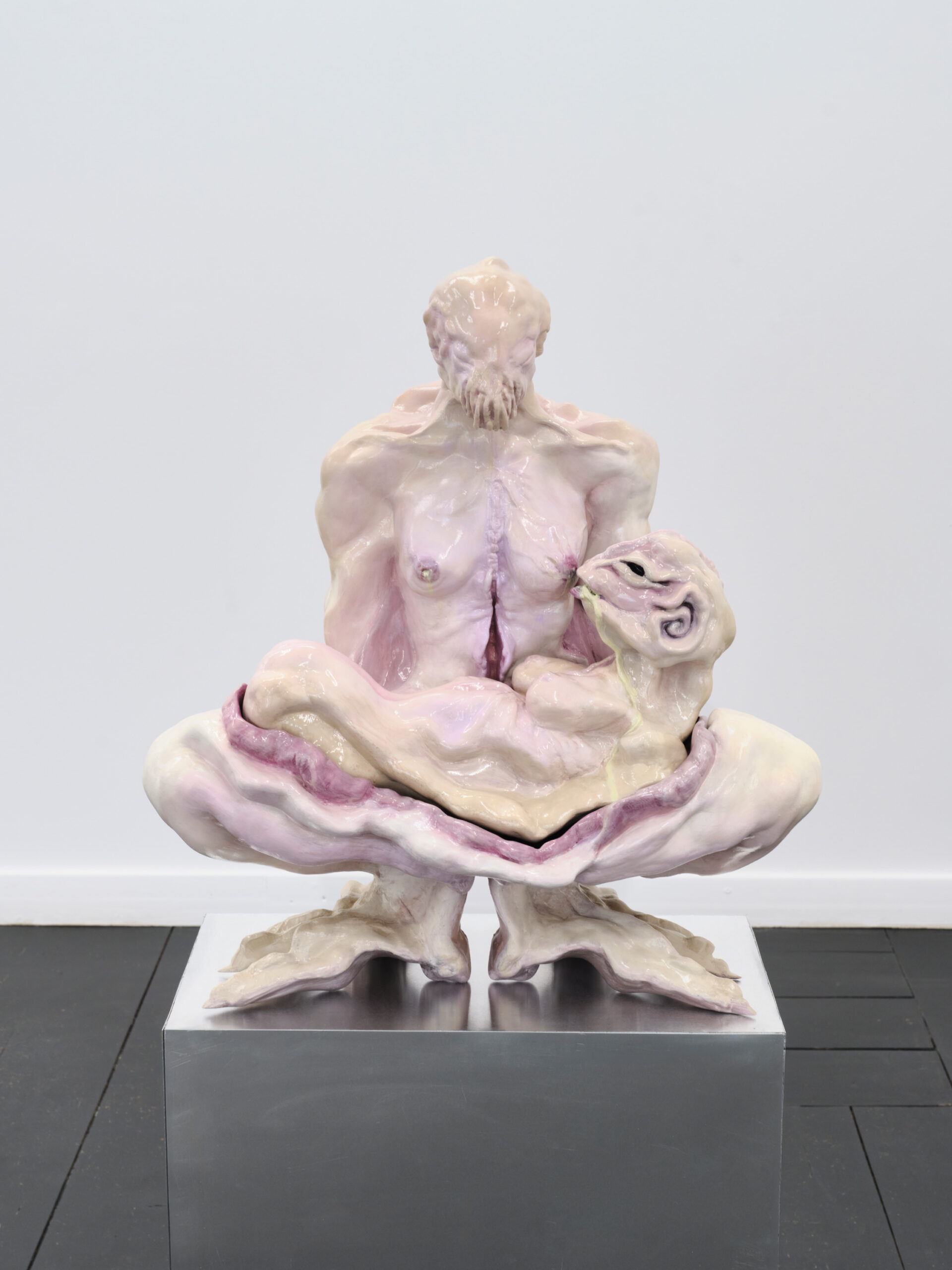
Sucked Out With My Mother’s Milk, 2026 – Hand-painted acrylic on 3D-printed PETG, 54 x 50 x 25 cm
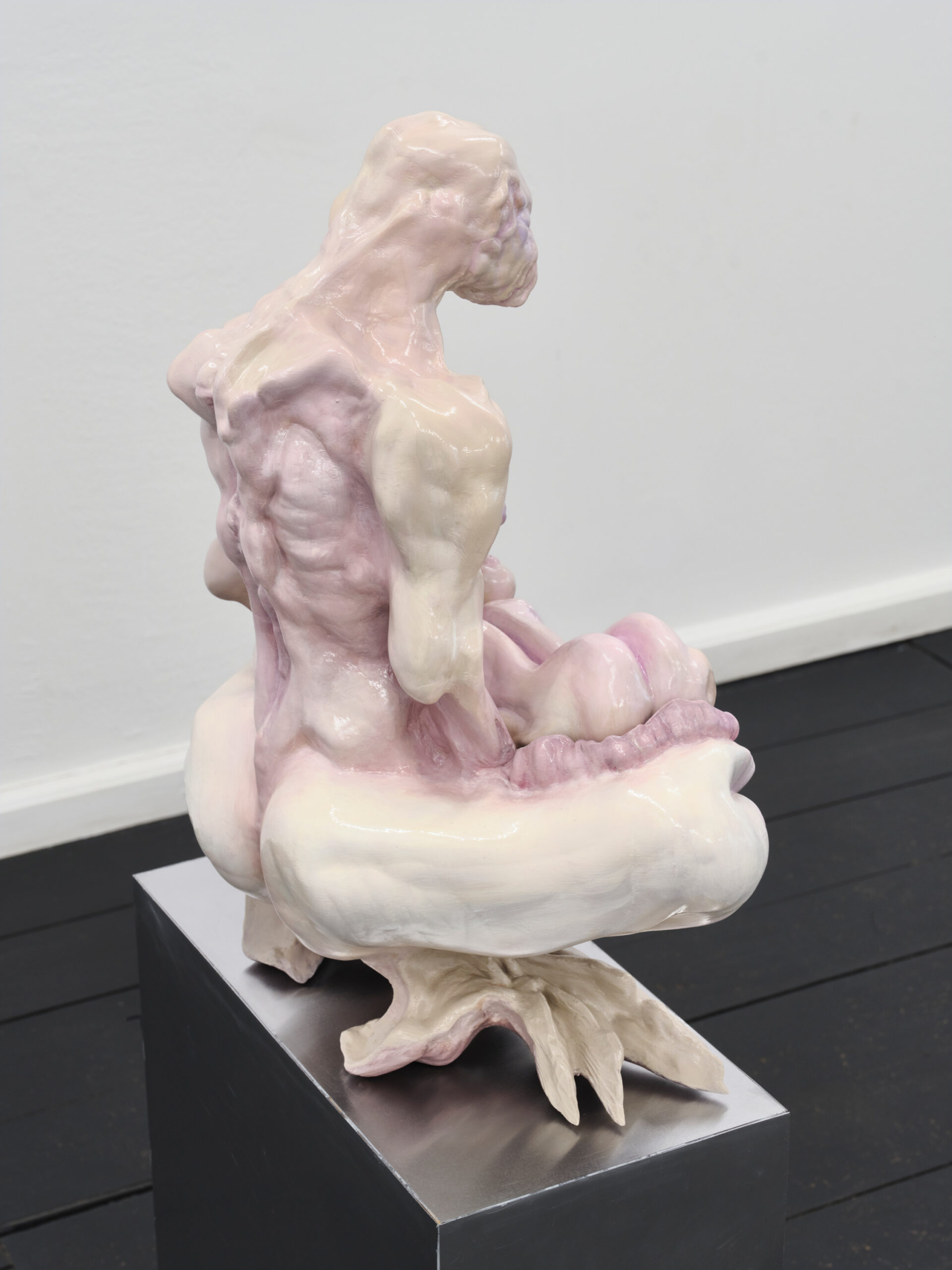
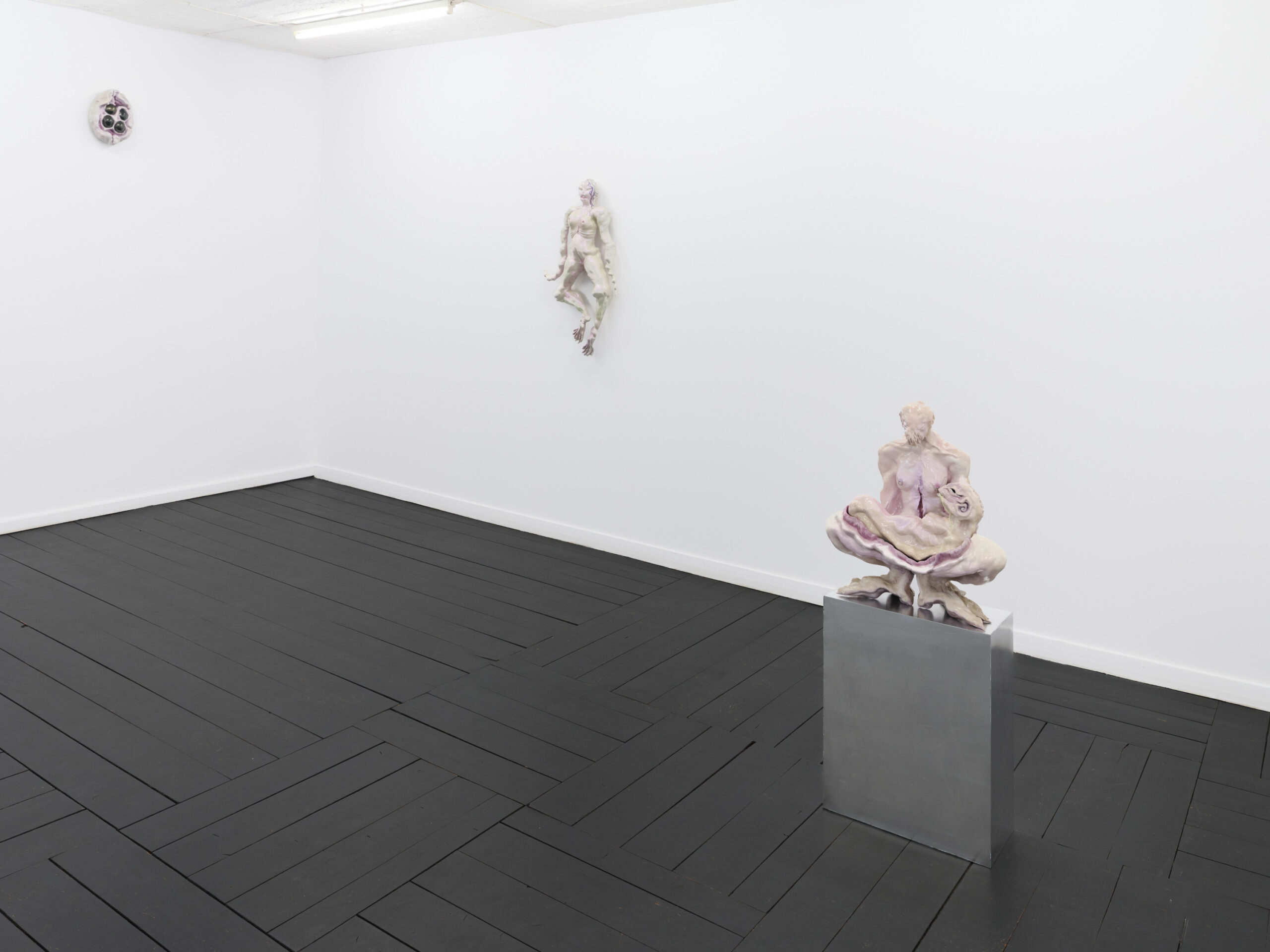
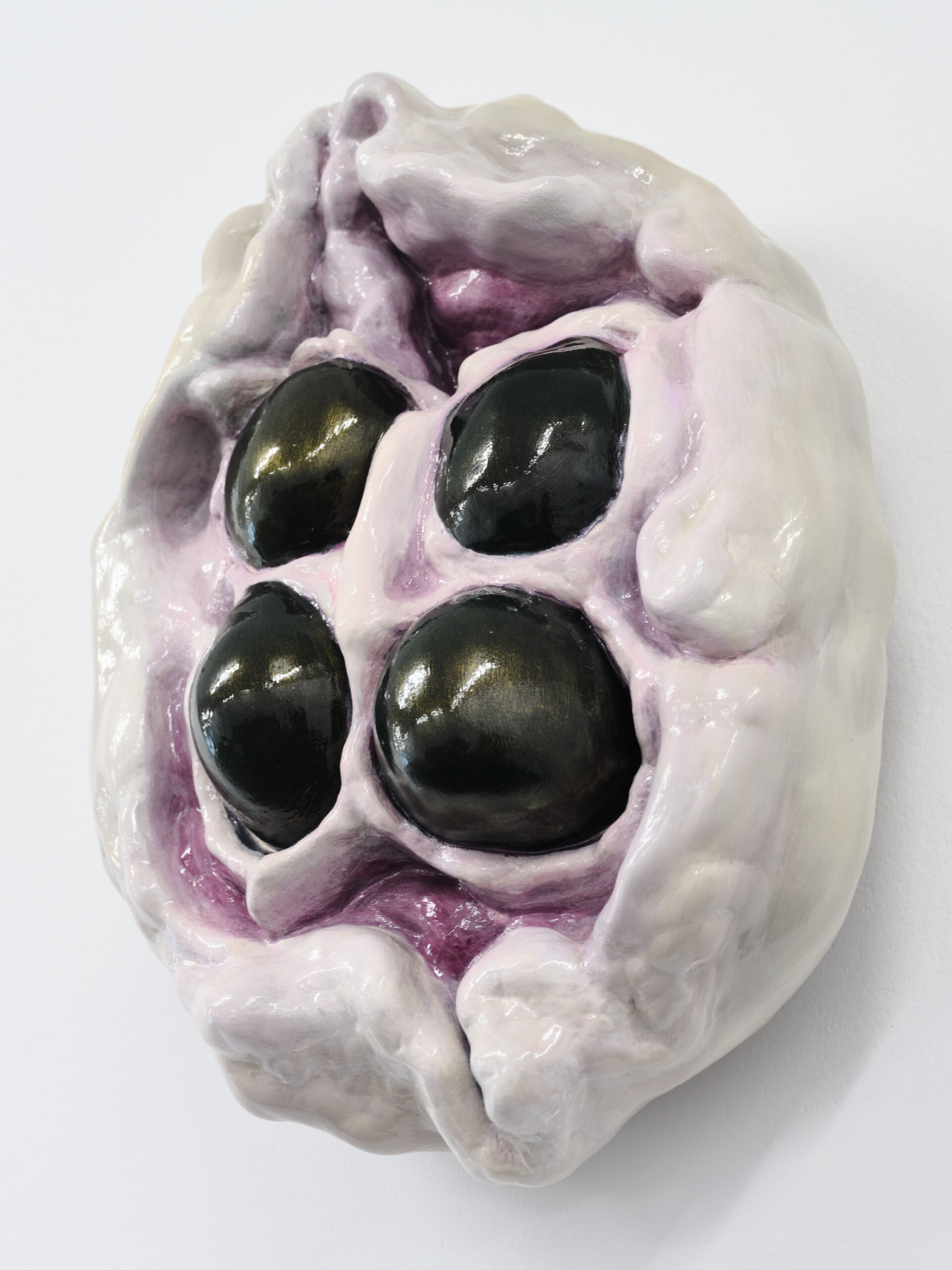
The Nest, 2026 – Hand-painted acrylic on 3D-printed PETG and clay, 30 x 23 x 12 cm
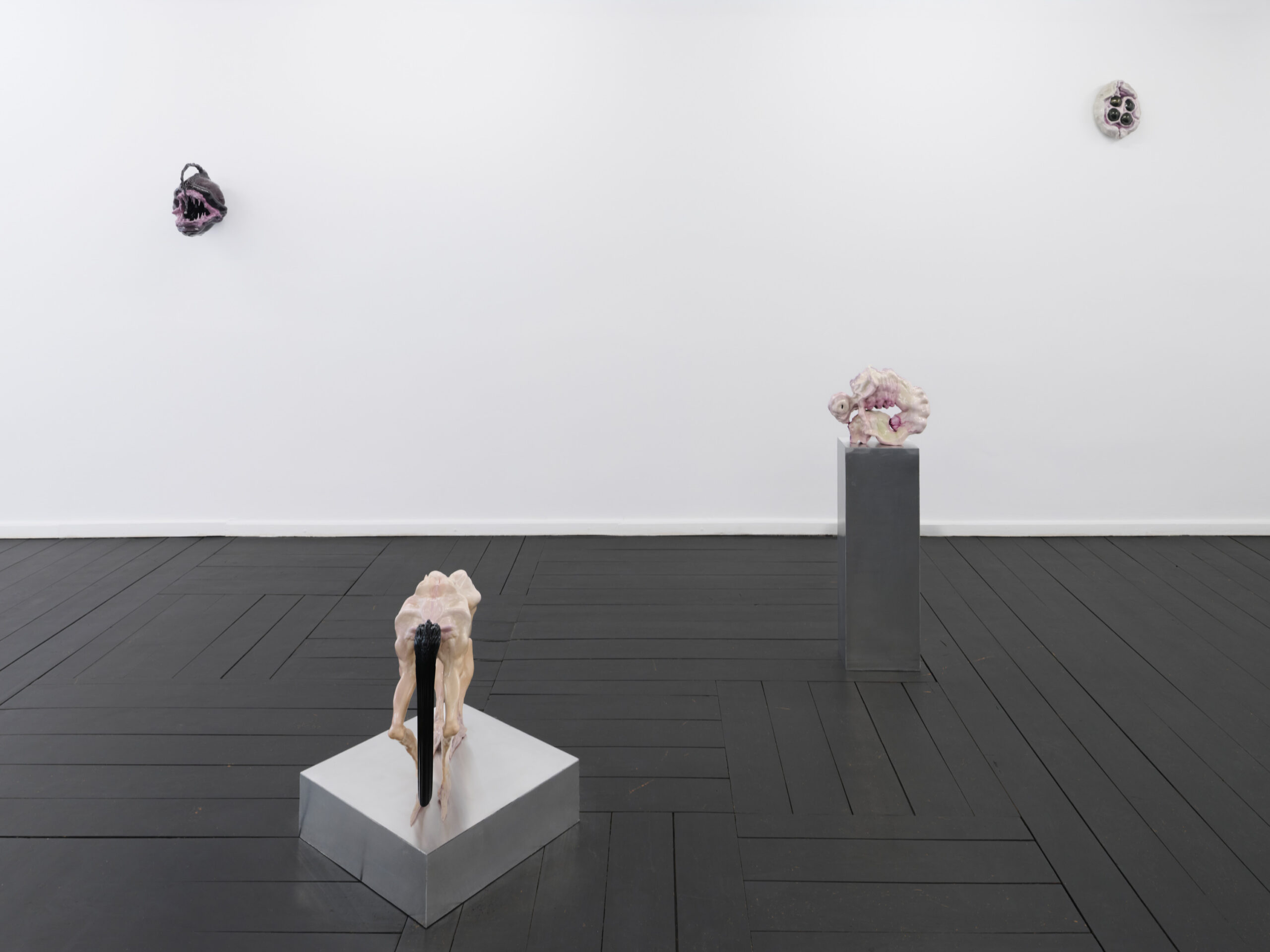
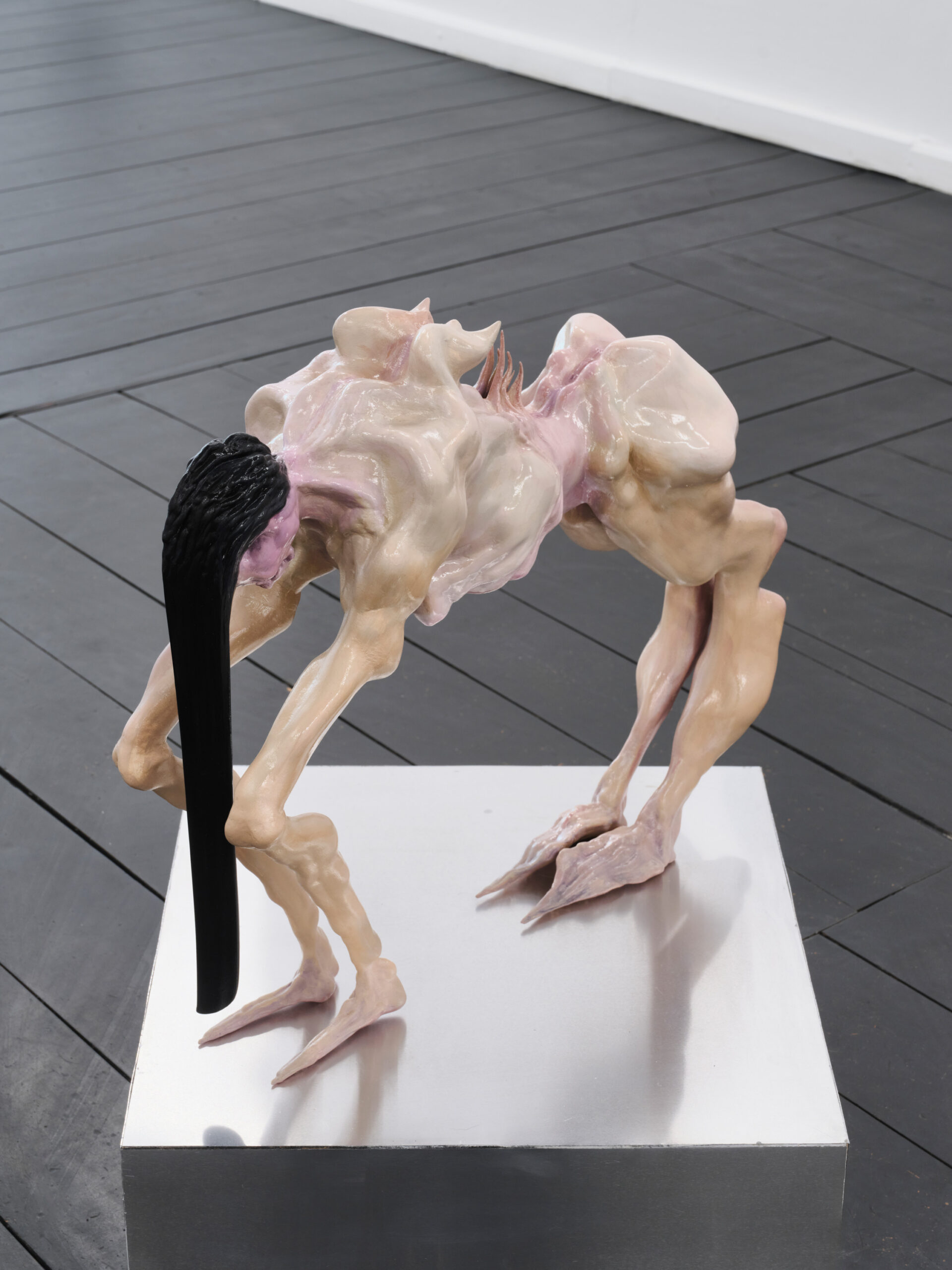
Let My Hair Down, 2026 – Hand-painted acrylic on 3D-printed PETG, 49 x 54 x 19 cm
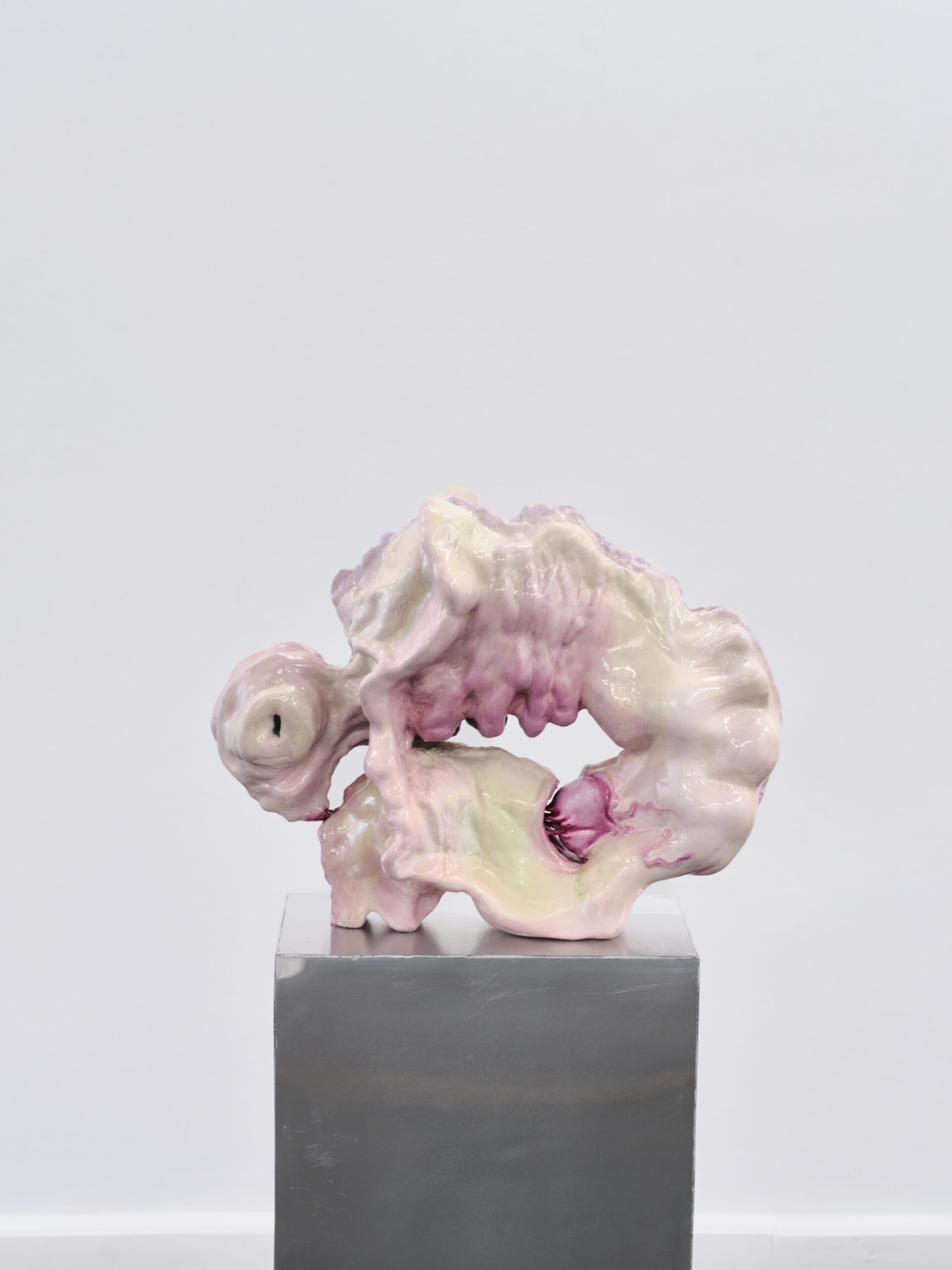
Consuming My Love, 2026 – Hand-painted acrylic on 3D-printed PETG, 28 x 36 x 16 cm
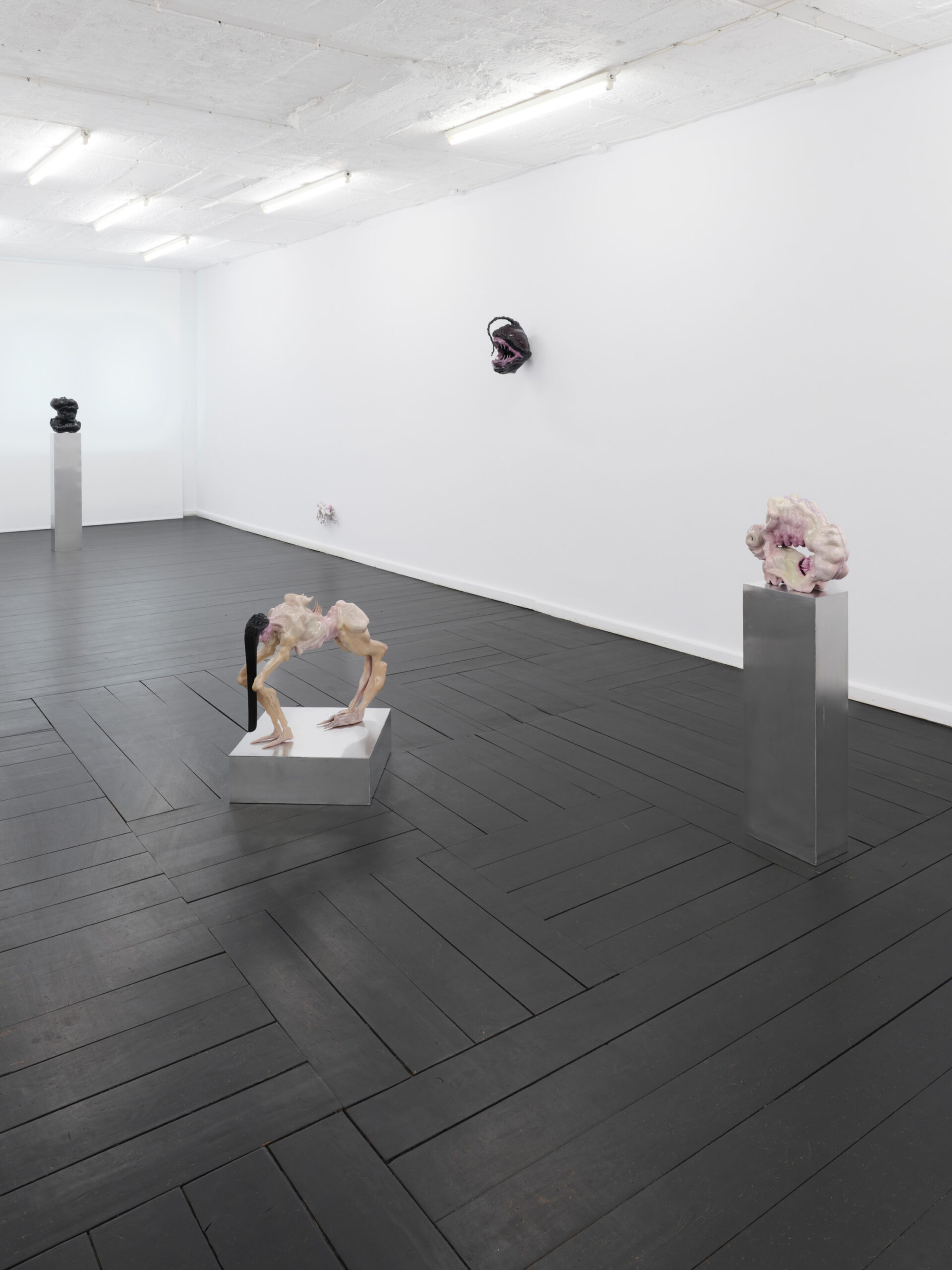
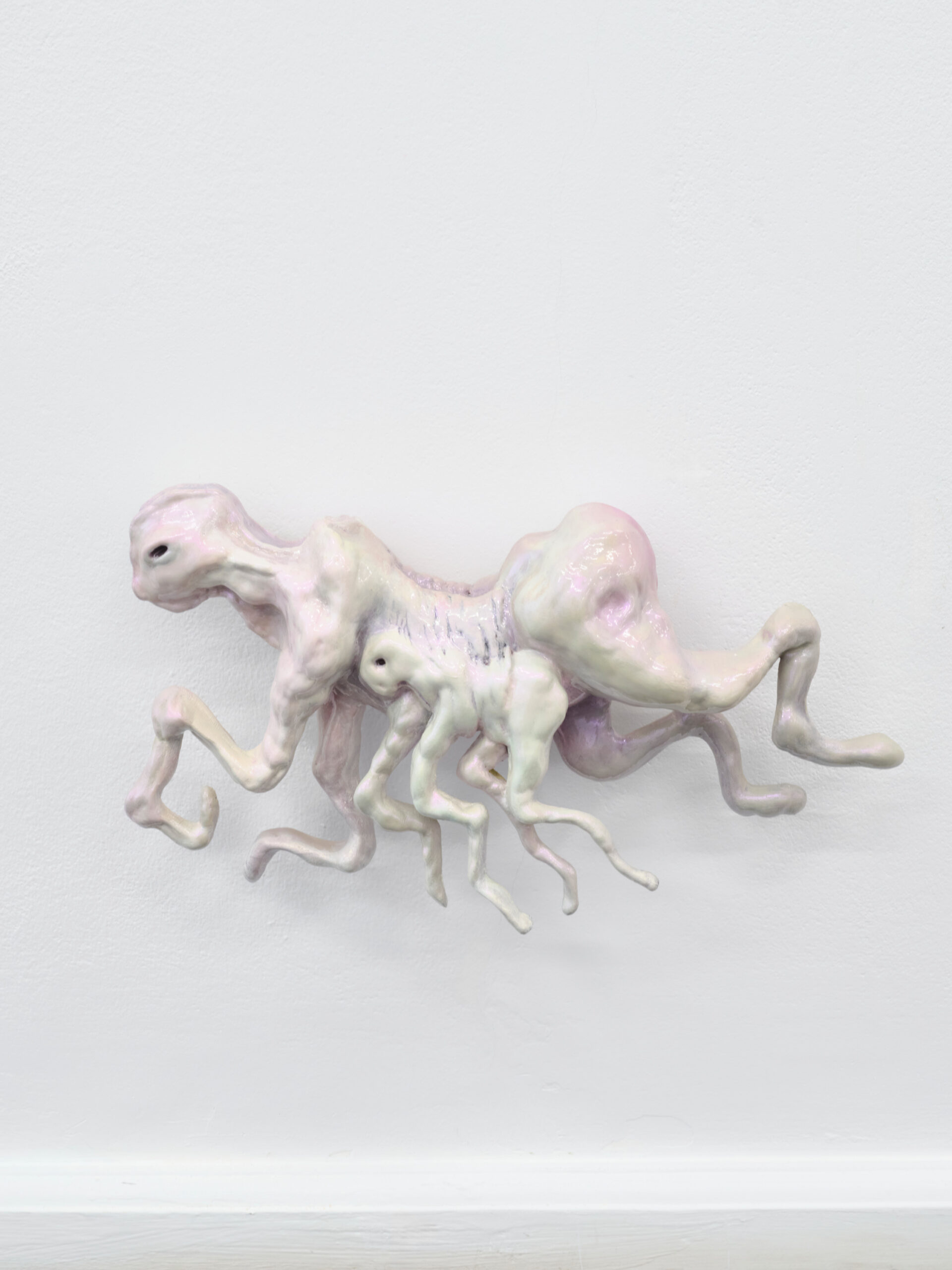
Beauty Spot, 2026 – Hand-painted acrylic on 3D-printed PETG, 21 x 35 x 7 cm
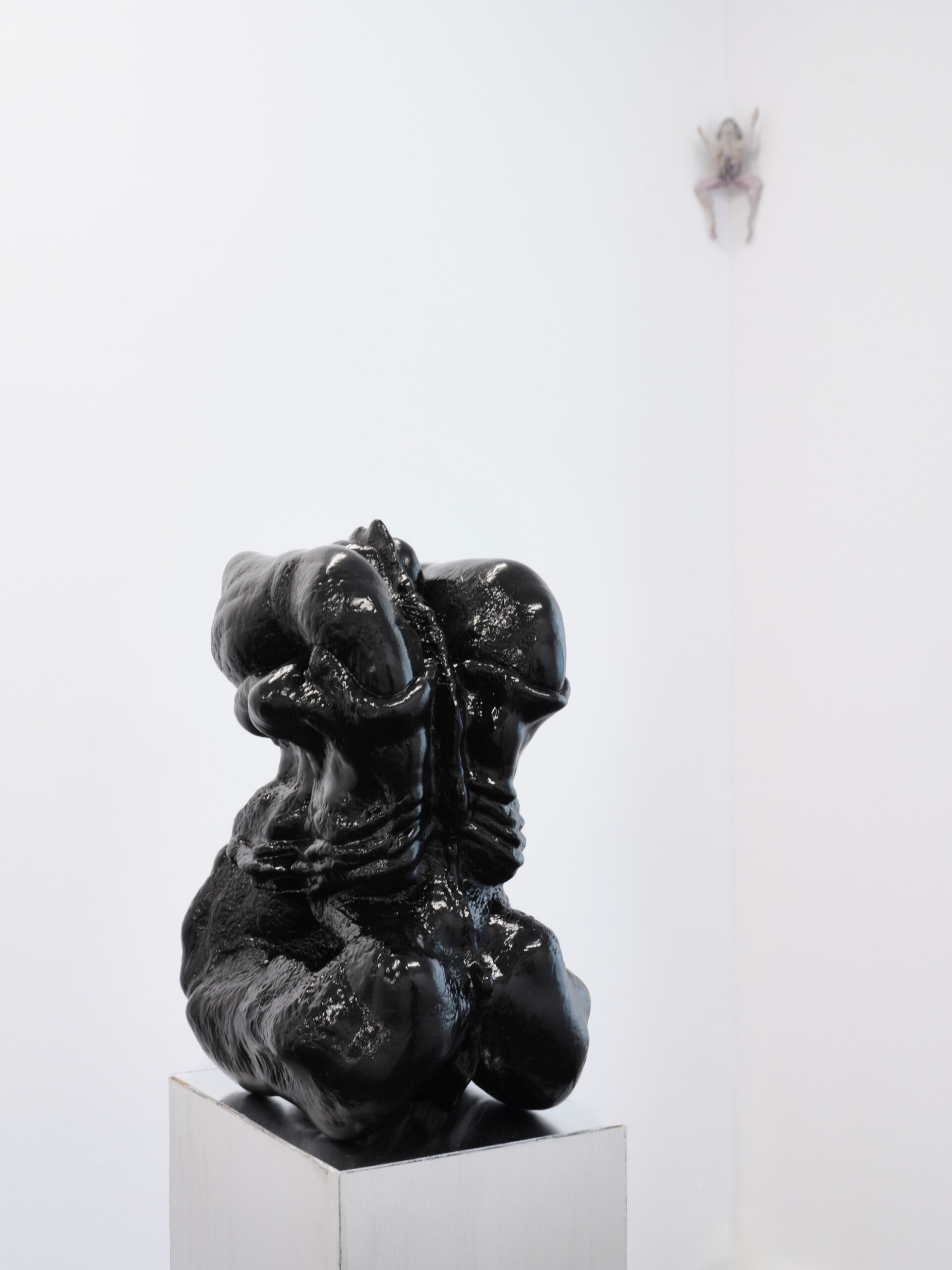
Siamese Lovers, 2026 – Hand-painted acrylic on 3D-printed PETG, 31 x 17 x 22 cm
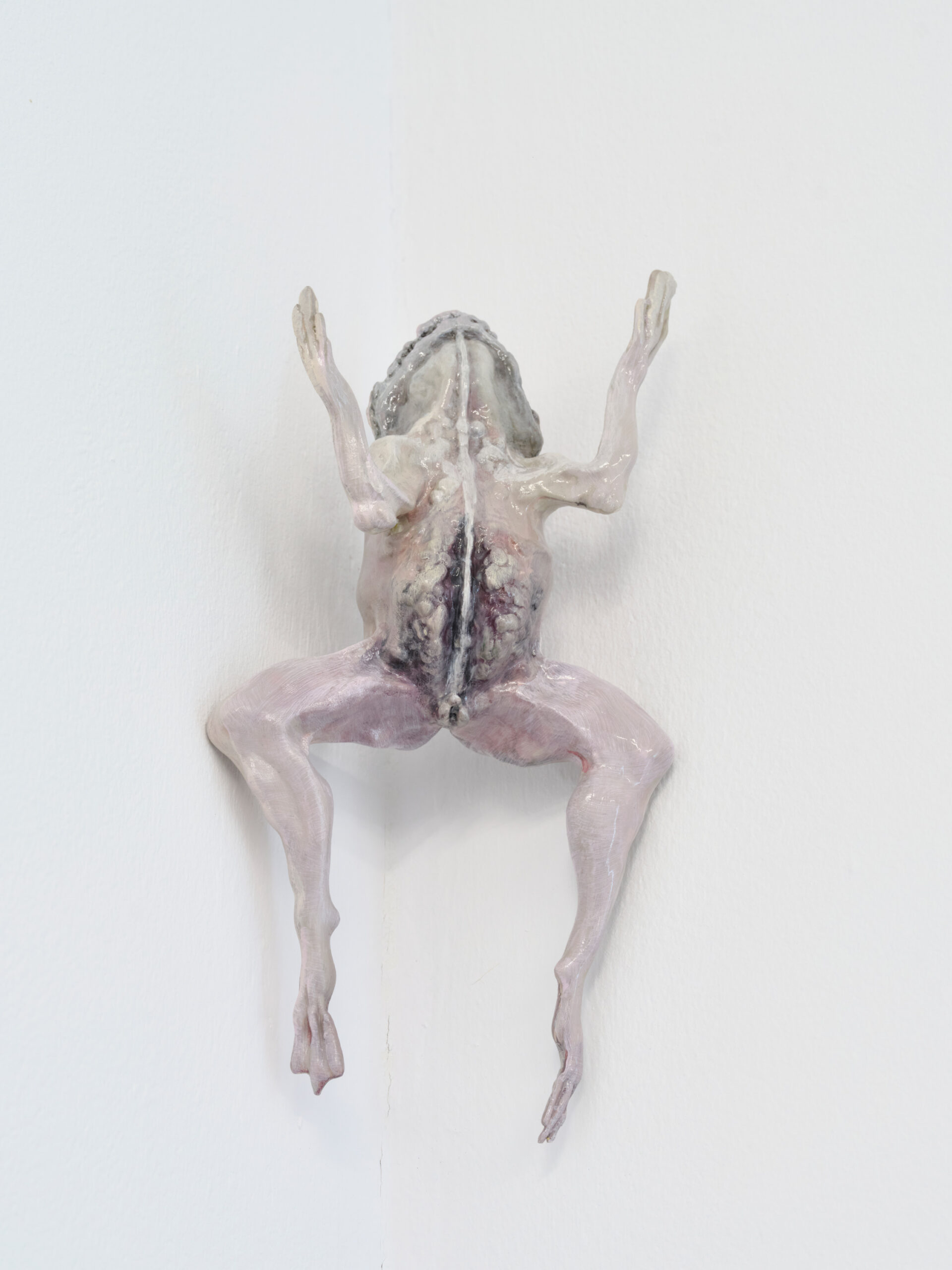
Boiled Over Low Heat, 2026 – Hand-painted acrylic on 3D-printed PETG, 24 x 13 x 7 cm
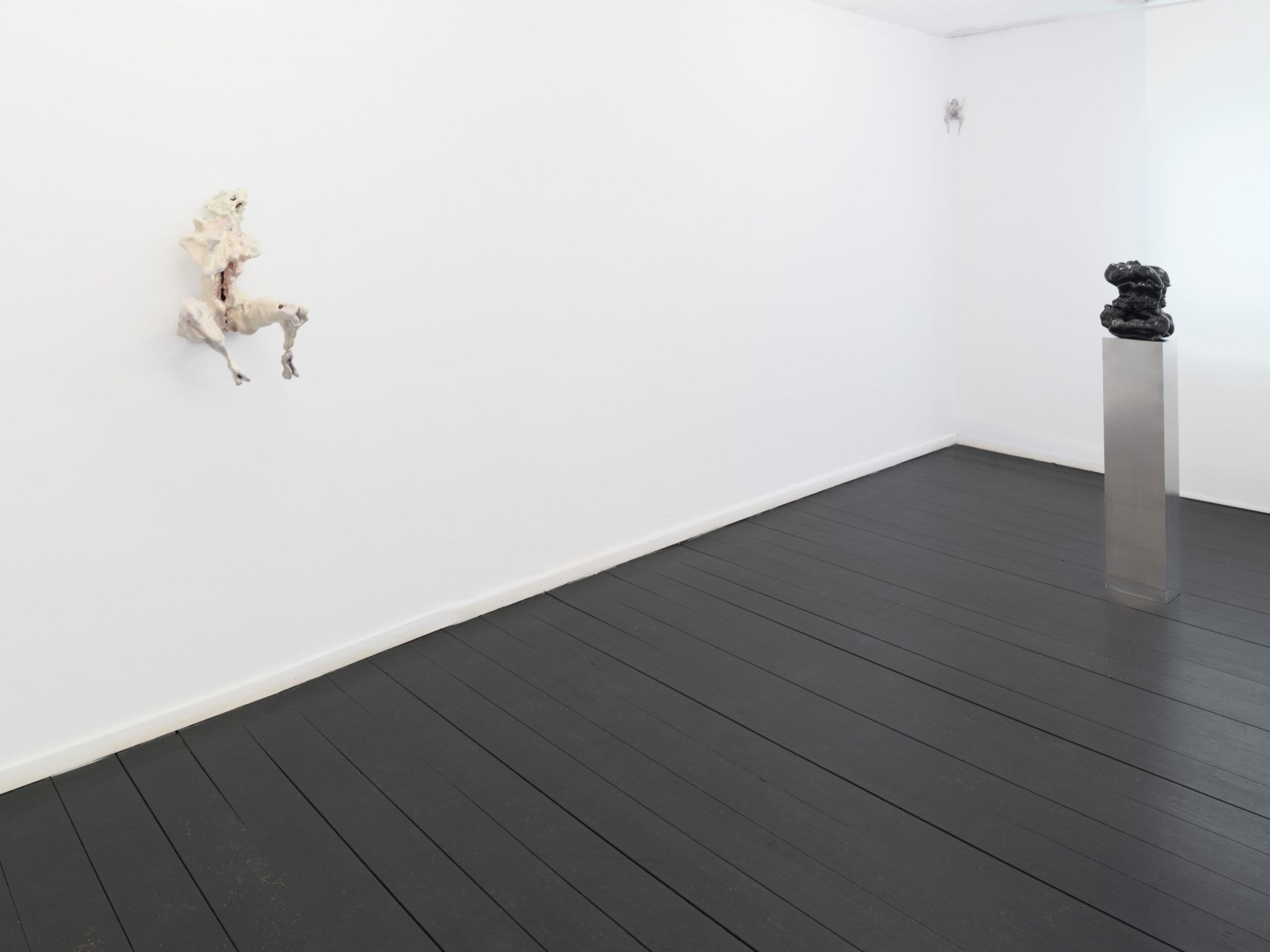
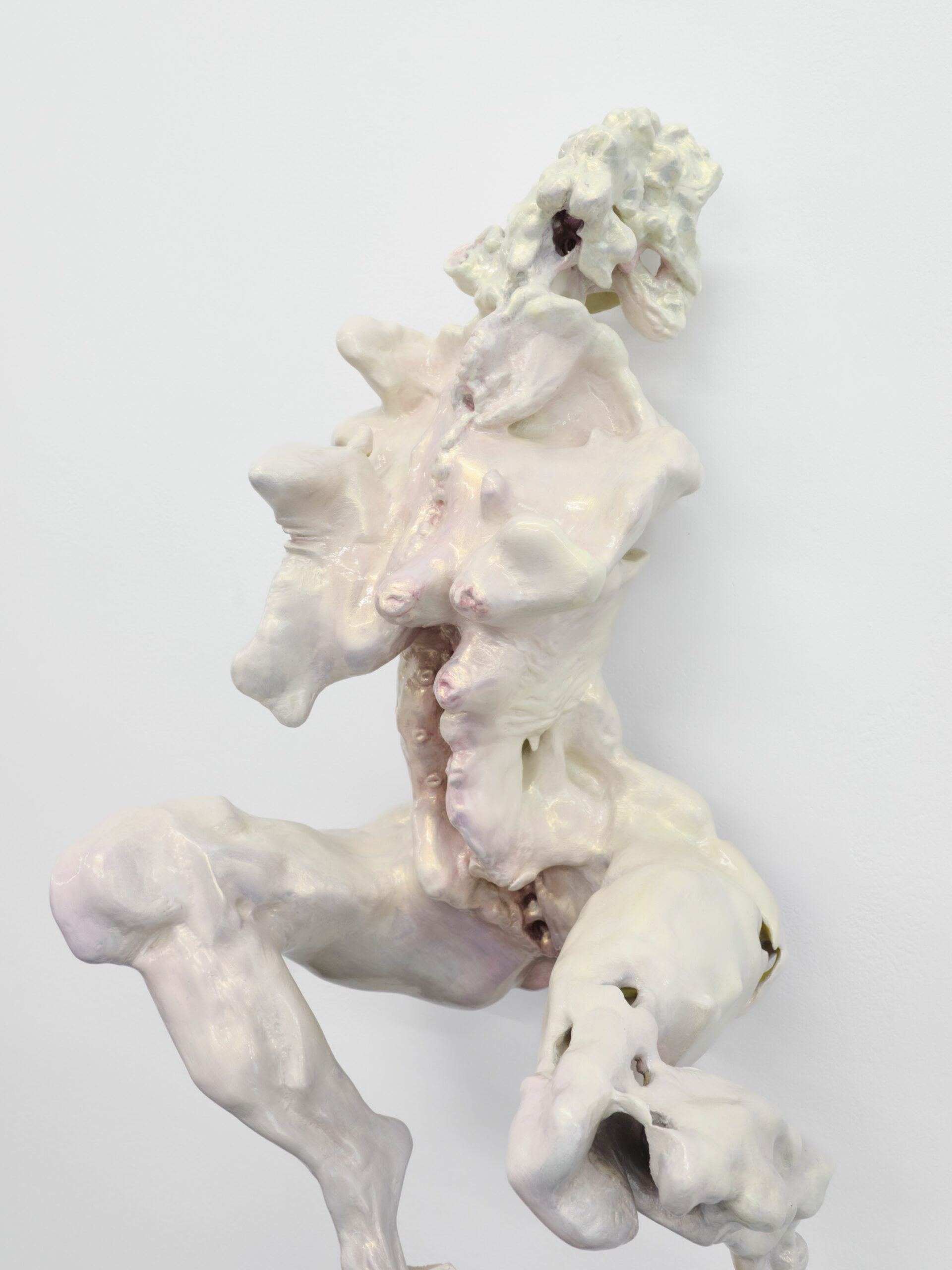
Fetal Dance to the Rhythm of a Lullaby, 2026 – Hand-painted acrylic on 3D-printed PETG, 56 x 34 x 28 cm
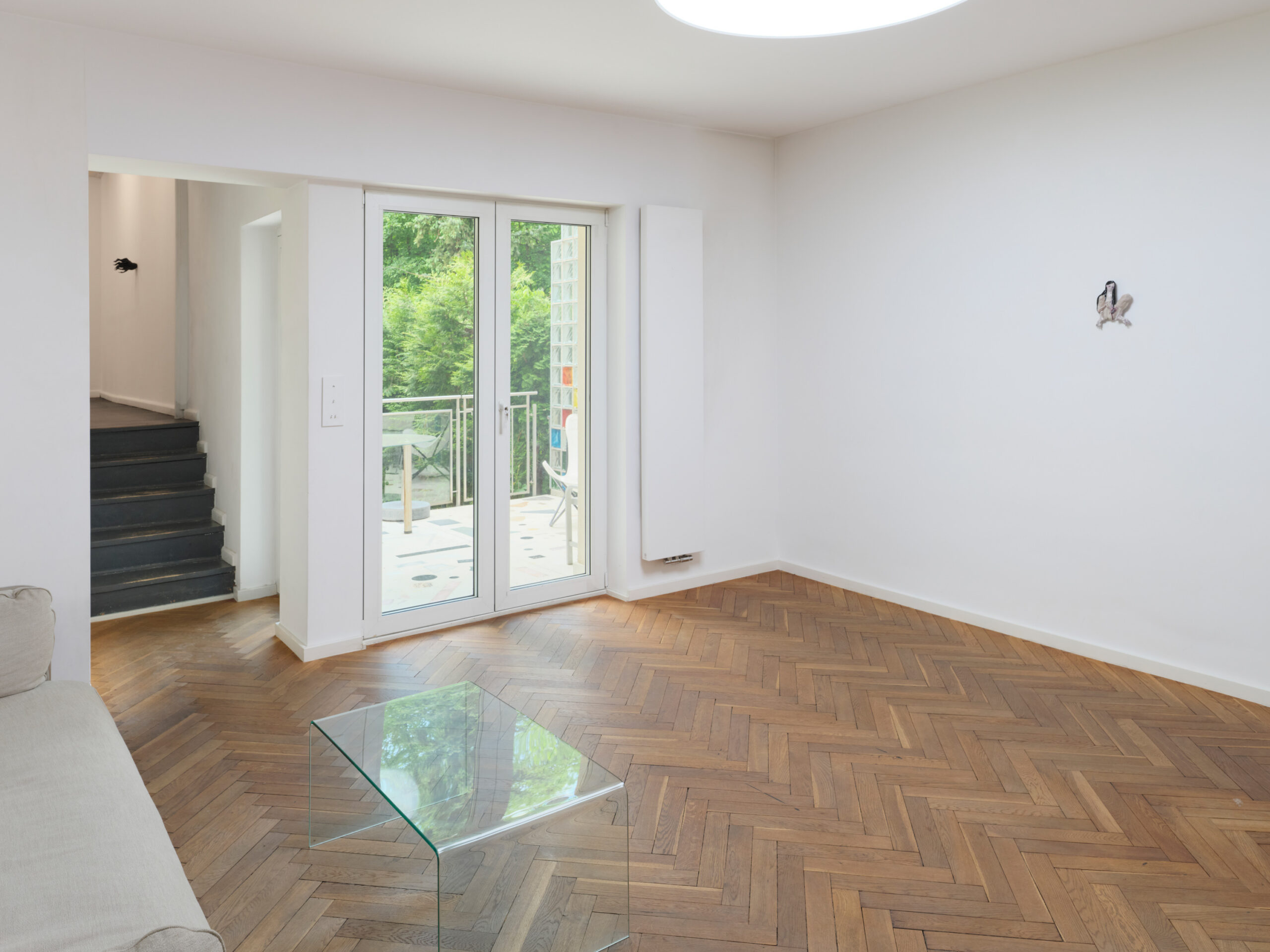
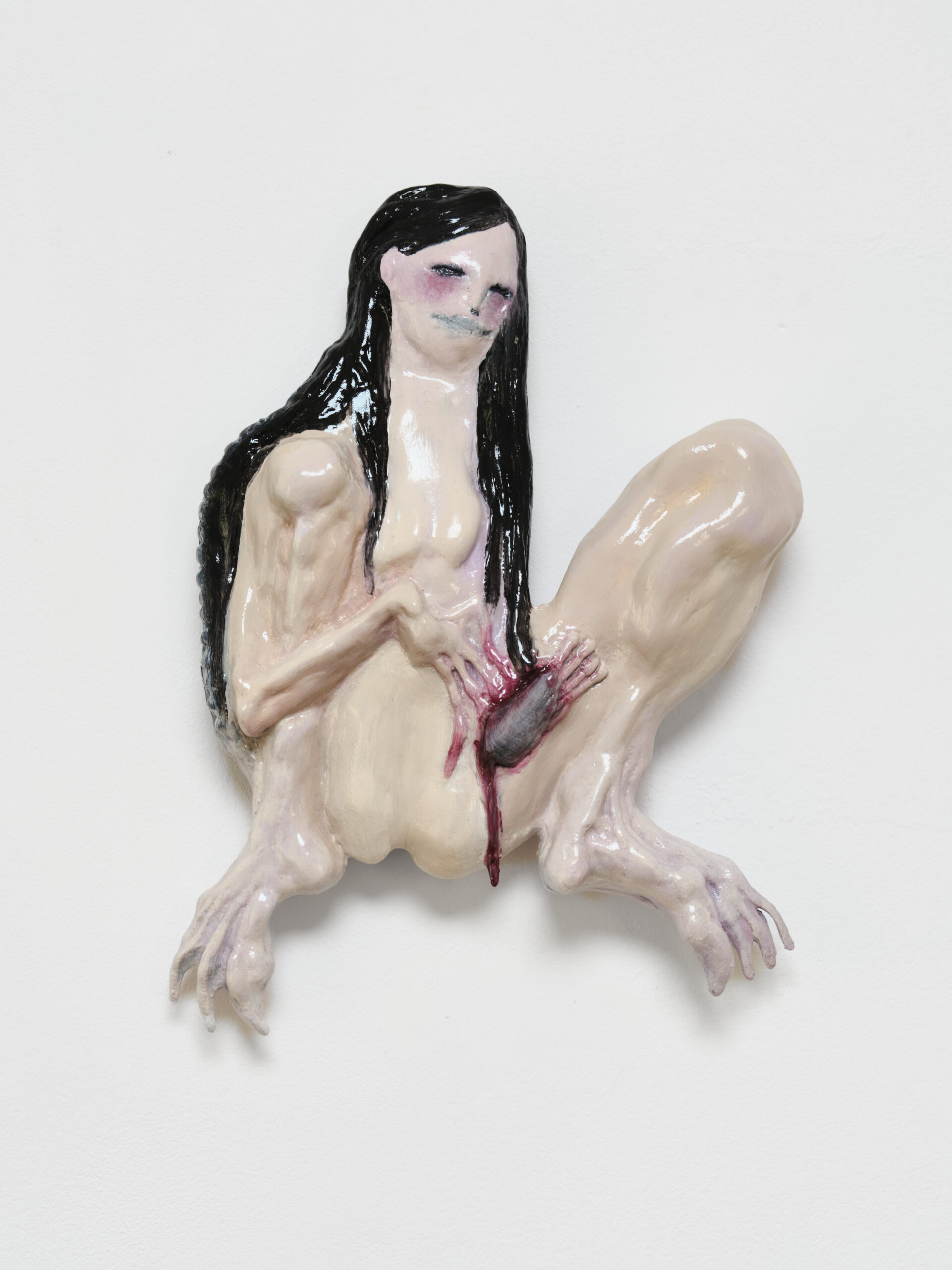
Curiosity of Destruction, 2026 – Hand-painted acrylic on 3D-printed PETG, 21 x 15 x 2 cm