Skinned and Spined
The exhibition Skinned and Spined invites an exploration of themes focusing on the interplay between human, animal, and material agency.
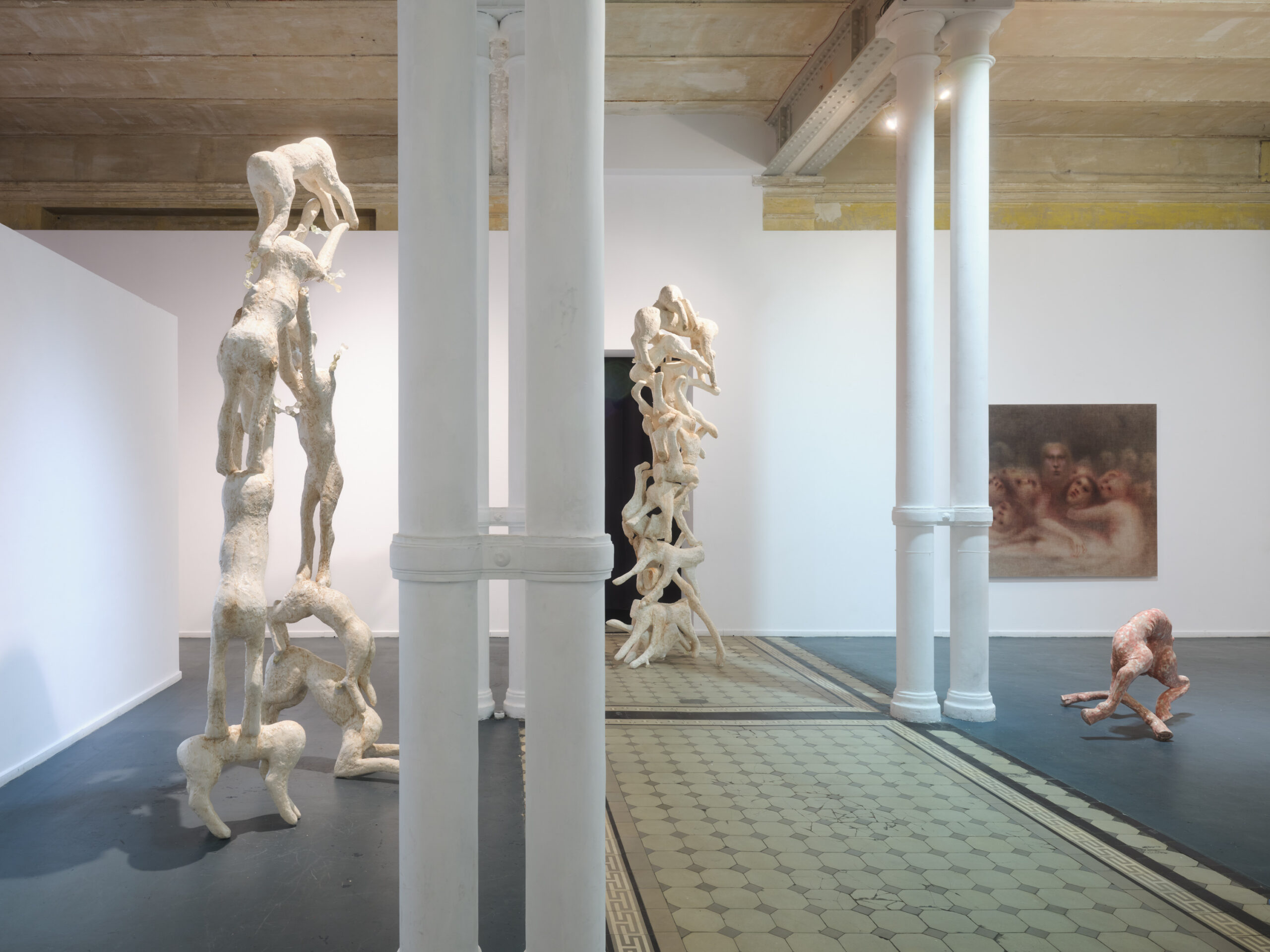
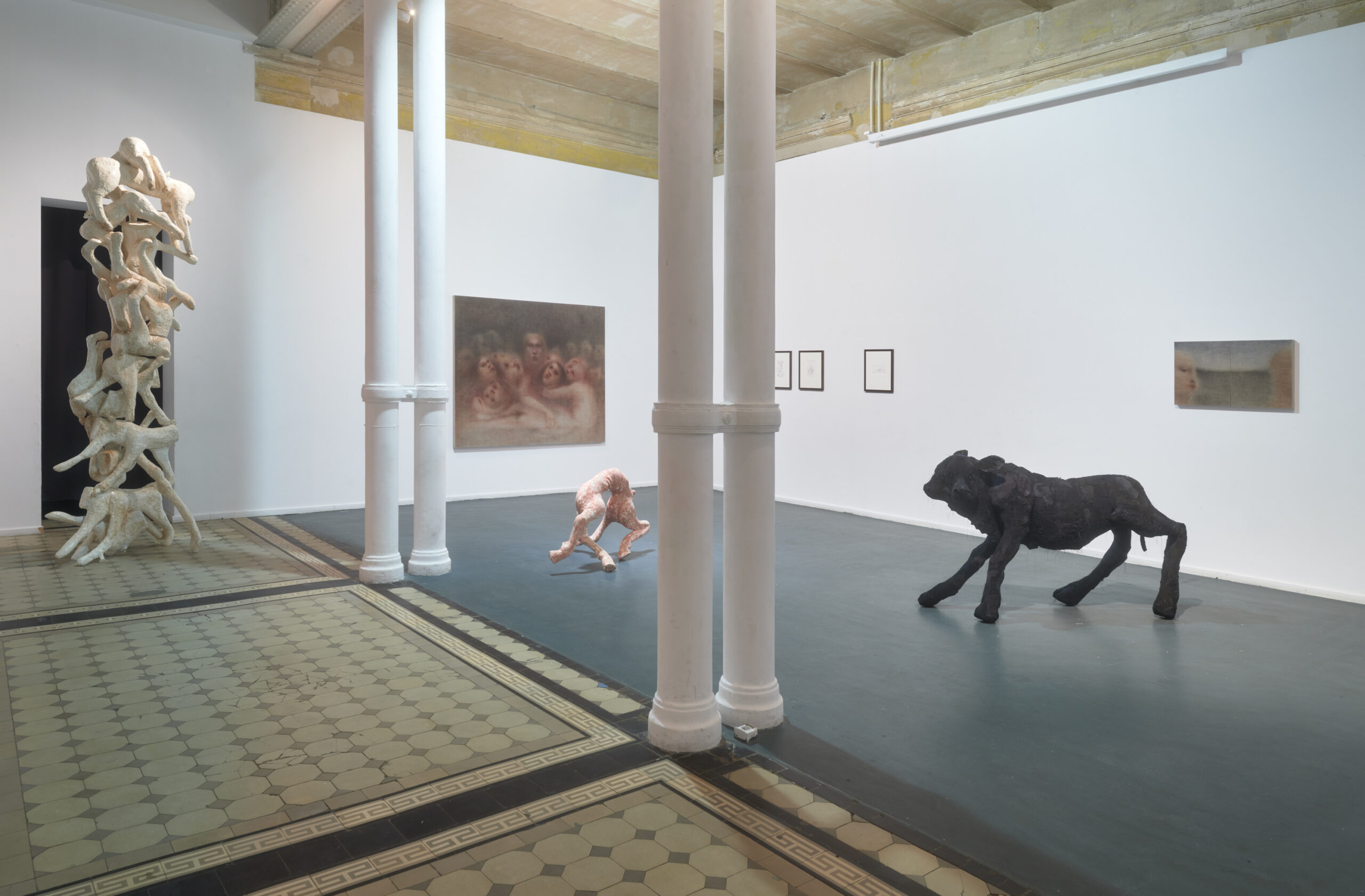
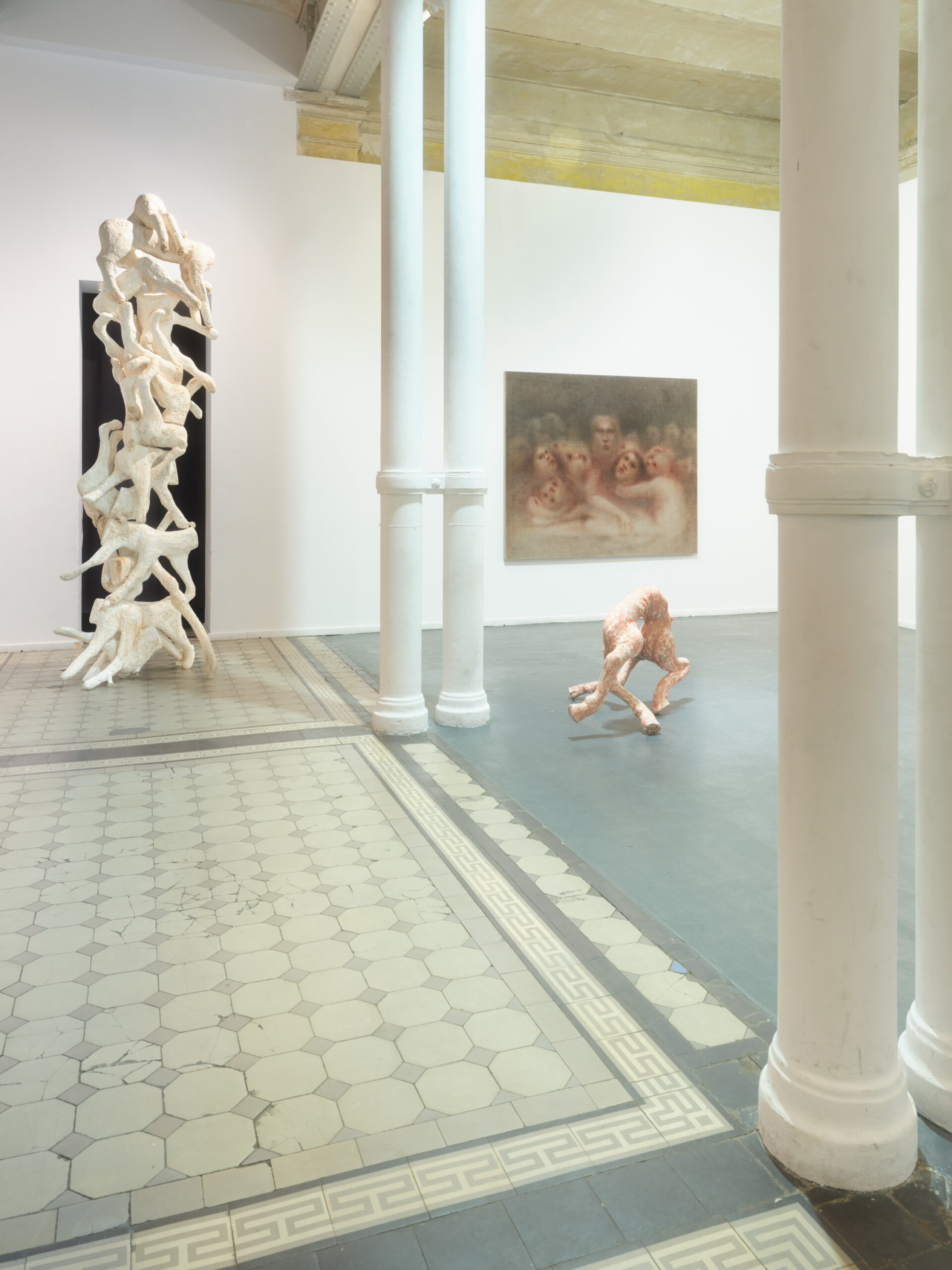
Jędrzej Bieńko’s paintings are created on raw linen, a surface that echoes the unrefined nature of the world itself. Despite the softness of his airbrush technique, there is no attempt to soften or obscure the underlying harshness. At the center of one of his works is a face with vacant eyes, staring directly at the viewer. It seems to communicate something unsettling — something difficult to contemplate, let alone accept. Surrounding this face are fragmented elements: bodies, skulls, limbs — disjointed pieces that defy coherence and create a deeply disorienting scene. This composition prompts a reflection on consciousness, raising the unsettling question: what is consciousness, really?
It is not necessarily exclusive to humans. In the foreground, a hand rests on a stretched-out body, appearing weak and vulnerable. It suggests the fragility of the physical world, much like the body itself. The figure, lying abandoned and incomplete, evokes mortality — helpless, anchored to the earth, and bound to the endless cycles of life, death, and decay. Around it, heads and skulls tumble like dice in a game of chance, reinforcing the idea that existence is marked by repetition — constant, arbitrary, and inevitable cycles of becoming and dissolution.
Bieńko’s work challenges the idea that consciousness is unique to humans. Rather, it suggests that consciousness exists everywhere — in dust, in air, and perhaps even in things we would rather ignore. The face in the painting is not the face of an individual, but a symbol — a mask that represents something much larger. It reflects the shared experience of all things, suggesting that we are all interconnected in this vast, chaotic existence. The hand on the body emphasizes that we are all part of this, whether we want to acknowledge it or not. Life, death, and consciousness are tangled together — interdependent and inseparable. The raw linen reinforces the starkness of the painting’s message. It is rough and unforgiving, much like the world itself, leaving no room for illusion or escape. The body and flesh are the only tangible constants. All abstract ideas and idealizations ultimately dissolve in the face of this unvarnished awareness. In the end, Bieńko’s work compels the viewer to confront this stripped-down condition of existence, offering no comfort, no refuge — only exposure.
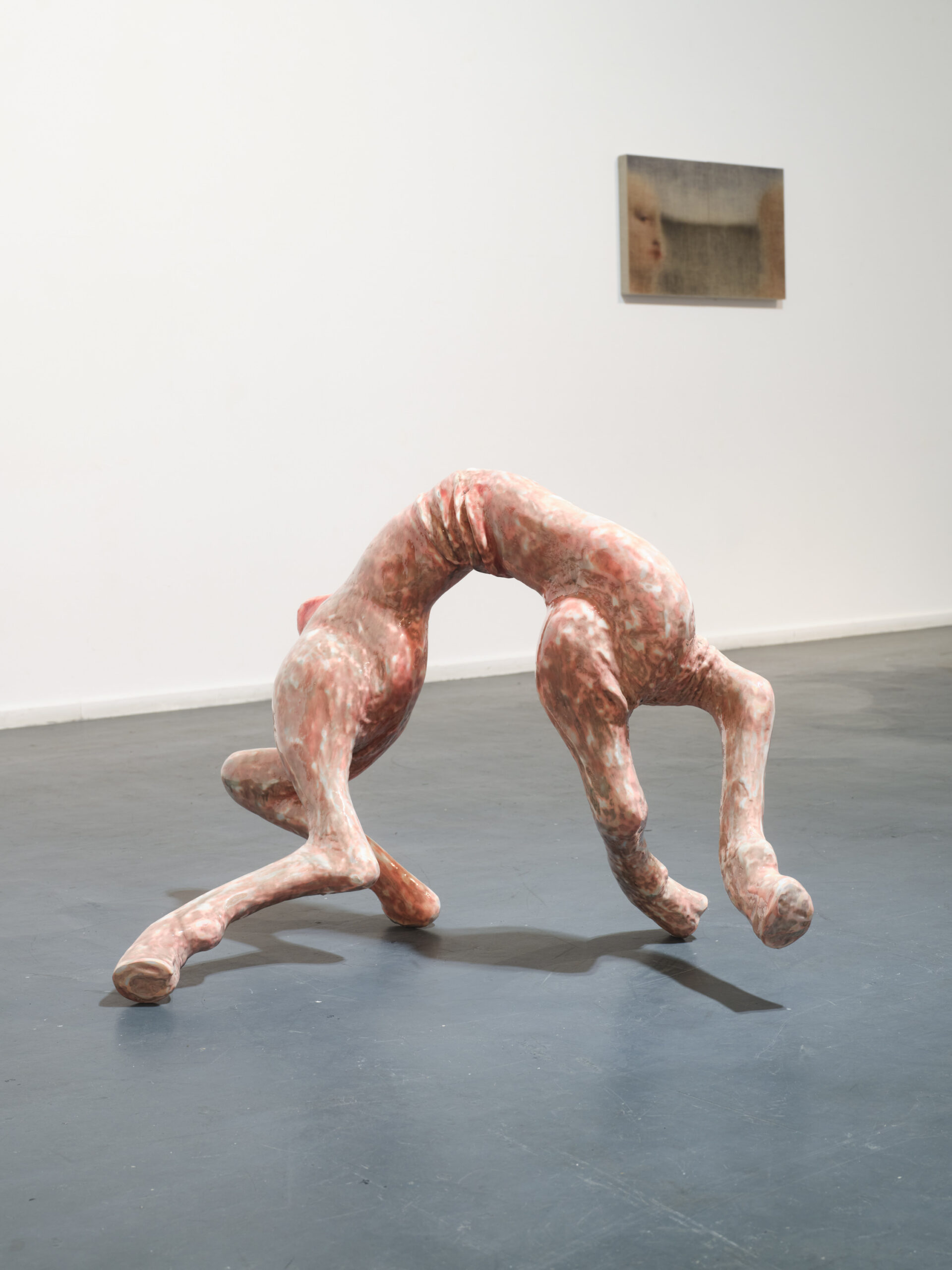
In Sally von Rosen’s sculptures, the contorted, headless quadruped forms evoke an immediate sense of physical tension, but their twisted postures do not solely suggest pain. Cast in resin, these bodies — stripped of heads and even the anatomical possibility of a neck — occupy a space between vulnerability and strength. Their convulsions can be read not just as expressions of suffering, but also as gestures of transformation, resistance, or adaptation. The ambiguity of their movement opens the door to multiple interpretations: perhaps a body bracing itself, stretching toward something, or even performing. Rather than presenting fixed or tragic forms, von Rosen’s creatures seem to exist in a state of becoming — caught in the middle of a gesture that refuses resolution. The absence of heads prevents us from projecting emotion or narrative in a conventional way, shifting the focus toward the physicality of the forms themselves. The viewer is left to interpret these tensions through posture and relation, rather than expression. In this way, the works challenge traditional hierarchies of meaning, suggesting that agency and affect might arise not from identifiable features, but from movement, material, and relational intensity.
Several of these sculptures are modular, conceived not as static objects but as elements in a potentially endless configuration. Stacked vertically, they form columns of contorted bodies — acrobatic and architectural at once. Without a clear front or back, they resist directional reading, behaving almost like palindromes — symmetrical, reversible, and indifferent to orientation. This indeterminacy underlines their refusal to embody a single identity or narrative, instead emphasizing a state of continuous becoming. This resistance to fixed form also speaks to a deeper challenge: the difficulty of articulating in language the kind of material agency these works suggest. Our linguistic and grammatical tools often fail to account for the liveliness of the non-human world. There is no widely accepted syntax to describe the force of resin, the silent pressure of a twisted limb, or the latent energy of a form that is both object and gesture. Von Rosen’s sculptures seem to inhabit precisely this gap in expression — they assert a kind of presence that exceeds what words can capture, demanding a new sensitivity to the capacities of matter itself.
This exploration of presence and absence continues in a separate work that resembles a monochrome painting. At first glance, it appears minimal, almost malevitchian, but its surface catches the light differently. It doesn’t reflect the viewer like a mirror, but rather like a shadow — faint, partial, spectral. Behind this reflective veil, the resin reveals subtle scrapings, traces that speak of friction, gesture, or erasure. It suggests not a void, but a memory held within the material, as if the surface had recorded the passage of time or the movement of a hand. This work, like the sculptures, resists finality: it is less an image than an event — quiet, persistent, and unresolved — inviting the viewer to question where meaning resides, and whether it lies on the surface, behind it, or in the act of looking itself.
Further complicating the relationship between body, machine, and imagination is a series of drawings — mechanically produced replicas of Hieronimus Bosch’s fantastical sketches. Recreated by an automatic drawing device, these images depict distorted human figures, hybrids: a one-legged man, a tree sprouting ears, bodies fused with tools or architectural elements. Stripped of the immediacy of the artist’s hand, these drawings gain a strange, clinical clarity. Yet rather than emptying them of life, the machine’s involvement invites us to reconsider the boundary between imagination and mechanism. The grotesque, reinterpreted through automation, becomes a commentary on our own entanglement with technology, with the non-human and the increasingly fluid definition of the human. Together, von Rosen’s works form a dense and nuanced meditation on form, agency, and material. They invite us to look beyond the human, to imagine a world in which bodies shift, matter speaks, and the grammar of experience must be reinvented to accommodate what we can feel, but not quite name.
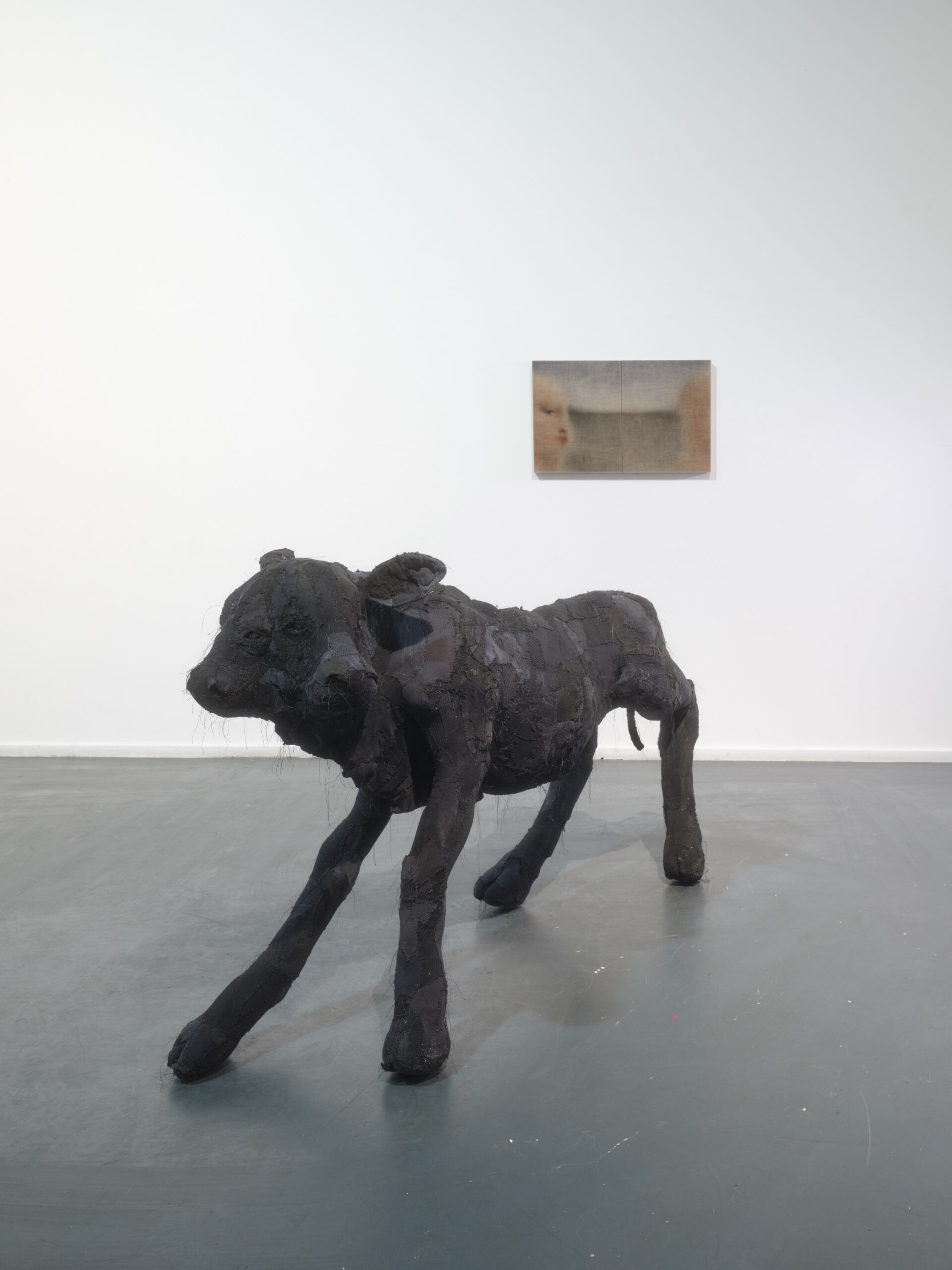
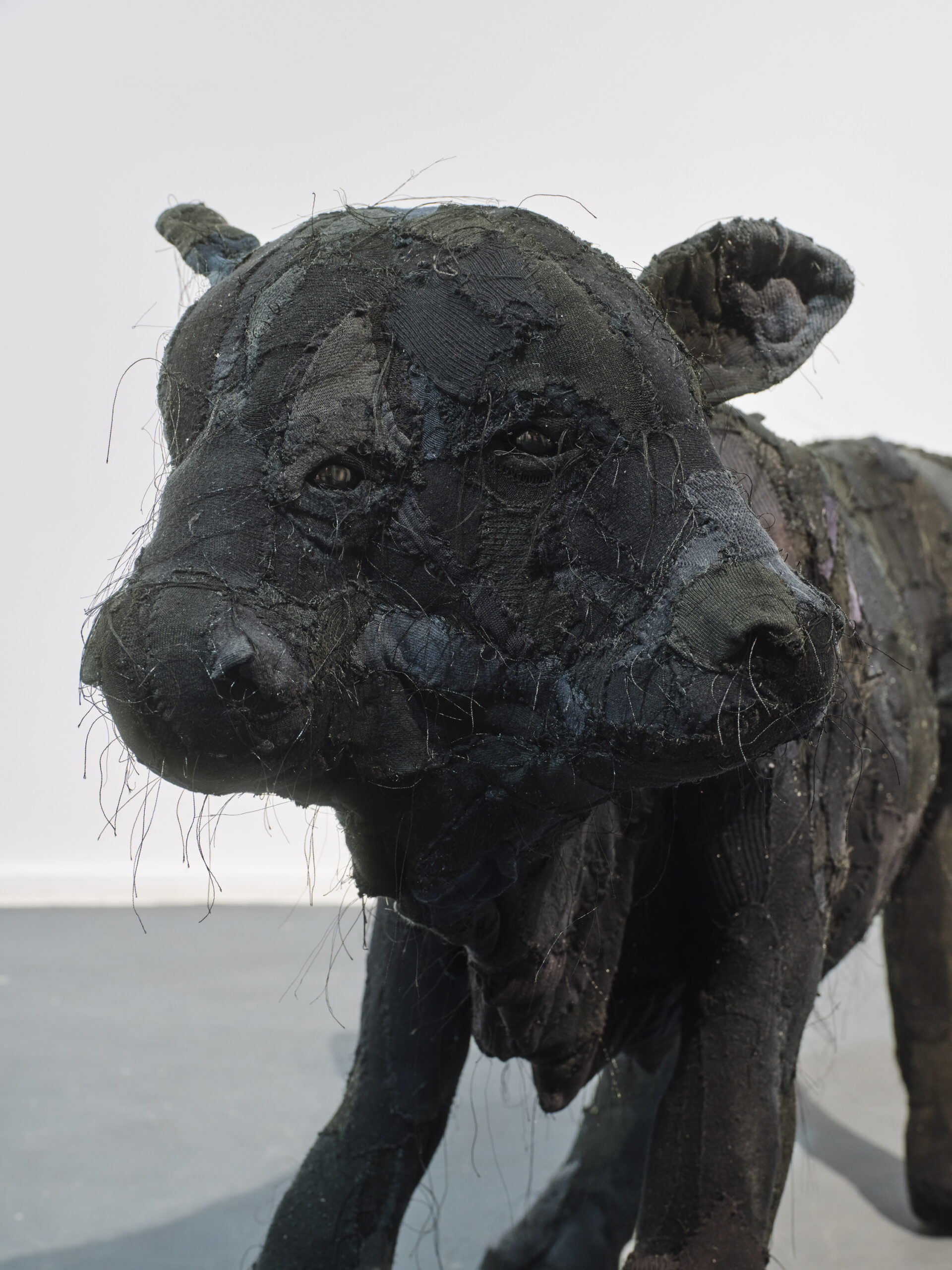
Jan Baszak’s sculptures provoke reflection on transformation, memory, and the agency of materiality. One of his works features a life-sized, two-headed calf made from worn black socks in varying shades. This sculpture presents the calf’s dual-headed form as a symbol of transformation rather than monstrosity. Rather than representing a grotesque divergence, it evokes an ongoing process of becoming, tied to the natural world. The calf’s unusual form embodies the unpredictable forces of change, challenging our traditional notions of symmetry, corporeal form, and the limits of nature’s design. The two-headed calf also raises intriguing questions about identity and language. We might easily refer to a calf with two heads, yet if this were a human, we would likely describe it as “two humans with one body.” This distinction highlights the differing ways we conceptualize identity, form, and individuality. Humans are typically seen as distinct, singular beings, while the duality of the calf suggests a more fluid, interconnected understanding of selfhood, one that resists rigid separations. The socks themselves — worn, anonymous, and undifferentiated — take on significant meaning in Baszak’s sculpture. Typically associated with personal wear and intimacy, socks are often objects of subtle shame: their wear and tear, the holes — all these are elements we tend to hide or discard. Similarly, the calf, as an animal of sacrifice, can carry its own form of shame, often seen as an object of consumption in society. Both the socks and the calf, in their worn, used, or sacrificial states, evoke a complex relationship with shame — one rooted in the act of consumption, but also in the social taboos surrounding imperfection and use. In Baszak’s sculpture, however, these imperfections — the holes, fraying, and texture of the socks — are not sources of shame but rather contribute to the calf’s identity, imbuing it with emotional depth and personal history. The transformation of discarded, mundane socks into a life-sized sculpture challenges the viewer to reconsider the value and meaning of objects typically deemed “useless” or shameful. The calf becomes a paradox, an object of both reverence and shame, reflecting the complexities of societal value and perception.
Baszak evokes the ritualistic potential of everyday objects through a miniature head crafted from worn socks. This piece recalls the tsantsa — the shrunken head traditionally made by Amazonian tribes — hinting at themes of spiritual transformation and preservation. By reimagining such humble materials, Baszak elevates the ordinary into the realm of the symbolic and profound, revealing their capacity to hold hidden meaning when given new context. Baszak’s use of worn socks resonates with Jane Bennett’s theory of vibrant matter, which posits that materials are not inert but possess their own agency. Through this lens, the artwork becomes a meditation on the overlooked vitality of everyday things. It suggests that when treated with care and intention, even discarded or “imperfect” objects are agents of our own transformation — bringing to light what is typically hidden or repressed. In doing so, Baszak challenges us to reconsider the value of the mundane and to see in it a quiet, transformative power of the materiality.
Text: WHOISPOLA
Wystawa Skinned and Spined zaprasza do eksploracji tematów koncentrujących się na wzajemnym oddziaływaniu człowieka, zwierzęcia i sprawczości materii.
Obrazy Jędrzeja Bieńko tworzone są na surowym lnie, powierzchni, która odzwierciedla nieprzetworzoną naturę samego świata. Pomimo miękkości jego techniki aerografu, nie ma próby złagodzenia lub ukrycia podstawowej szorstkości. W centrum jednej z jego prac znajduje się twarz z pozbawionymi wyrazu oczami, wpatrująca się bezpośrednio w widza. Wydaje się komunikować coś niepokojącego – coś trudnego do kontemplacji, nie mówiąc już o akceptacji. Wokół tej twarzy znajdują się fragmentaryczne elementy: ciała, czaszki, kończyny – rozłączone części, które wymykają się spójności i tworzą głęboko dezorientującą scenę. Kompozycja ta skłania do refleksji nad świadomością, podnosząc niepokojące pytanie: czym tak naprawdę jest świadomość?
Niekoniecznie jest ona zarezerwowana wyłącznie dla ludzi. Na pierwszym planie dłoń spoczywa na rozciągniętym ciele, które wydaje się słabe i bezbronne. Sugeruje to kruchość świata fizycznego, podobnie jak samego ciała. Postać, leżąca opuszczona i niekompletna, przywołuje na myśl śmiertelność – bezsilną, zakotwiczoną w ziemi i związaną z niekończącymi się cyklami życia, śmierci i rozkładu. Wokół niego głowy i czaszki przewracają się jak kości w grze losowej, wzmacniając ideę, że egzystencja jest naznaczona powtarzalnością – ciągłymi, arbitralnymi i nieuniknionymi cyklami stawania się i rozpadu. Praca Bieńko podważa ideę, że świadomość jest unikalna dla ludzkiego gatunku. Sugeruje raczej, że świadomość istnieje wszędzie – w kurzu, w powietrzu, a może nawet w rzeczach, które wolelibyśmy zignorować. Twarz na obrazie nie jest twarzą jednostki, ale symbolem – maską, która reprezentuje coś znacznie większego. Odzwierciedla wspólne doświadczenie wszystkich rzeczy, sugerując, że wszyscy jesteśmy ze sobą połączeni w tej ogromnej, chaotycznej egzystencji. Ręka na ciele podkreśla, że wszyscy jesteśmy tego częścią, niezależnie od tego, czy chcemy to przyznać, czy nie. Życie, śmierć i świadomość są ze sobą powiązane – współzależne i nierozłączne. Surowe płótno wzmacnia surowość przekazu obrazu. Jest szorstki i bezlitosny, podobnie jak sam świat, nie pozostawiając miejsca na iluzję czy ucieczkę. Ciało i kości są jedynymi namacalnymi stałymi. Wszystkie abstrakcyjne idee i idealizacje ostatecznie rozpływają się w obliczu tej nieskazitelnej świadomości. Ostatecznie prace Bieńko zmuszają widza do konfrontacji z tym odartym ze wszystkiego stanem egzystencji, nie oferując pocieszenia, schronienia – jedynie ekspozycję.
W rzeźbach Sally von Rosen wykrzywione, bezgłowe czworonogi wywołują natychmiastowe poczucie fizycznego napięcia, ale ich powykręcane postawy nie sugerują wyłącznie bólu. Odlane z żywicy ciała – pozbawione głów, a nawet anatomicznej możliwości posiadania szyi – zajmują przestrzeń między bezbronnością a siłą. Ich konwulsje mogą być odczytywane nie tylko jako wyraz cierpienia, ale także jako gesty transformacji, oporu lub adaptacji. Niejednoznaczność ich ruchu otwiera drzwi do wielu interpretacji: być może jest to ciało które się wzmacnia, rozciąga w kierunku czegoś, a nawet performuje. Zamiast prezentować stałe lub tragiczne formy, stworzenia von Rosen wydają się istnieć w stanie stawania się – złapane w środku gestu, który odmawia rozwiązania. Brak głów uniemożliwia nam projekcję emocji lub narracji w konwencjonalny sposób, przenosząc uwagę na fizyczność samych form. Widz musi zinterpretować te napięcia poprzez postawę i relację, a nie ekspresję. W ten sposób prace podważają tradycyjne hierarchie znaczeń, sugerując, że sprawczość i afekt mogą wynikać nie z możliwych do zidentyfikowania cech, ale z ruchu, materiału i intensywności relacji.
Kilka z tych rzeźb jest modułowych, pomyślanych nie jako statyczne obiekty, ale jako elementy w potencjalnie nieskończonej konfiguracji. Ustawione pionowo, tworzą kolumny wykrzywionych ciał – akrobatycznych i architektonicznych jednocześnie. Bez wyraźnego przodu lub tyłu, opierają się odczytywaniu kierunku, zachowując się prawie jak palindromy – symetryczne, odwracalne i obojętne na orientację. Ta nieokreśloność podkreśla ich odmowę ucieleśnienia pojedynczej tożsamości lub narracji, zamiast tego podkreślając stan ciągłego stawania się. Ten opór wobec ustalonej formy mówi również o głębszym wyzwaniu: trudności z wyrażeniem w języku rodzaju materialnej sprawczości, jaką sugerują te prace. Nasze narzędzia językowe i gramatyczne często nie są w stanie uwzględnić żywotności świata nie-ludzkiego. Nie ma powszechnie akceptowanej składni, która opisywałaby siłę żywicy, cichy nacisk skręconej kończyny lub ukrytą energię formy, która jest zarówno przedmiotem, jak i gestem. Rzeźby Von Rosen zdają się zamieszkiwać właśnie tę lukę w ekspresji – zapewniają rodzaj obecności, która wykracza poza to, co słowa mogą uchwycić, wymagając nowej wrażliwości na możliwości samej materii.
Ta eksploracja obecności i nieobecności jest kontynuowana w osobnej pracy, która przypomina monochromatyczny obraz. Na pierwszy rzut oka wydaje się minimalistyczna, niemal malevitchowska, ale jej powierzchnia inaczej łapie światło. Nie odbija widza jak lustro, ale raczej jak cień – słaby, częściowy, widmowy. Za tą odblaskową zasłoną żywica ujawnia subtelne zadrapania, ślady, które mówią o tarciu, geście lub wymazywaniu. Sugeruje to nie pustkę, ale pamięć przechowywaną w materiale, tak jakby powierzchnia rejestrowała upływ czasu lub ruch ręki. Ta praca, podobnie jak rzeźby, opiera się ostateczności: jest mniej obrazem niż wydarzeniem – cichym, uporczywym i nierozstrzygniętym – zachęcając widza do zastanowienia się, gdzie znajduje się znaczenie i czy leży ono na powierzchni, za nią, czy w samym akcie patrzenia.
Dalszą komplikacją relacji między ciałem, maszyną i wyobraźnią jest seria rysunków – mechanicznie wyprodukowanych replik fantastycznych szkiców Hieronima Boscha. Odtworzone przez automatyczne urządzenie rysujące, obrazy te przedstawiają zniekształcone postacie ludzkie, hybrydy: jednonogiego mężczyznę, drzewo wyrastające z uszu, ciała połączone z narzędziami lub elementami architektonicznymi. Pozbawione bezpośredniości ręki artysty, rysunki te zyskują dziwną, kliniczną wyrazistość. Jednak zamiast pozbawiać je życia, zaangażowanie maszyny zachęca nas do ponownego rozważenia granicy między wyobraźnią a mechanizmem. Groteska, reinterpretowana poprzez automatyzację, staje się komentarzem do naszego własnego uwikłania w technologię, z nie-ludzkim i coraz bardziej płynną definicją człowieka. Razem, prace von Rosen tworzą gęstą i zniuansowaną medytację nad formą, sprawczością i materiałem. Zapraszają nas do spojrzenia poza to, co ludzkie, do wyobrażenia sobie świata, w którym ciała się zmieniają, materia przemawia, a gramatyka doświadczenia musi zostać wymyślona na nowo, aby pomieścić to, co możemy poczuć, ale nie do końca nazwać.
Rzeźby Jana Baszaka skłaniają do refleksji nad przemianą, pamięcią i sprawczością materii. Jedna z jego prac przedstawia cielę naturalnych rozmiarów, o dwóch głowach, wykonane ze zużytych czarnych skarpet w różnych odcieniach. Ta rzeźba ukazuje dwugłową formę cielęcia jako symbol przemiany, a nie potworności. Zamiast przedstawiać groteskowe odstępstwo od normy, dzieło odwołuje się do nieustannego procesu stawania się, głęboko związanego ze światem natury. Nietypowa forma cielęcia ucieleśnia nieprzewidywalne siły zmiany, kwestionując nasze tradycyjne wyobrażenia o symetrii, cielesności i granicach naturalnego porządku.
Dwugłowe cielę rodzi również intrygujące pytania o tożsamość i język. Mówimy bez trudu o „cielęciu z dwiema głowami”, ale gdyby chodziło o człowieka, prawdopodobnie nazwalibyśmy to „dwiema osobami w jednym ciele”. To rozróżnienie ukazuje, jak odmienne są nasze sposoby postrzegania tożsamości, formy i indywidualności. Człowieka zazwyczaj postrzega się jako byt wyraźnie odrębny i jedyny w swoim rodzaju, podczas gdy cielę zdaje się sugerować bardziej płynne, wzajemnie powiązane rozumienie podmiotowości, które wymyka się sztywnym podziałom.
Same skarpety — zużyte, anonimowe i nierozróżnialne — zyskują w rzeźbie Baszaka nowe znaczenie. Zwykle kojarzone z osobistym użytkiem i intymnością, bywają też obiektami subtelnego wstydu: przetarcia, dziury — to wszystko elementy, które staramy się ukryć lub wyrzucić. Podobnie cielę, jako zwierzę ofiarne, niesie ze sobą własną formę wstydu — często postrzegane jako przedmiot konsumpcji w kulturze. Zarówno skarpety, jak i cielę w swoim zużyciu, wykorzystaniu czy ofiarności, przywołują złożoną relację ze wstydem — zakorzenioną w akcie spożywania, ale też w społecznych tabu wokół niedoskonałości i zużycia.
W rzeźbie Baszaka jednak te niedoskonałości — dziury, przetarcia, faktura materiału — nie są źródłem wstydu, lecz budują tożsamość cielęcia, nadając mu emocjonalną głębię i osobistą historię. Przekształcenie odrzuconych, banalnych skarpet w rzeźbę naturalnych rozmiarów zmusza widza do ponownego przemyślenia wartości i znaczenia przedmiotów zwykle uznawanych za „bezużyteczne” lub wstydliwe. Cielę staje się paradoksem — obiektem jednocześnie czci i wstydu, odzwierciedlającym złożoność społecznych systemów wartości i postrzegania.
Baszak przywołuje rytualny potencjał codziennych przedmiotów również poprzez miniaturową głowę wykonaną ze zużytych skarpet. Praca ta przywodzi na myśl tsantsa — pomniejszoną głowę tradycyjnie tworzoną przez plemiona Amazonii — sugerując duchową przemianę i przechowywanie. Poprzez reinterpretację tak skromnych materiałów, Baszak wynosi to, co zwyczajne, do poziomu symbolicznego i głębokiego, ujawniając ich zdolność do niesienia ukrytego znaczenia w nowym kontekście.
Wykorzystanie przez Baszaka zużytych skarpet współgra z koncepcją „żywotnej materii” Jane Bennett, która zakłada, że materia nie jest bierna, lecz posiada własną sprawczość. W tym ujęciu dzieło staje się medytacją nad niedostrzeganą żywotnością codziennych rzeczy. Sugeruje, że nawet odrzucone czy „niedoskonałe” przedmioty mogą być aktywnymi uczestnikami naszej przemiany — ujawniając to, co zazwyczaj ukryte lub tłumione. Tym samym Baszak zachęca nas do ponownego przemyślenia wartości tego, co zwyczajne, i dostrzeżenia w tym cichej, transformującej siły materii.
Tekst: WHOISPOLA
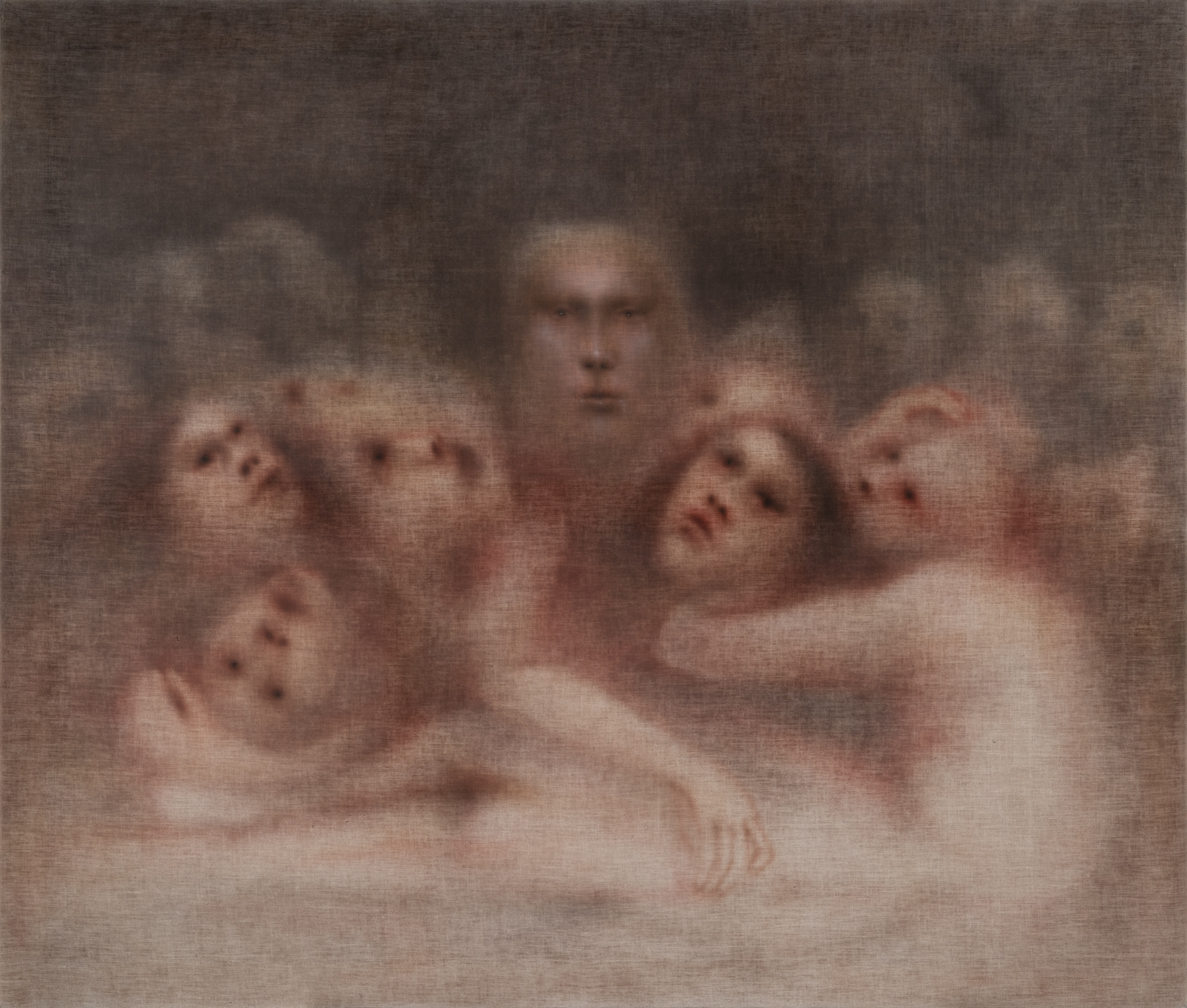
Jędrzej Bieńko, Untitled, 2025 – Acrylic on linen canvas, 170 x 200 x 4,5 cm
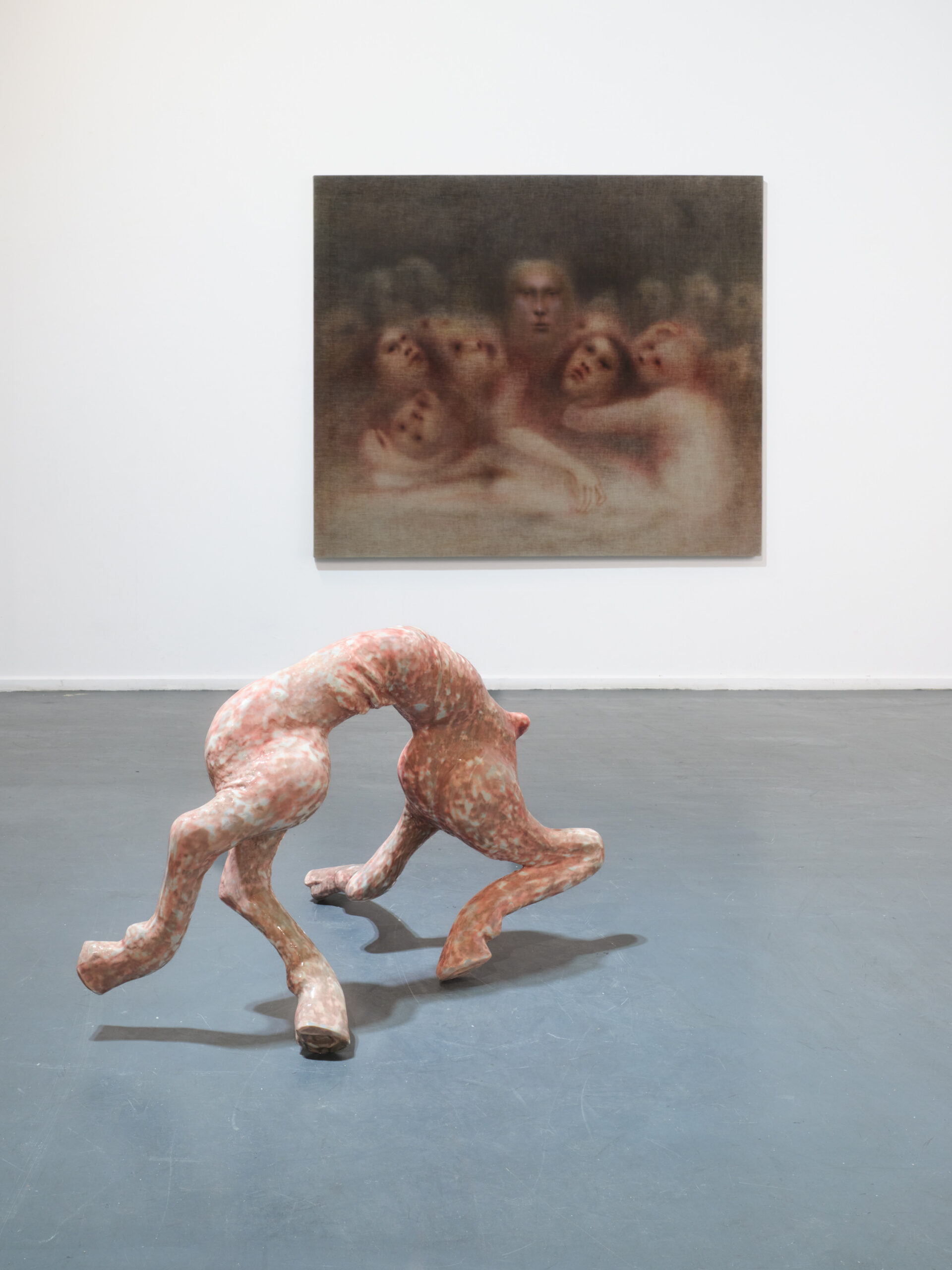
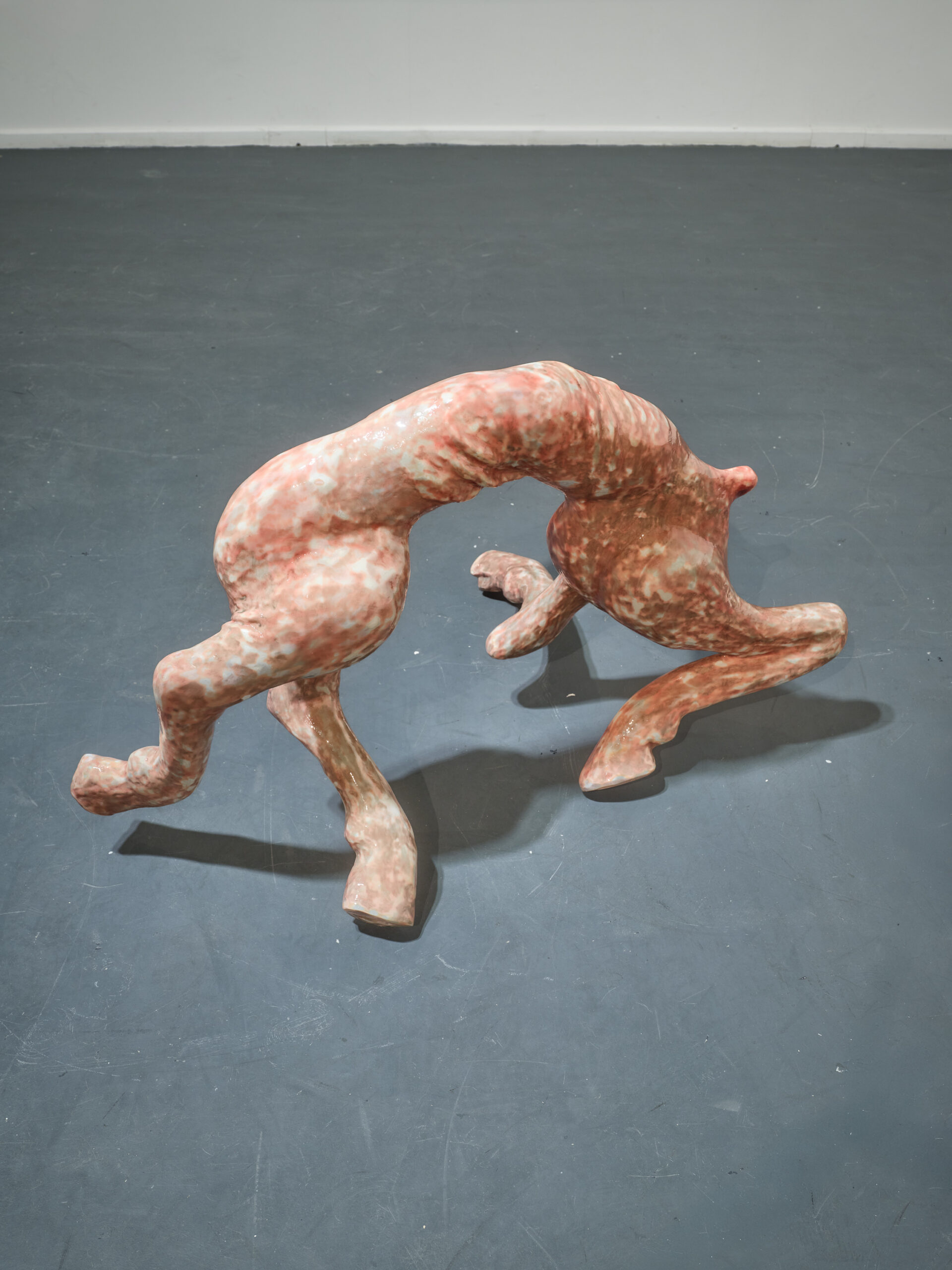
Sally von Rosen, Sinuous, 2024 – Epoxy, styrofoam, fiberglass, metal, acrylic resin, epoxy clay, polyester fiber, 107 x 103 x 77 cm
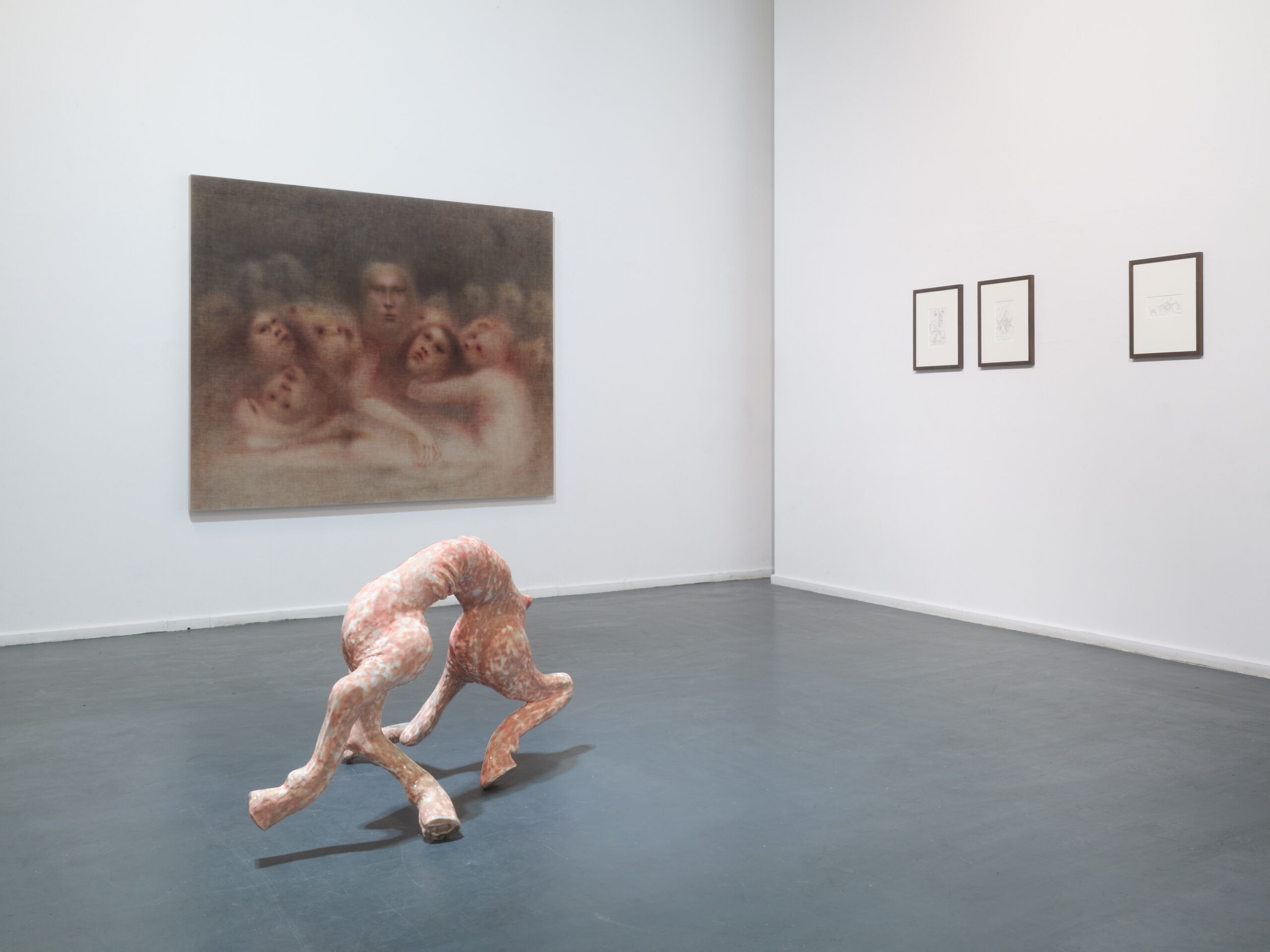
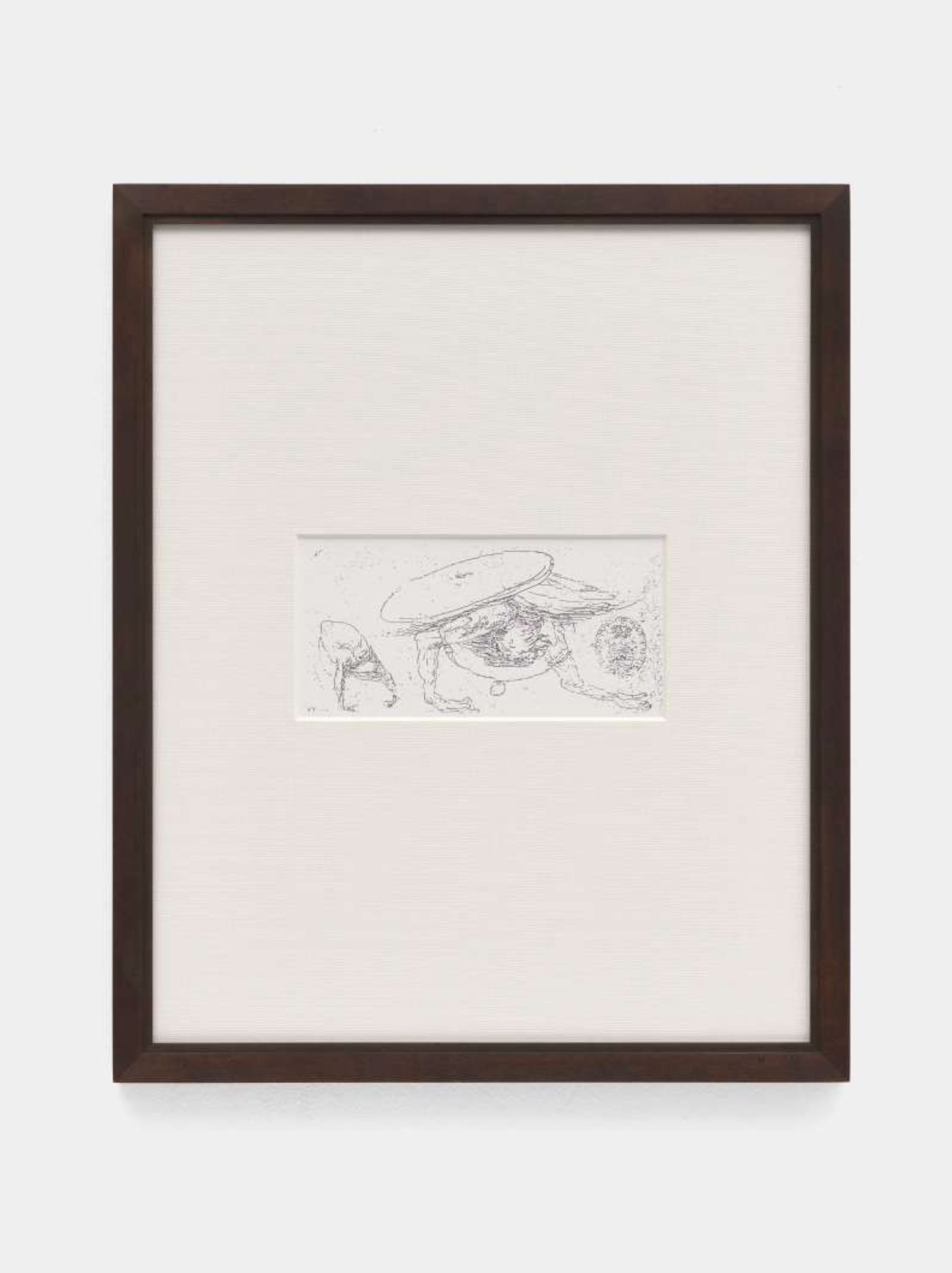
Sally von Rosen, MAIN BODY Drawing V (After H. Bosch, The Field Has Eyes, The Forest Has Ears), 2023 – Automatic drawing on paper, frame with linen passepartout, 47 x 37 cm
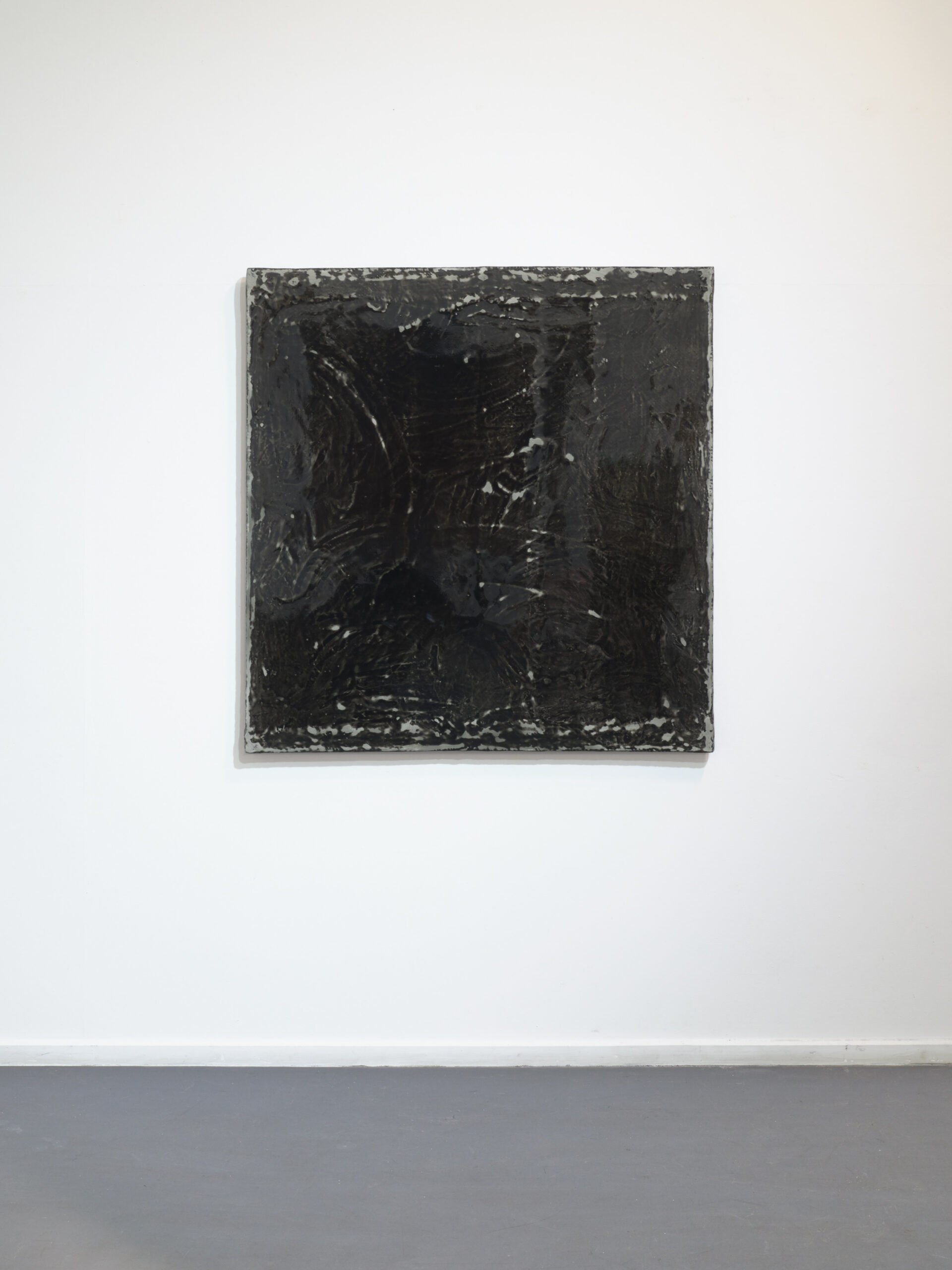
Sally von Rosen, AT ODDS panel I, 2023 – Styrofoam, wood, metal wire, translucent resin, acrylic resin, fiberglass, epoxy, 125 x 120 x 5 cm
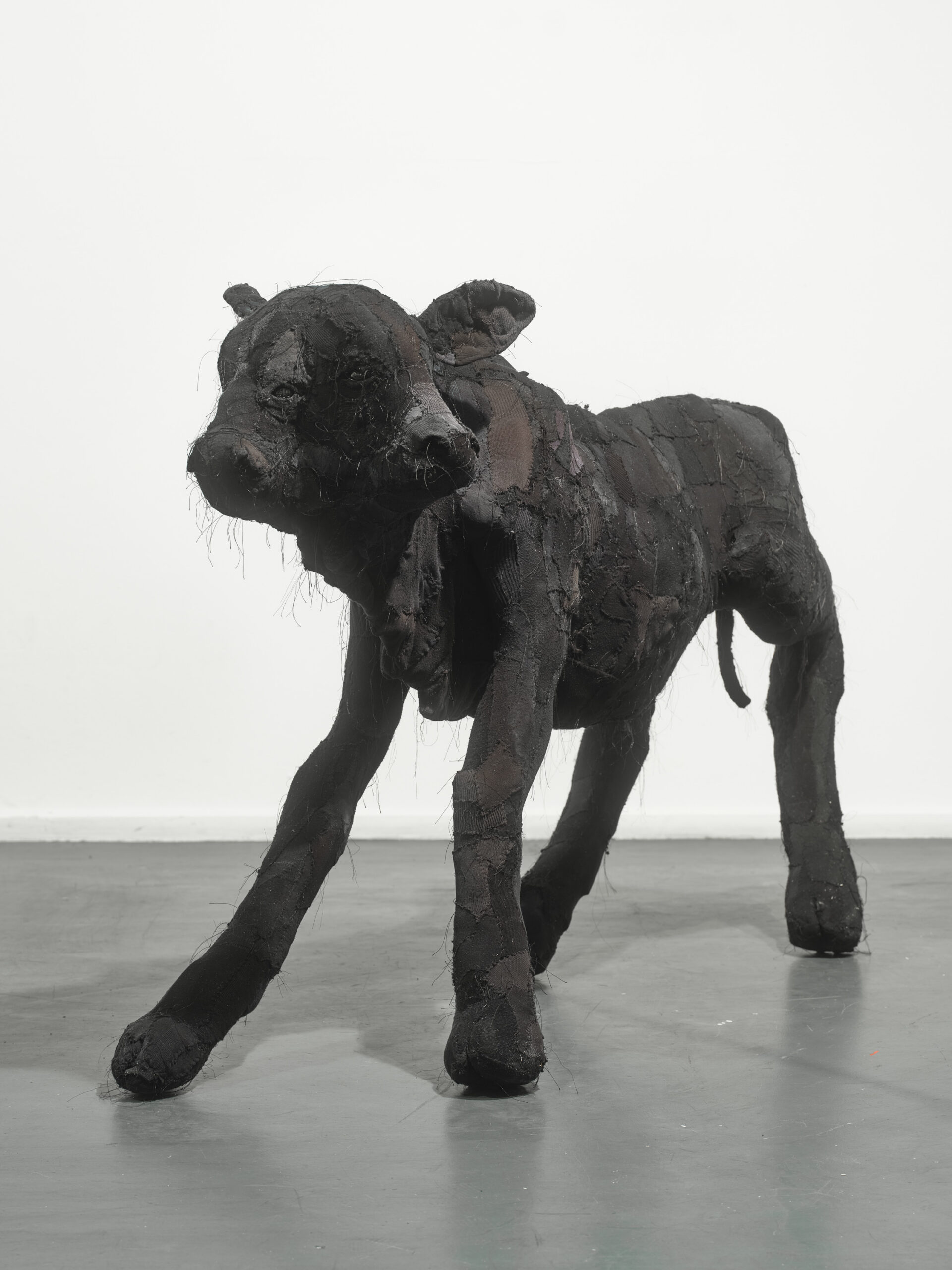
Jan Baszak, Two-Headed Calf, 2025 – Wood, upholstery foam, glass eyes, black socks, 110 x 170 x 35 cm
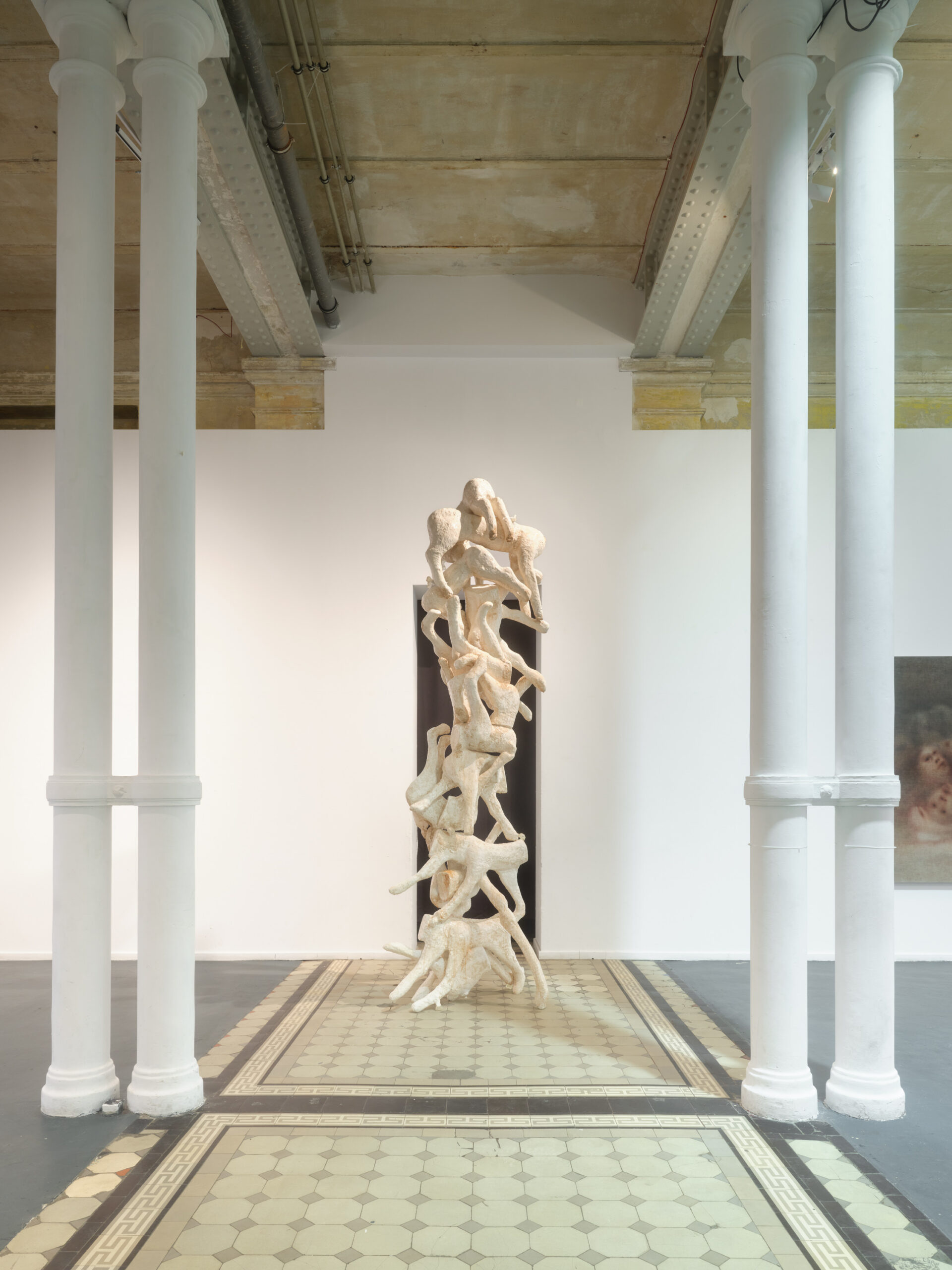
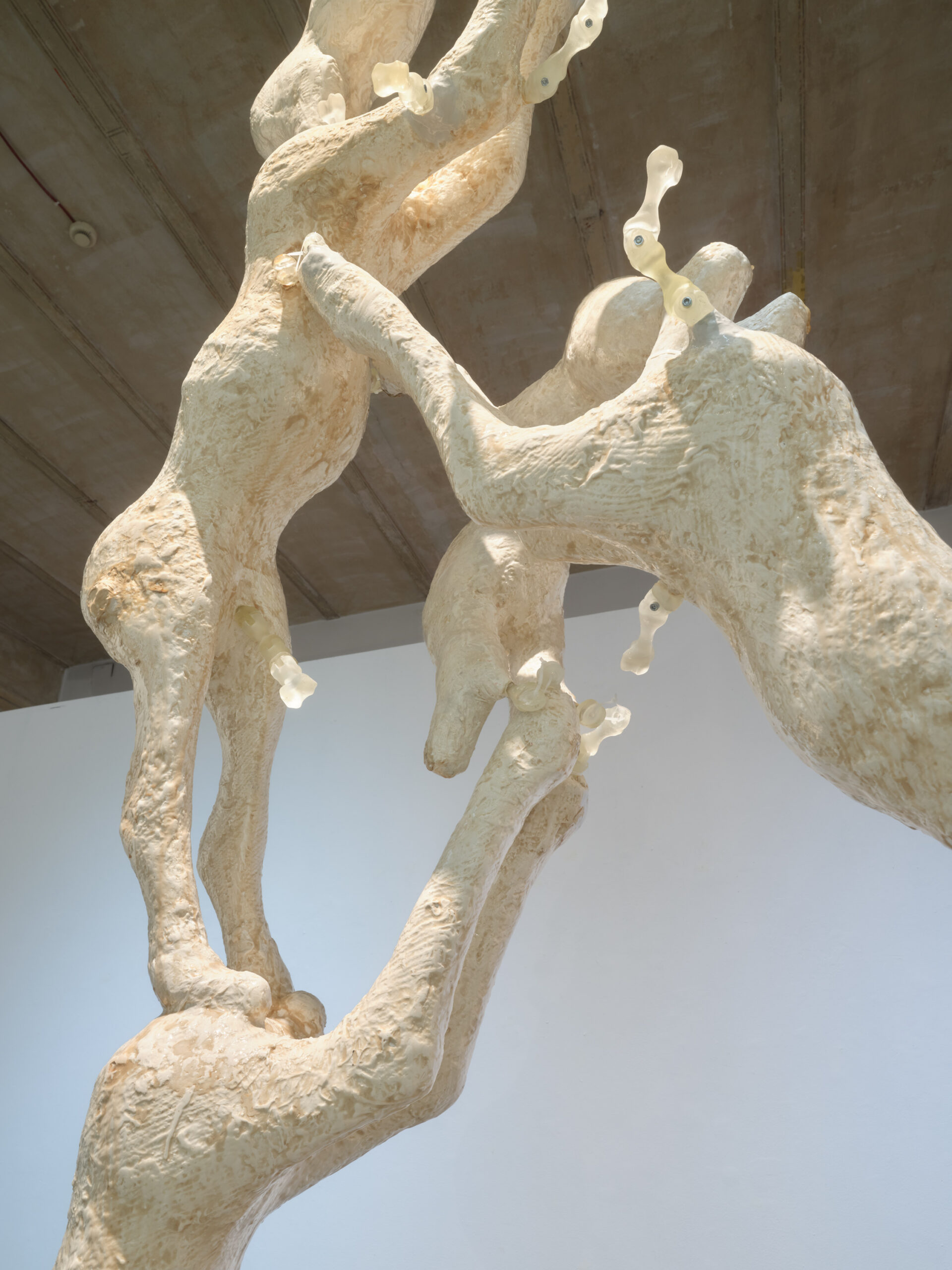
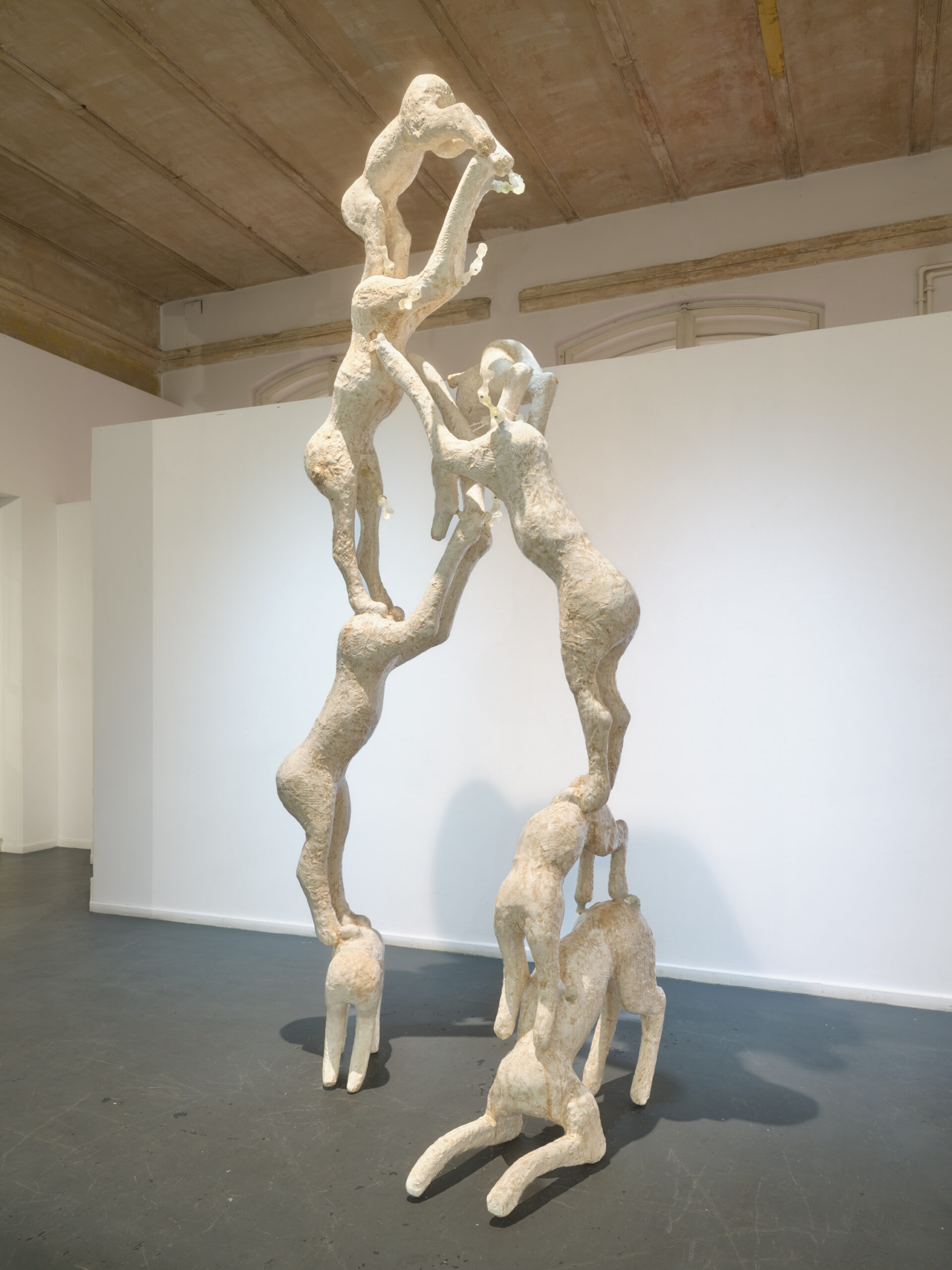
Sally von Rosen, MAIN BODY, 2023 – Photopolymer resin, styrofoam,acrylic resin, Translucent resin, pigments, epoxy clay. Dimensions variable
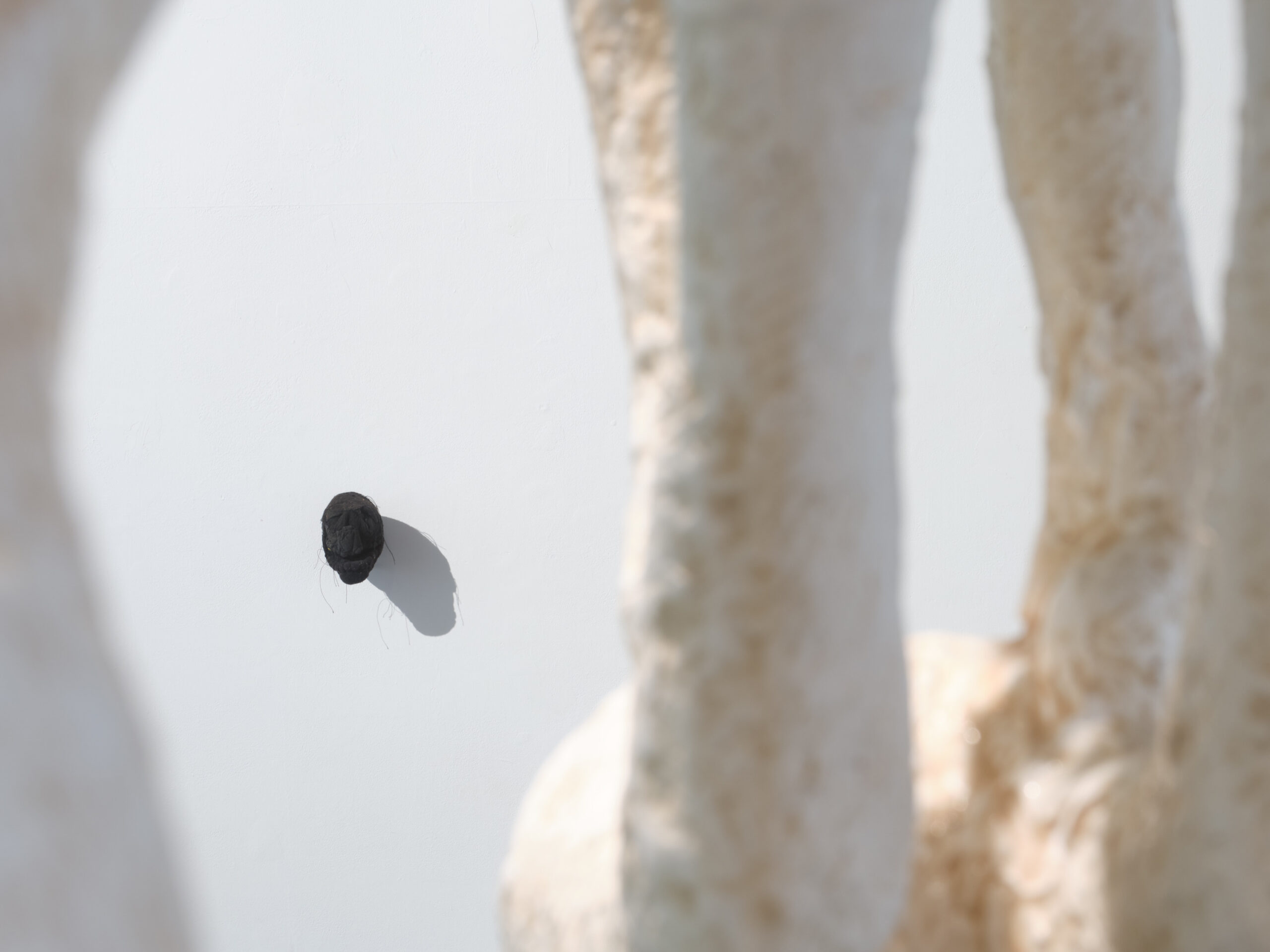
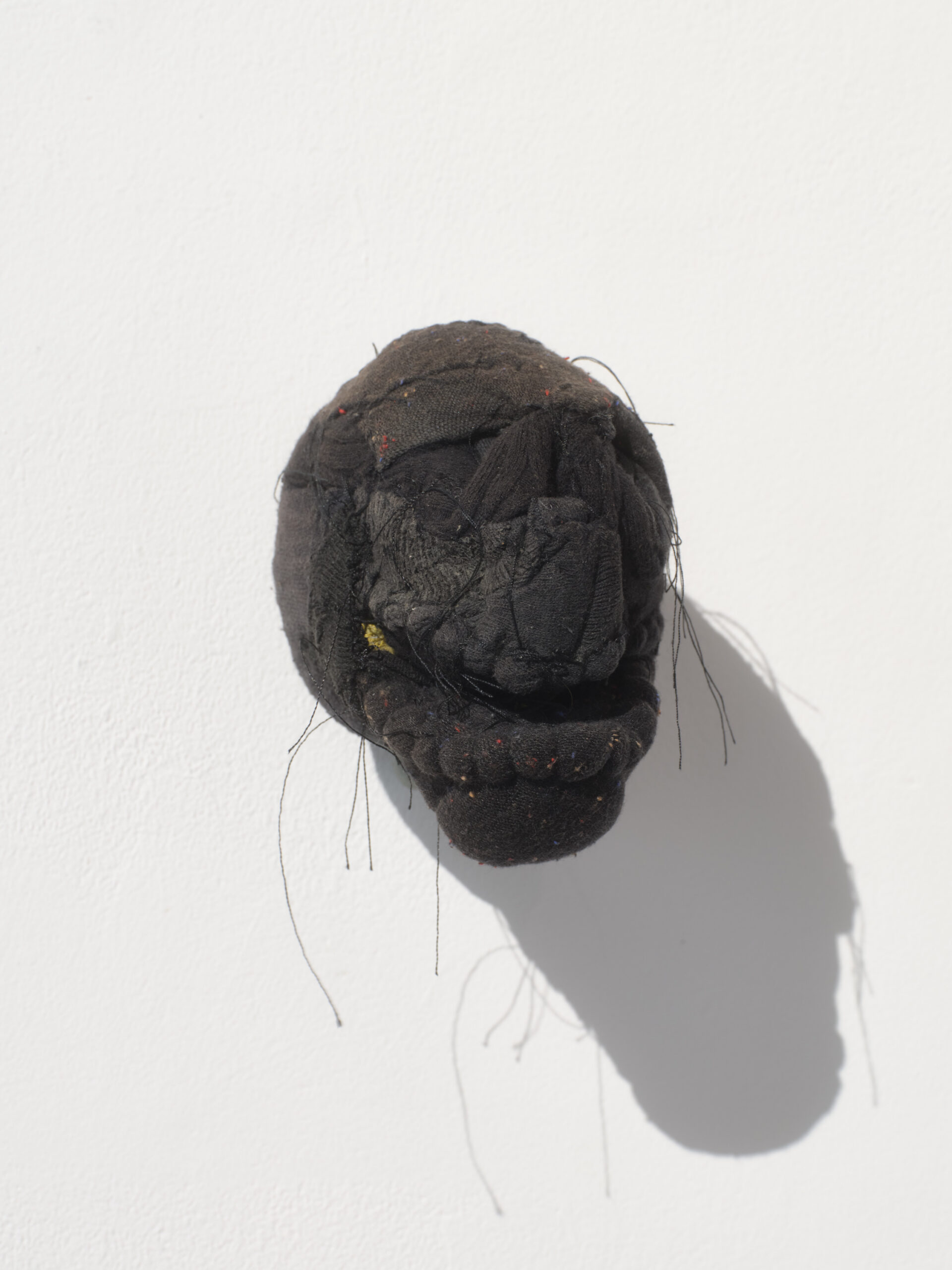
Jan Baszak, Laughing Head, 2023 – Wood, steel, black socks, 8 x 15 x 13 cm