Primrose
In an era in which it is becoming increasingly difficult for us to understand one another, it seems that everyone lives in their own world, with their own perspective. Yet despite this impression of dispersion, we share more than we might suppose — even in what appears most intimate, in the way we perceive the world around us. Nothing we see is immediate; our vision carries perceptual schemas that we inherit and that regulate what we notice and what remains in shadow. Take the landscape — one of the oldest experiences of shared perception. Its recognition seems obvious: a horizon, a solitary tree, a path, the rhythm of repeating façades, the geometry of an intersection are enough to summon it. But this obviousness rests on old perceptual patterns that privilege certain forms — lines, perspectival arrangements, familiar silhouettes — while simultaneously overlooking others.
The images of Jakub Michalak enter into a polemic with two traditions of the view. On the one hand, they question the iconography of the landscape — established ways of depicting nature and space that rely on familiar elements such as the horizon, solitary trees, or paths. On the other, they engage with intellectual projections, that is, ways of constructing a view of space through architectural, technical, or abstract forms, encompassing, for example, symmetry, iteration, and mise en abyme. This double polemic shifts established perceptual codes and causes the viewer to doubt not only what they see, but also how they look and with what disposition they observe the world around them.
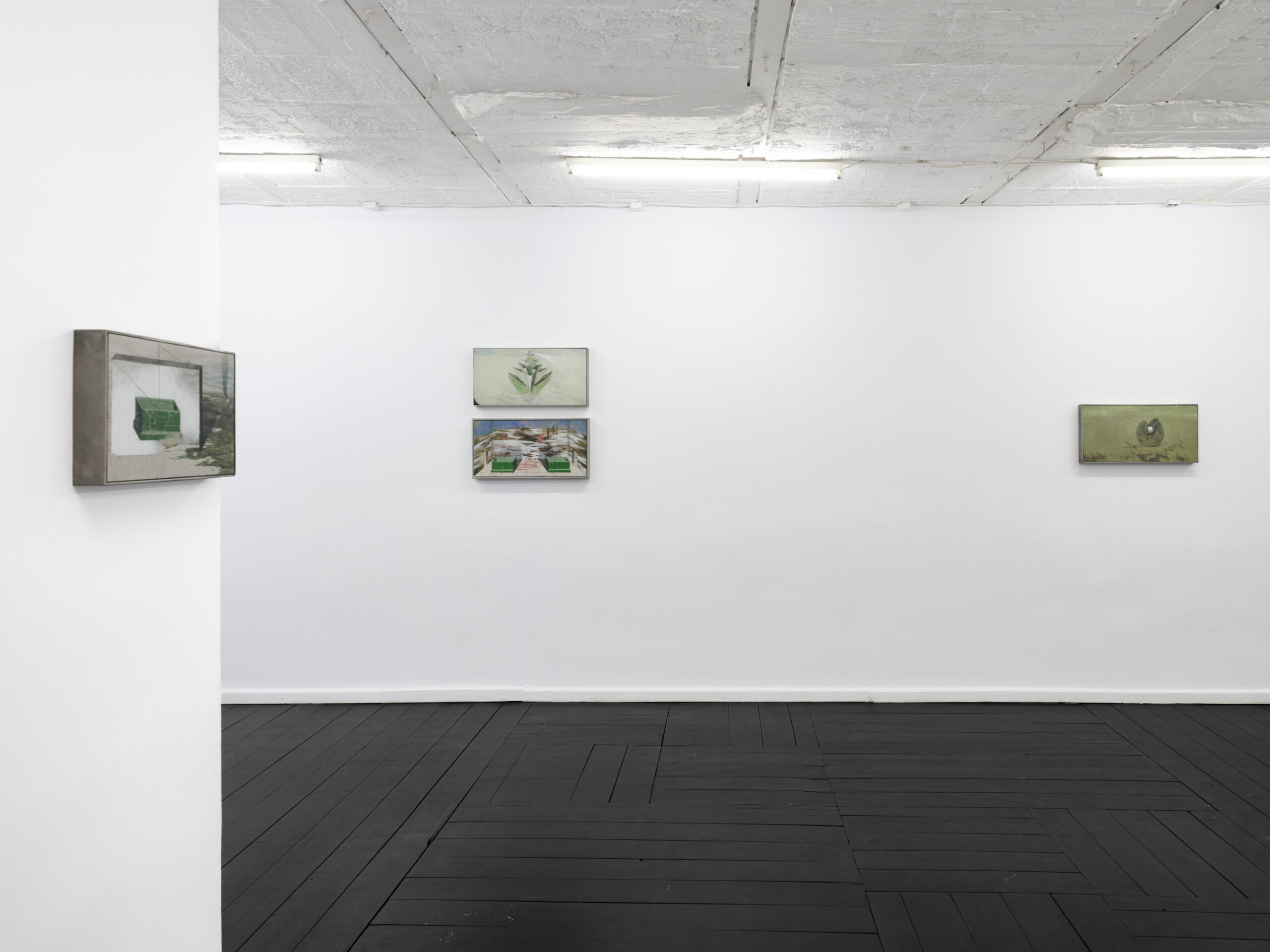
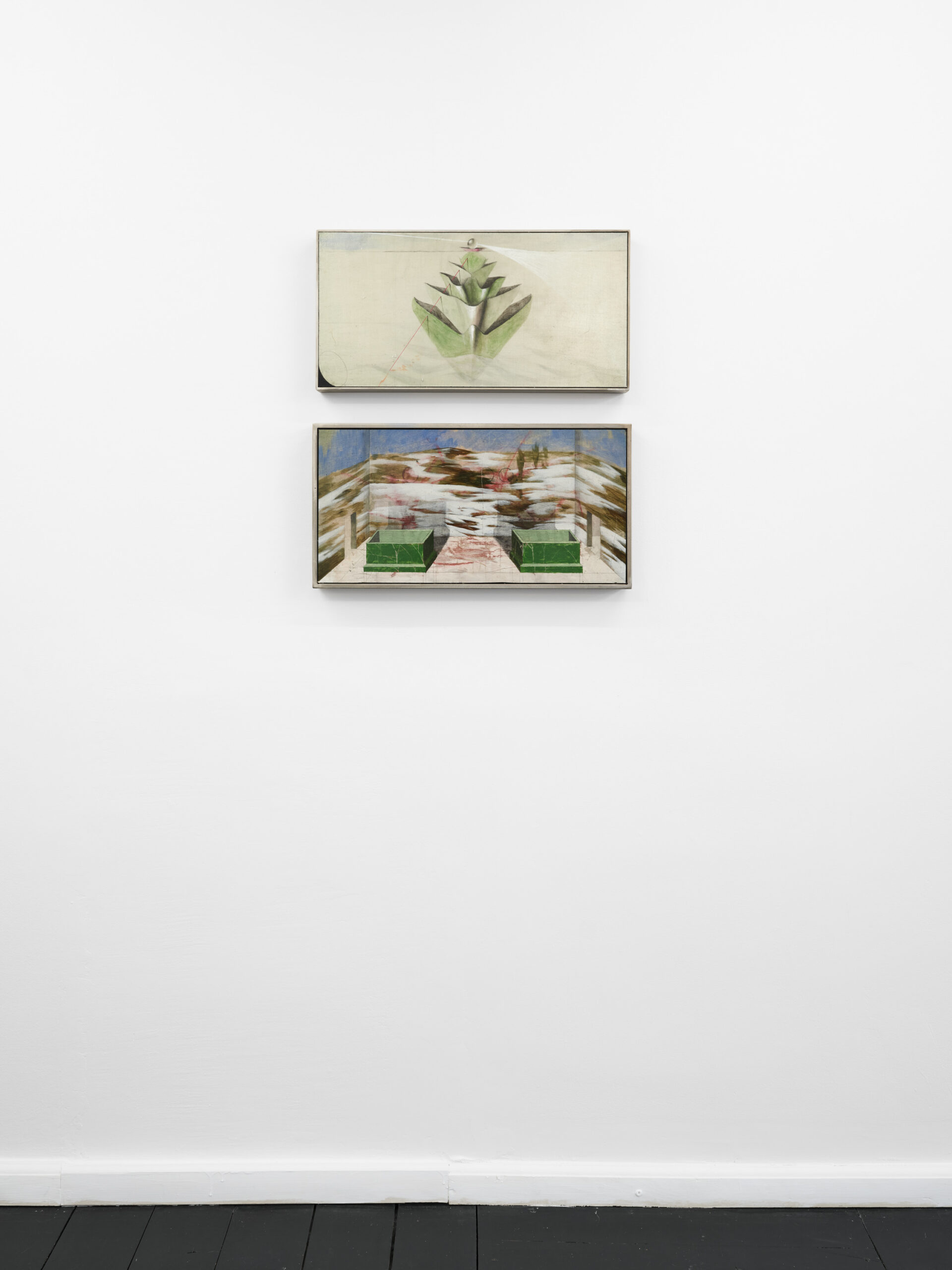
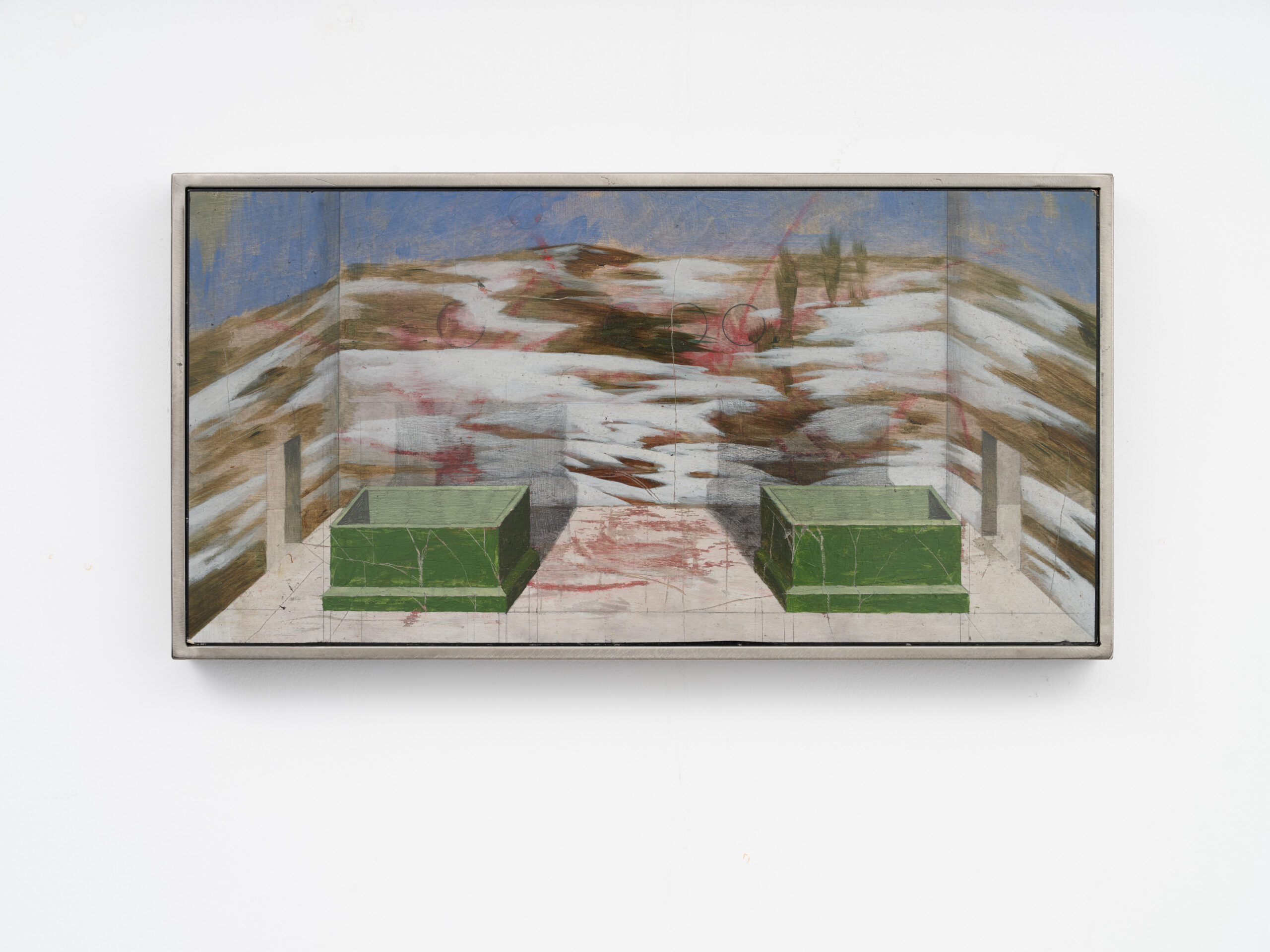
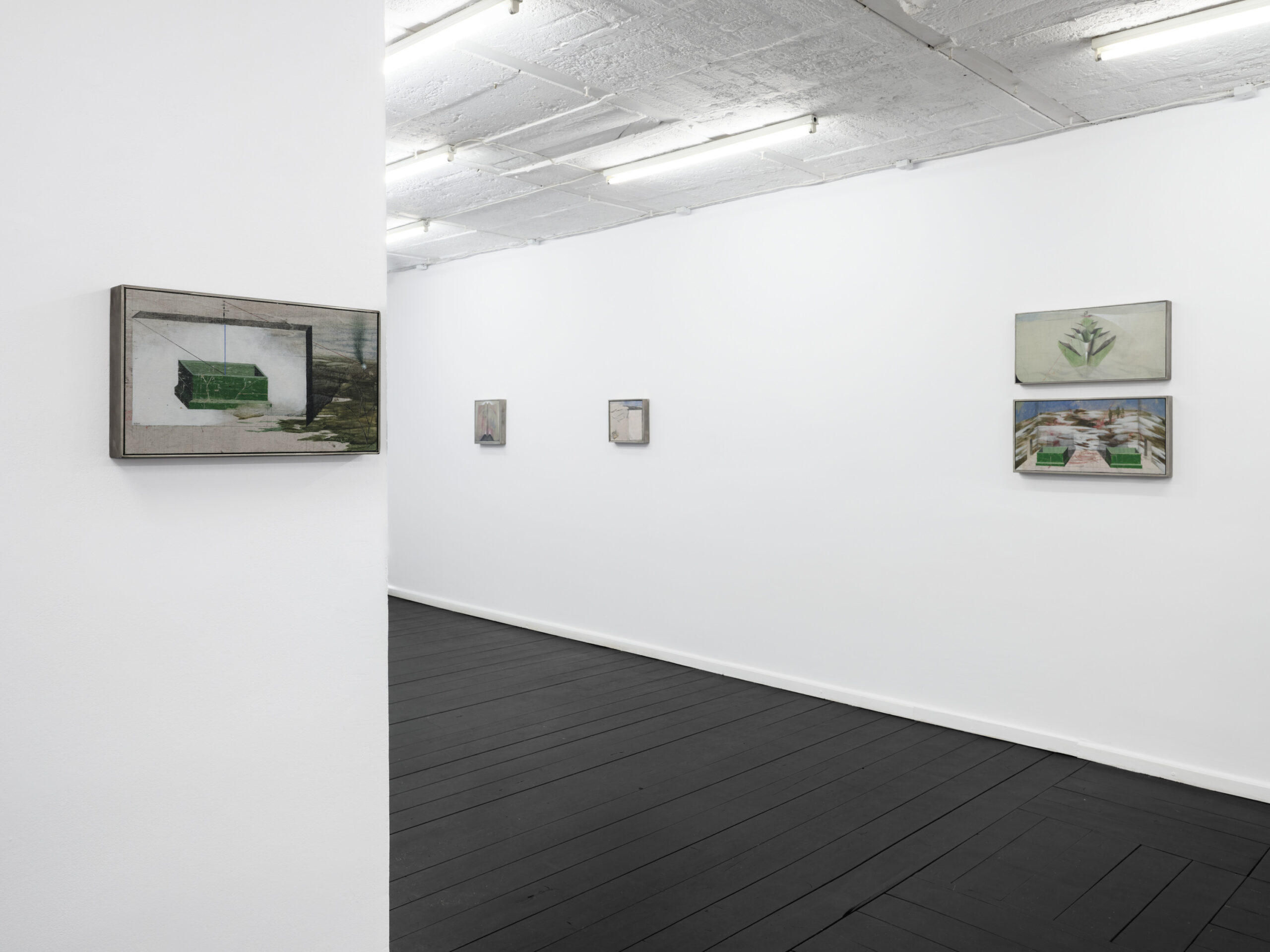
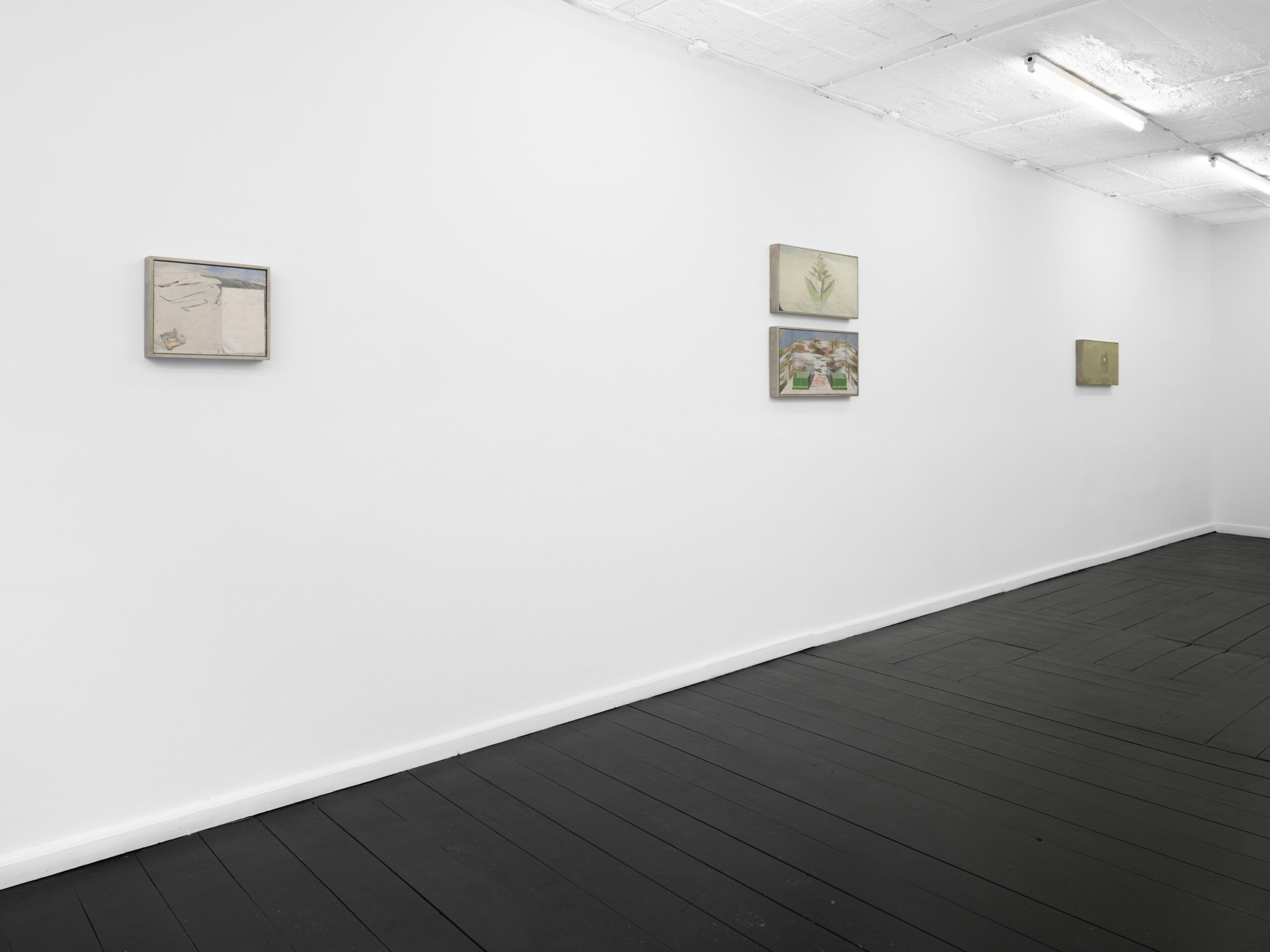
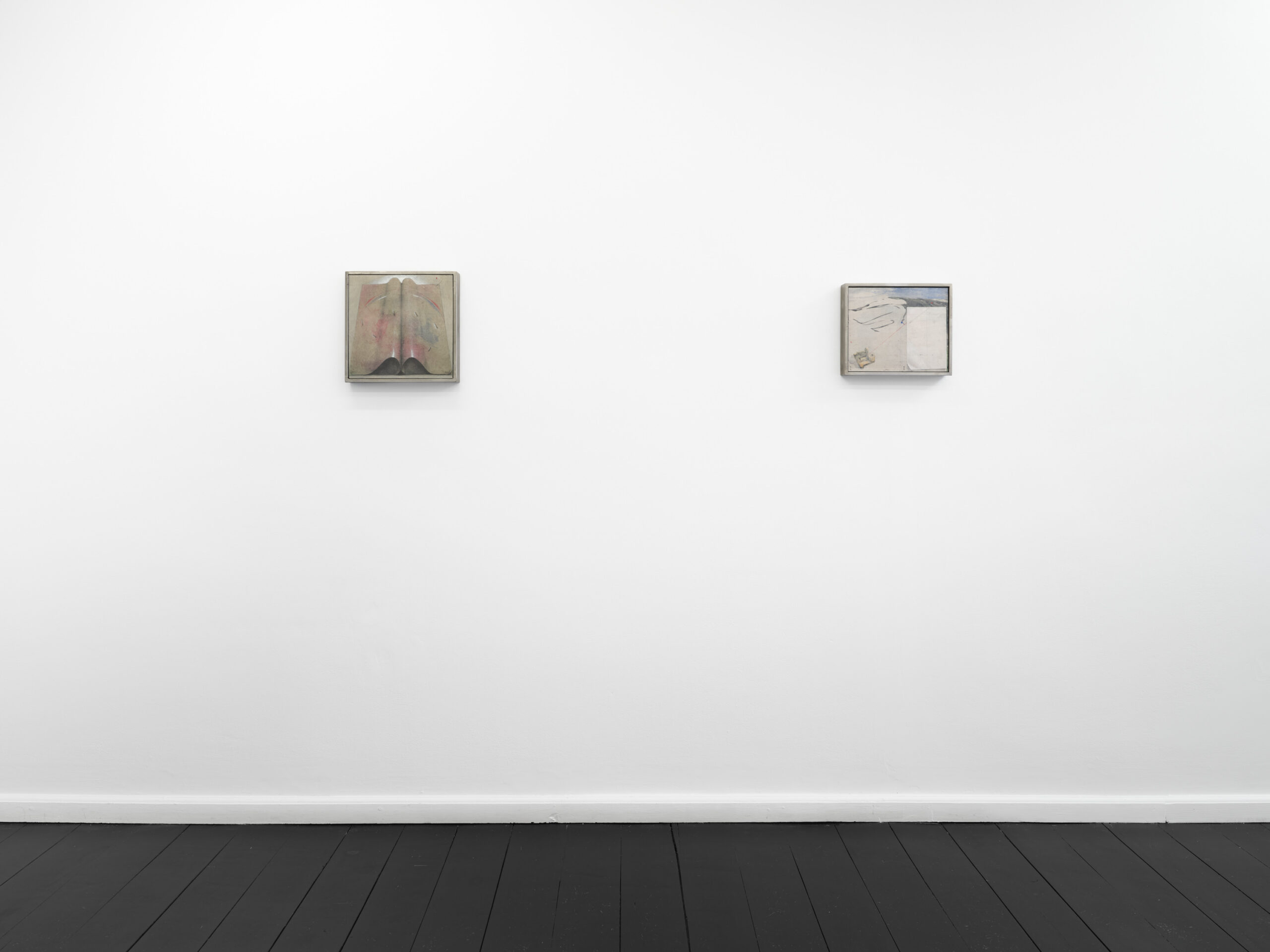
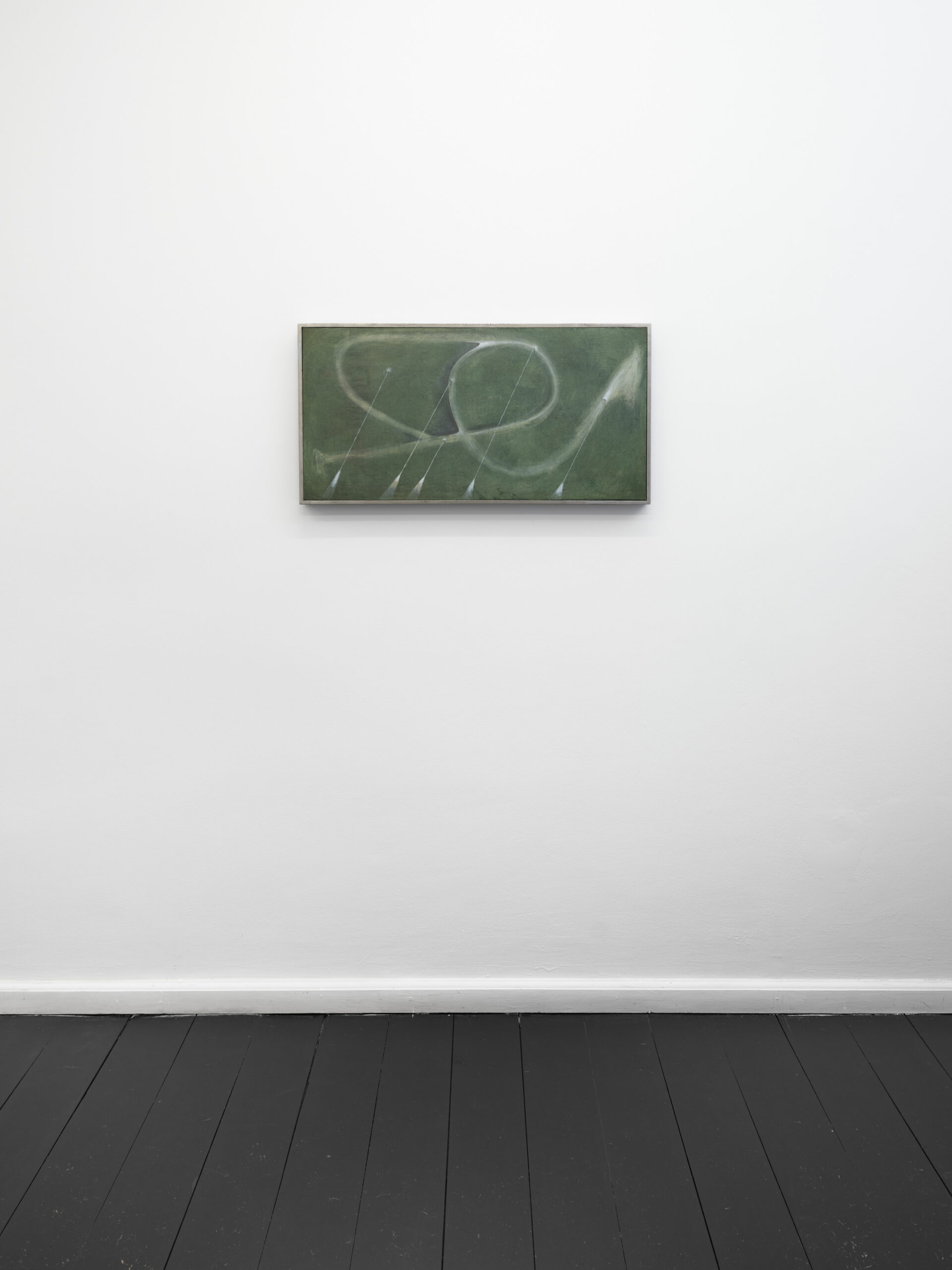
The traditional landscape is inhabited, animated, organized around a stable horizon and points of orientation. In Michalak’s work, horizons are distant and deserted; vegetation is spectral, the ground bare as if in perpetual winter. These are traces rather than forms: instead of monumental nature, a muted, post-human environment appears, stripped of lyricism. This approach undermines the idea of the landscape as a mirror of harmony or of human dominion over the world. His works depict vast spaces with shifting horizons — mountainous, desert, coastal — characterized by an extreme poverty of elements. Snow sometimes reveals the ground; vegetation is sparse, limited to grasses and traces, trembling in the icy air, vibrating with cold.
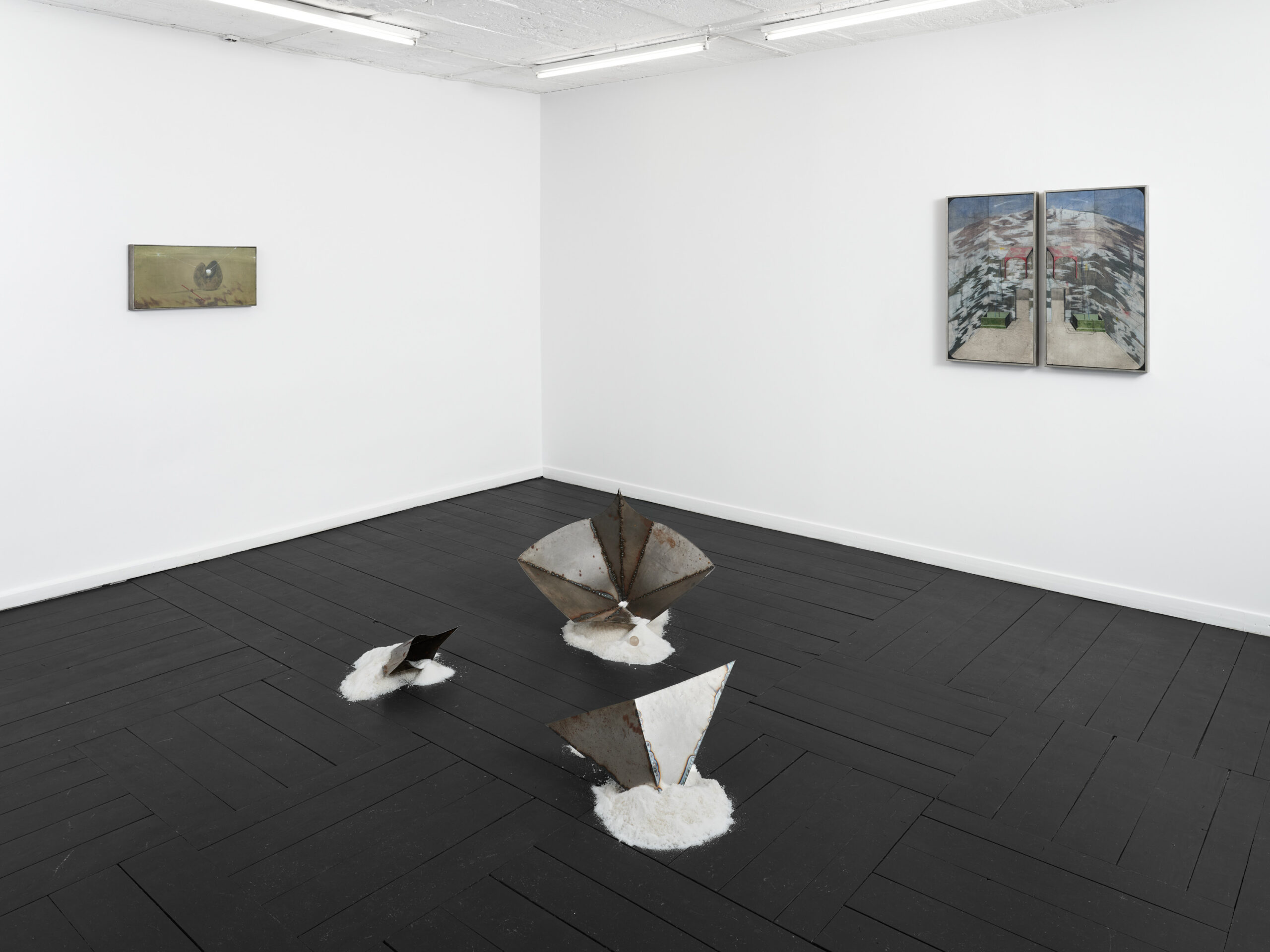
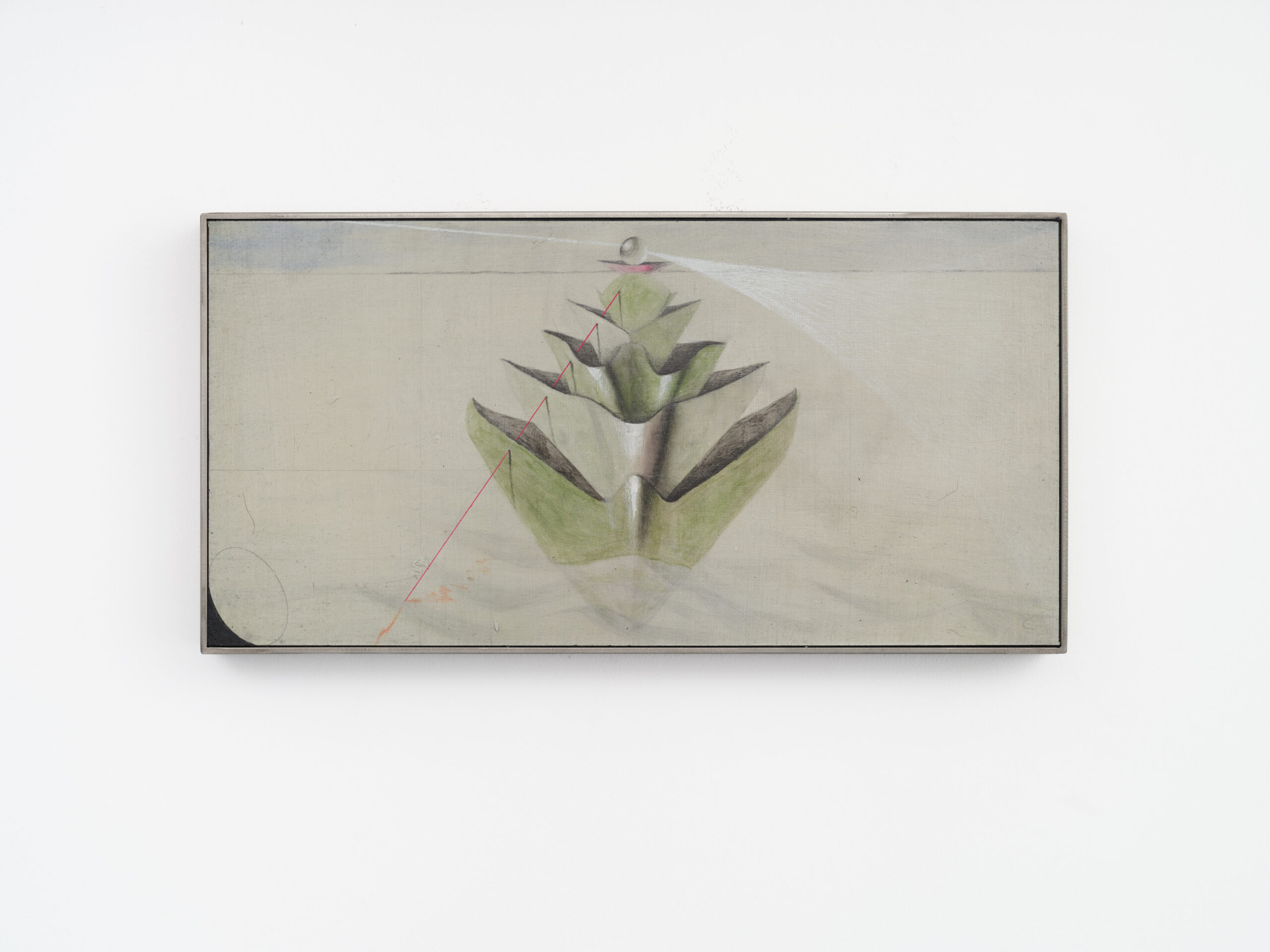
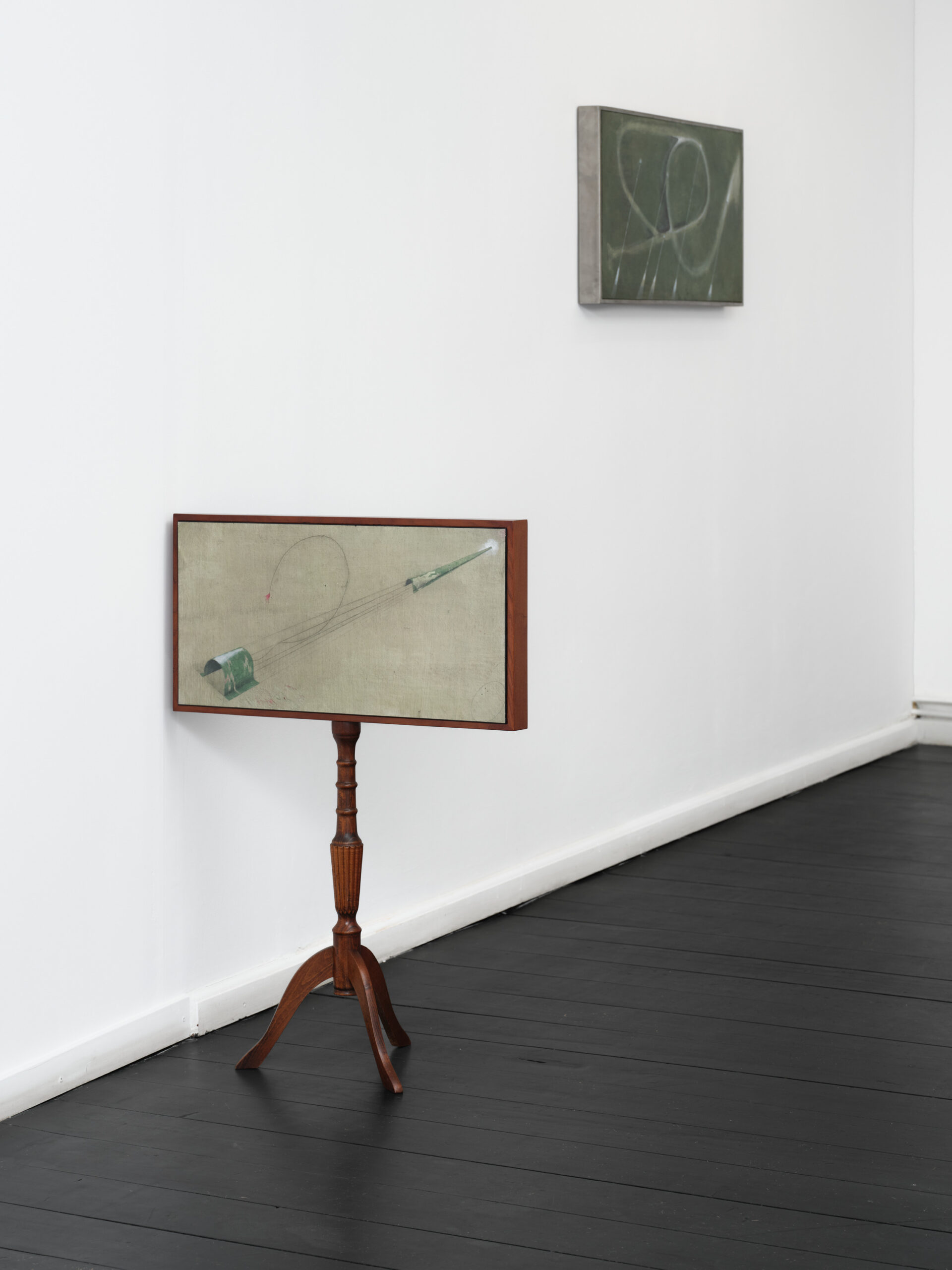
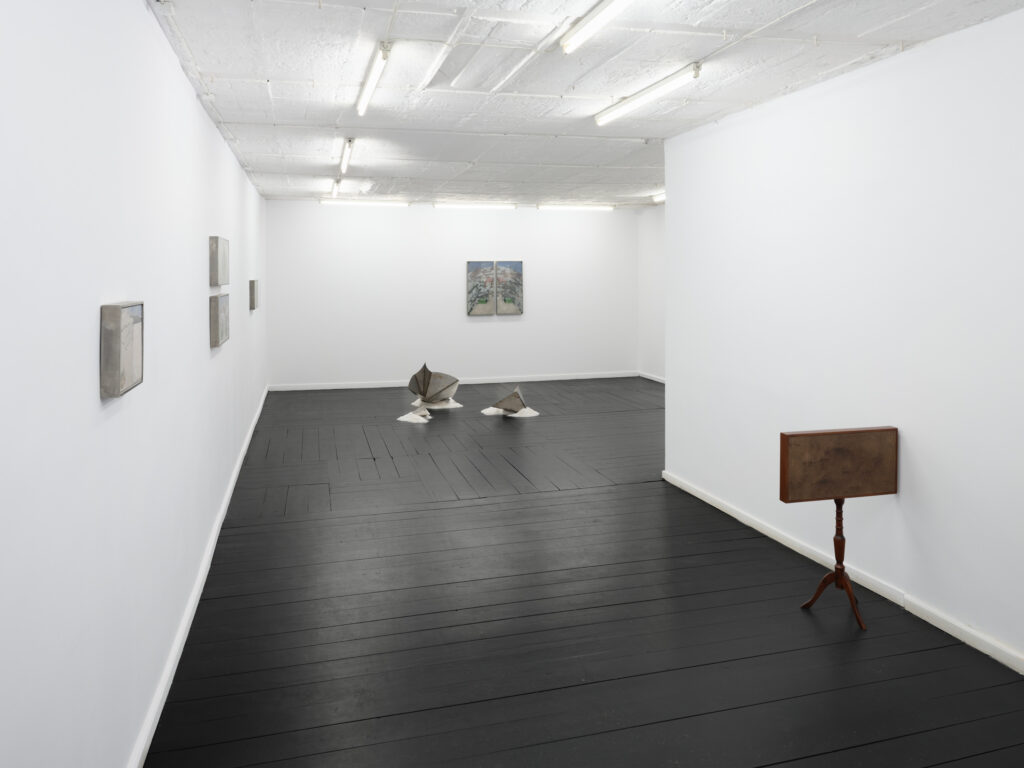
Painted on wooden boards marked by striations, scratches, and erosions, these works combine precise drawing with accidental surface signs that recall cracked marble, mirror fractures, or abrasions. The image becomes an assemblage: not a stable space subordinated to human perception, but a surface in which matter, gestures, accidents, visual technologies, and natural structures coexist. The human is an active absence here, a field beyond the frame that paradoxically organizes the image through its withdrawal.
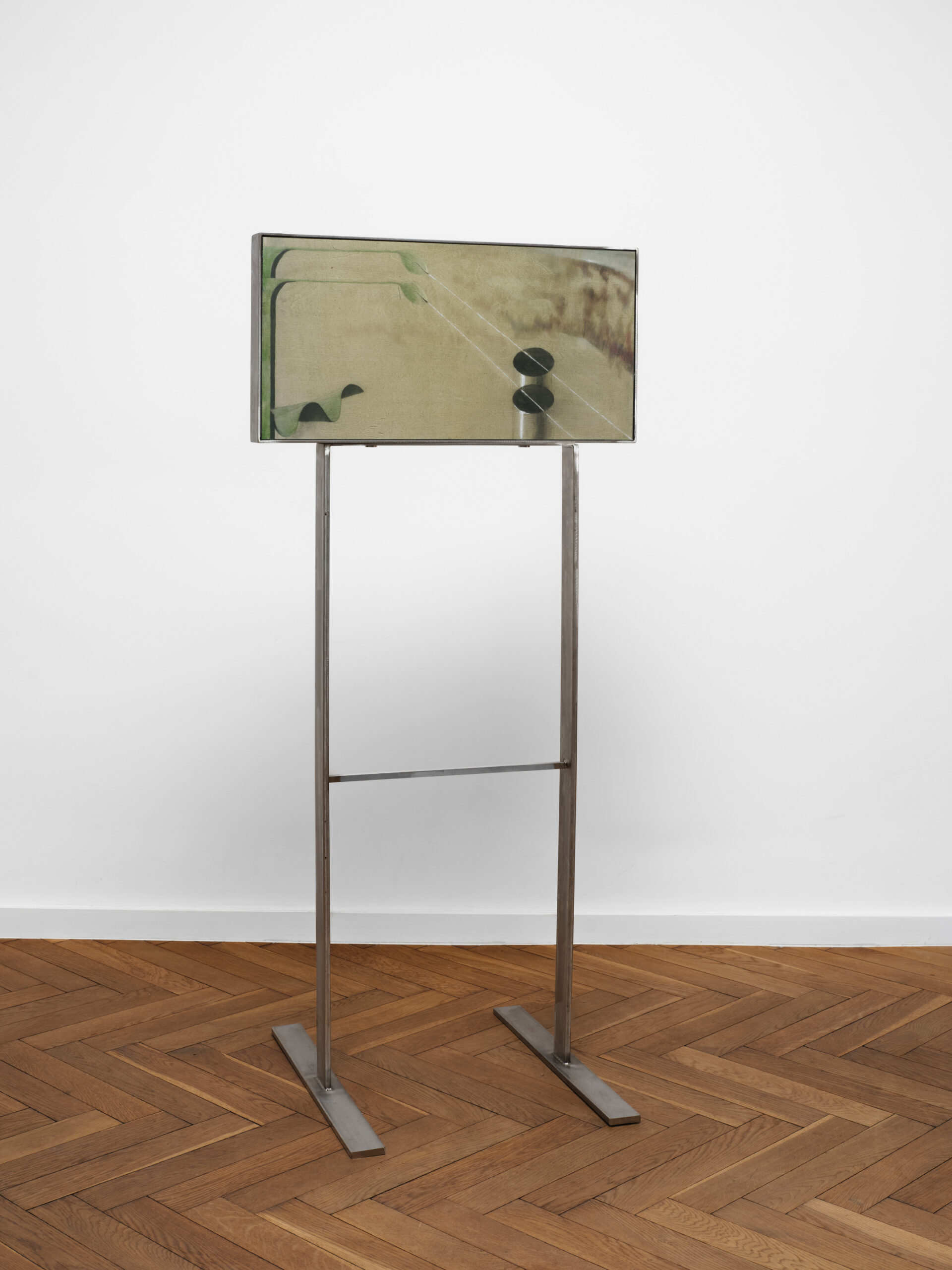
Michalak’s works encourage the movement of the eye, brief returns of the gaze like blinks: one must come closer to read the details, to trace overlapping spaces, cracks, and doublings that shape our experience of the view, acting like bait that lures the viewer’s attention. At the same time, lines appear — drifting or precise — evoking high-voltage cables or electrical wires without source or destination. Their function ceases to be representational; they guide the eye from one fragment of the image to another, from landscape space to architectural space, from the illusion of depth to the frontal plane. These lines act like autonomous agents — neutral technologies following their own trajectories after the disappearance of human intention. Then fragments of walls, tables, elements resembling urban furniture or plinths of removed monuments emerge — as if the “great men” to whom these pedestals once granted glory had vanished, leaving only open boxes, their contents indeterminate, perhaps awaiting rediscovery. The scene presents the ruins of classical humanism, but without pathos: rather than dramatizing collapse, these forms suggest an opening left by former structures, a field of new possibilities and reinterpretations.
In these quiet landscapes — “after the storm”, “after civilization” — a post-anthropocentric world emerges, in which ice, wood, metal, dust, geometric lines, and optical illusions form a material community. It is an aesthetic of shared sensibility, in which buildings, terrain, sky, and comets seem to coexist, to “breathe” together. Illusions of perspective and intellectual projections — symmetries, false perspectives, contradictory arrangements — create a visual nomadism in which meaning circulates, undergoes de-territorialization, and is constantly reconstructed. Through hybridizations, transitions between natural landscape and technical schema, vast deserted horizons, and lines taut as nerves, Michalak’s images actualize an ecological and relational vision of perception: looking ceases to be an act of appropriation and becomes a form of coexistence. What his works offer is not a view of the world, but a world of views — a space in which humans, non-humans, and material forces together shape what becomes visible.
Text by WHOISPOLA
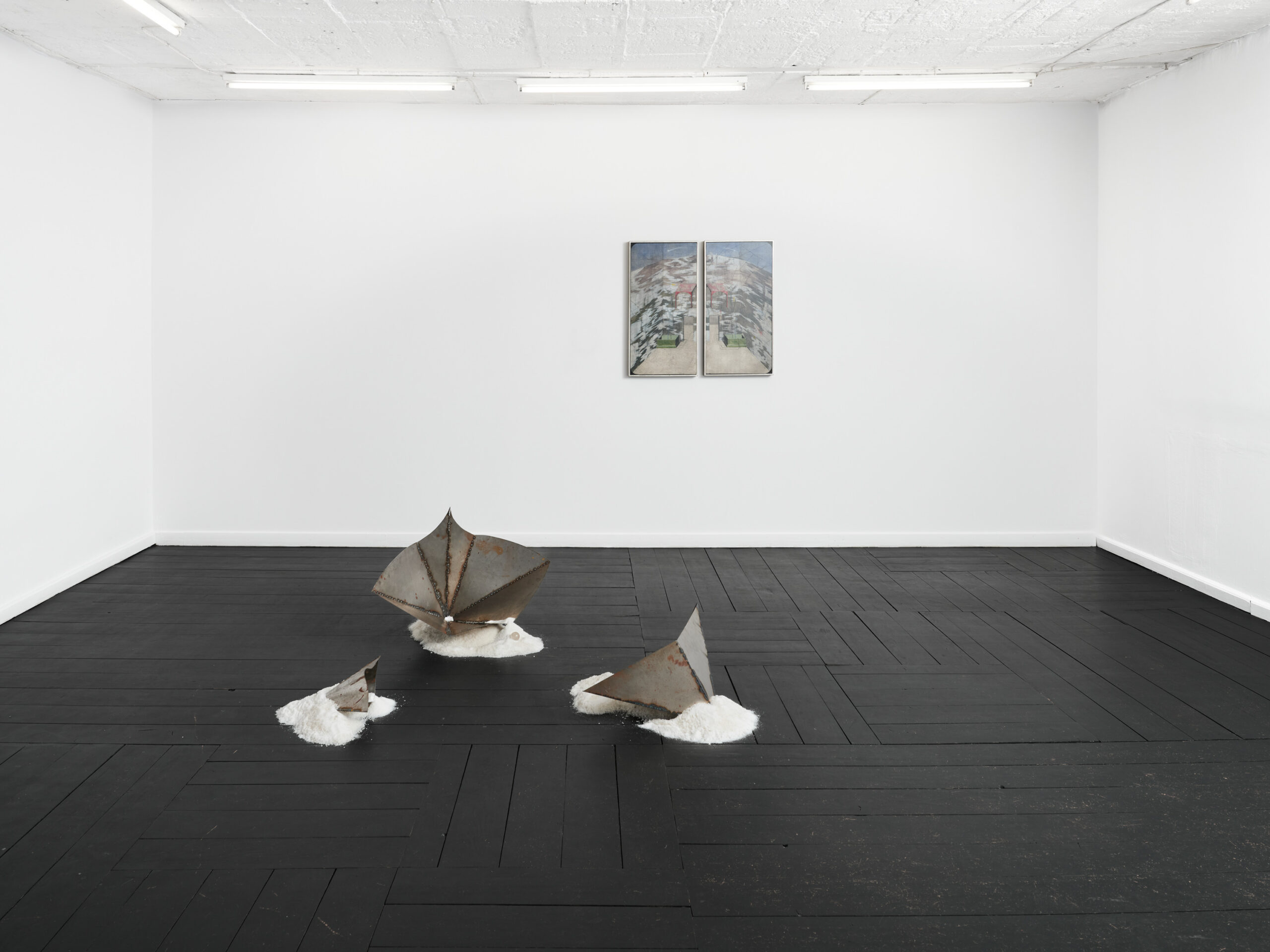
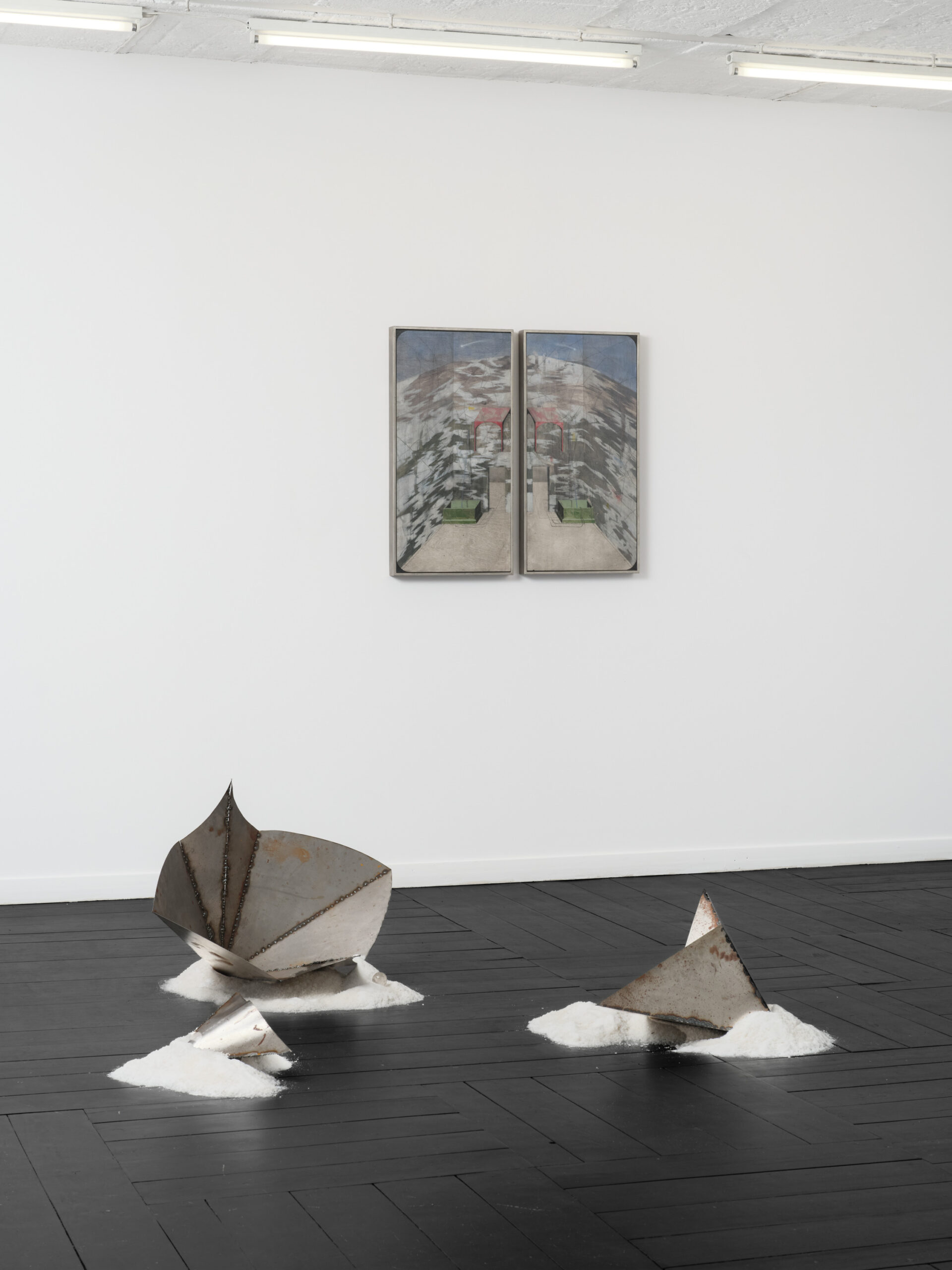
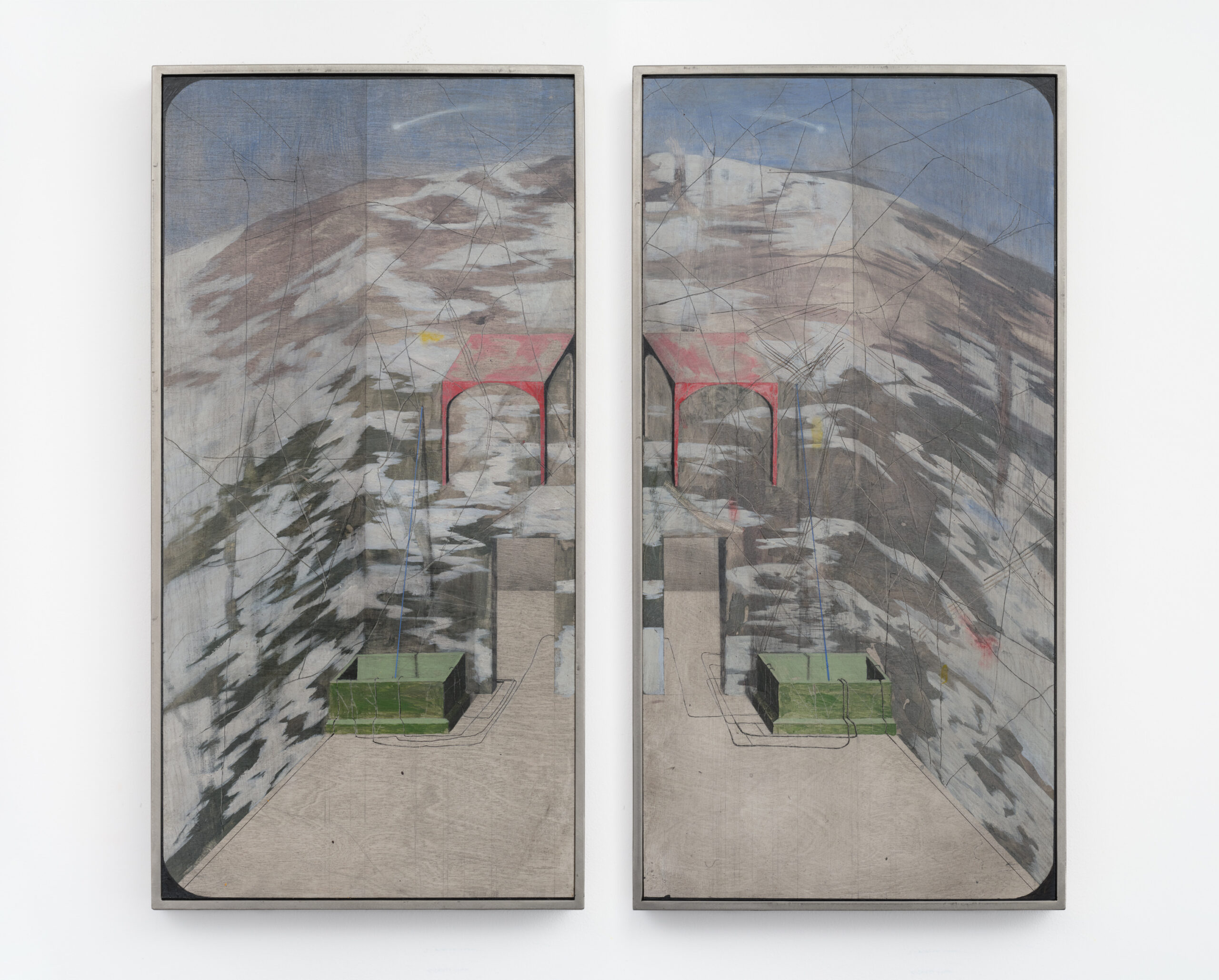
Untitled (Diptych), 2025 Acrylic, pencil on wood, artist’s metal frame 82 x 42 x 5 cm (each panel)
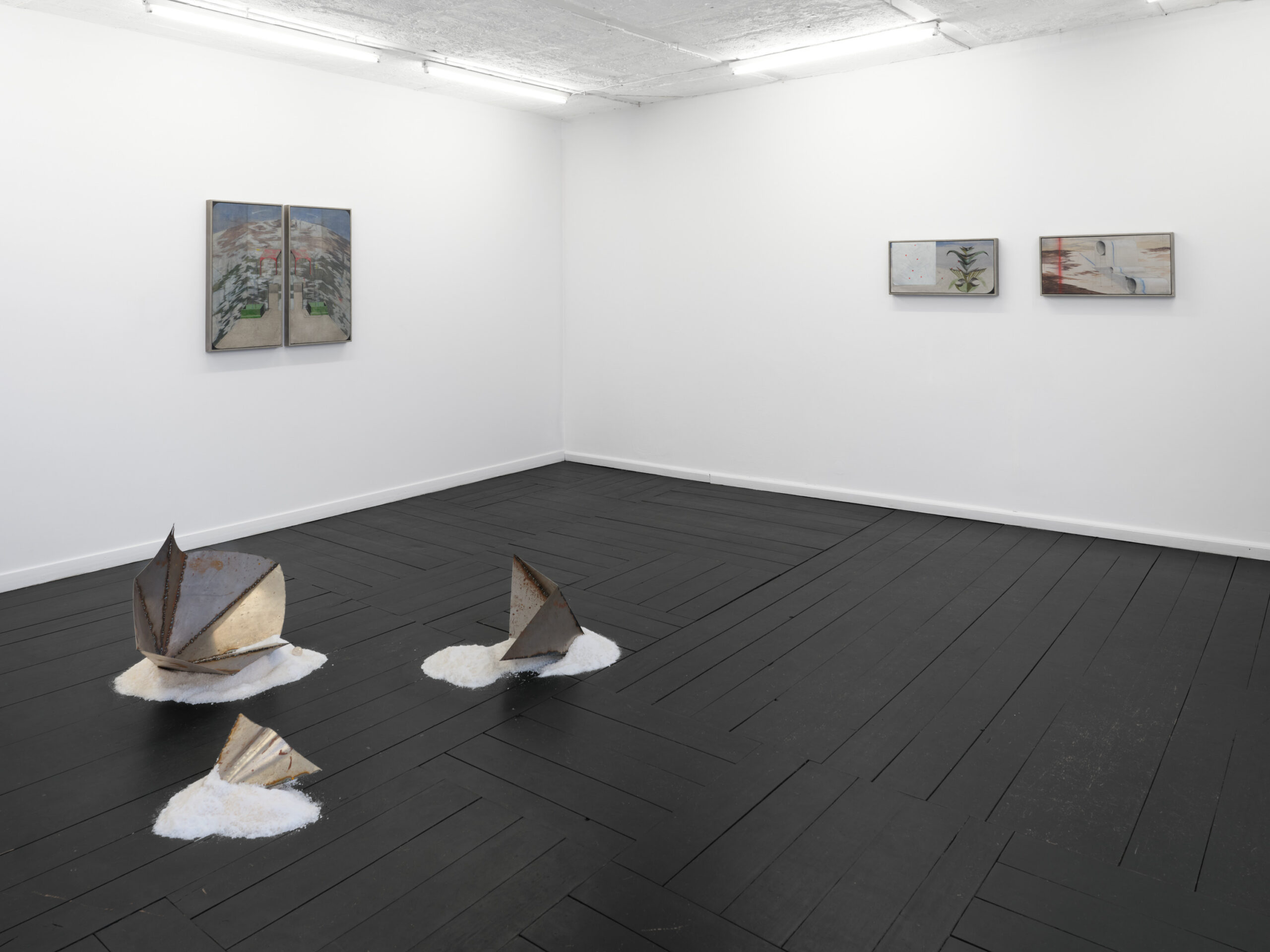
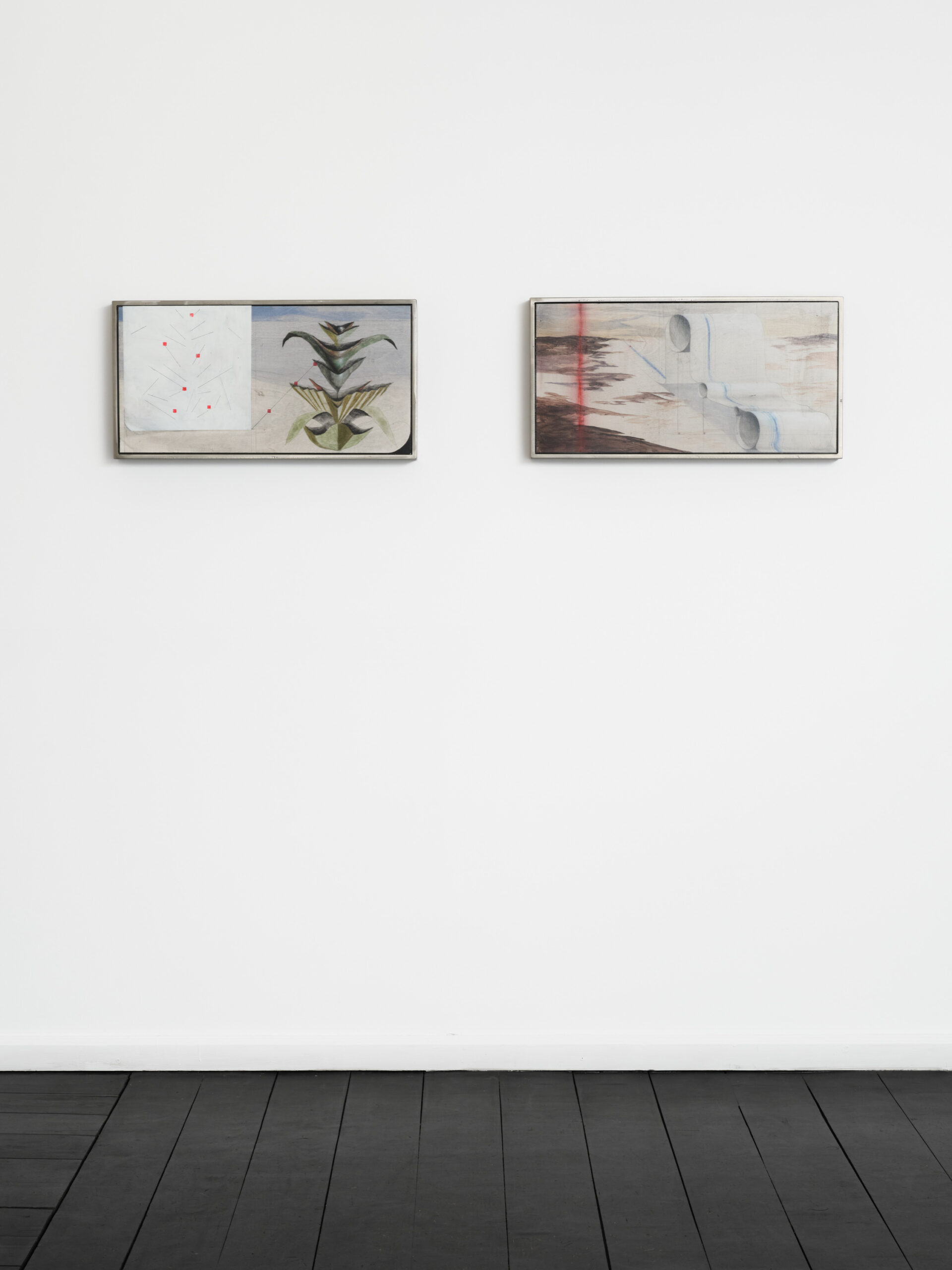
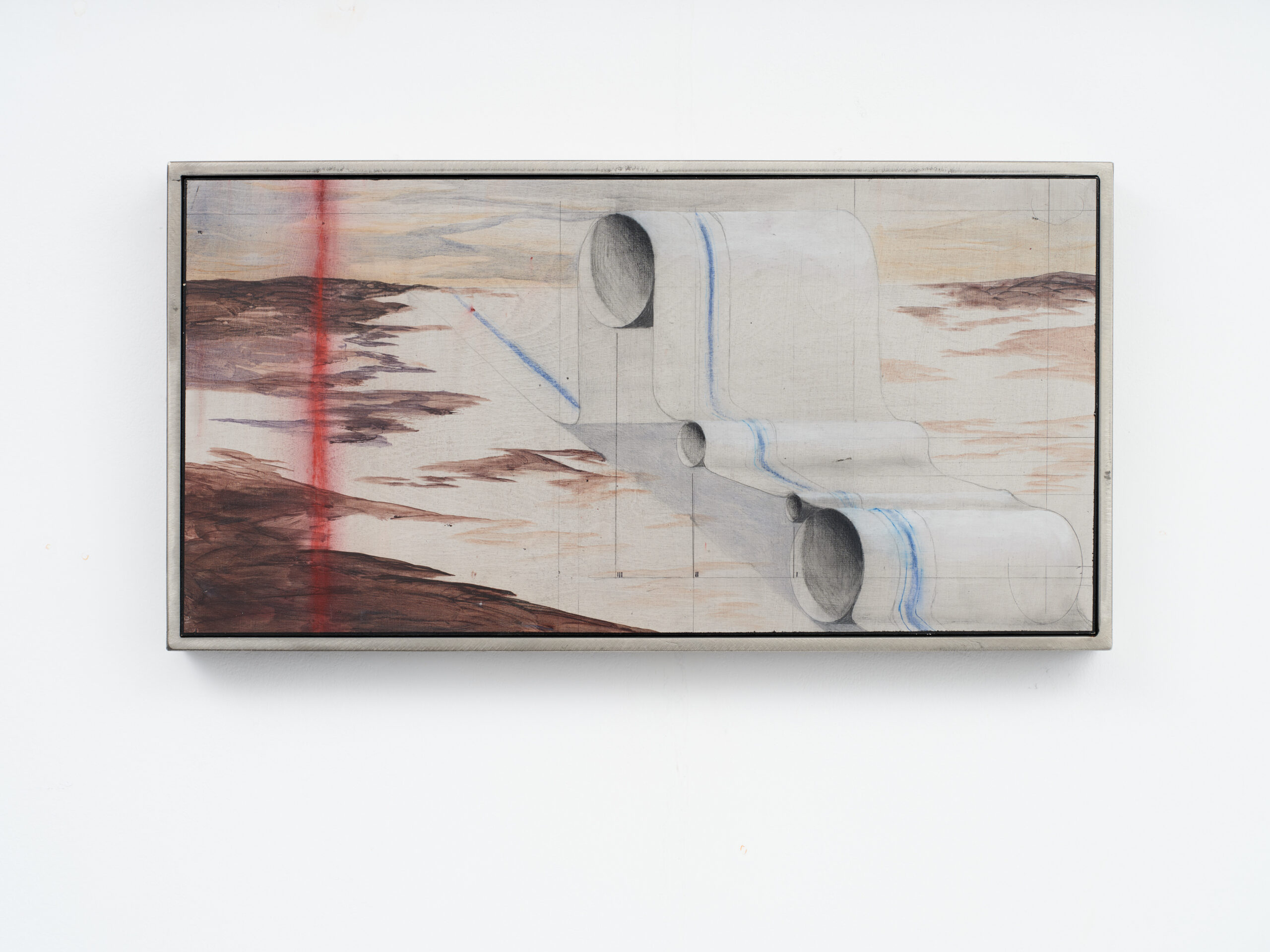
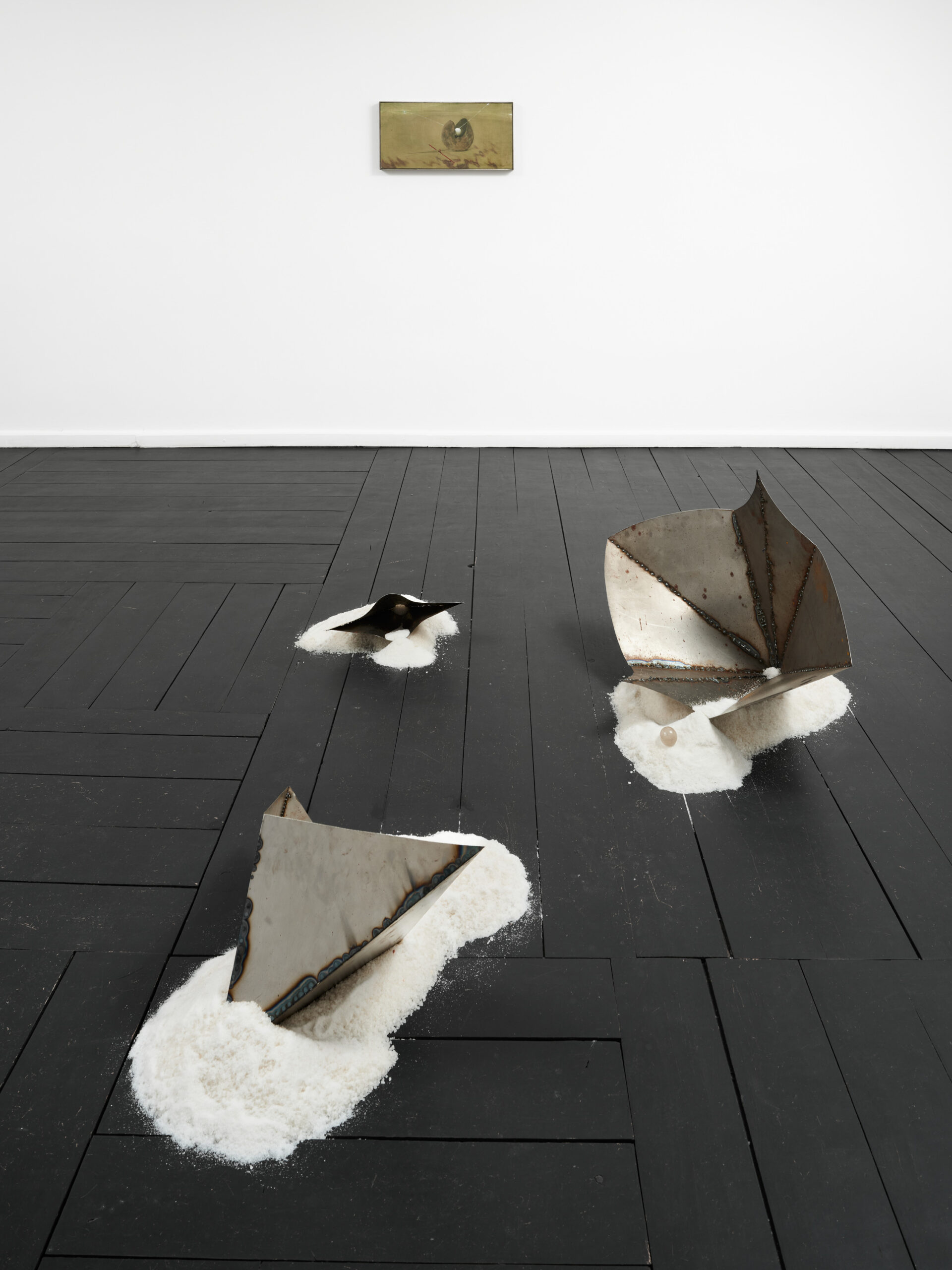
Untitled, 2025 – Acrylic, pencil on wood, artist’s metal frame 32 x 62 x 5 cm
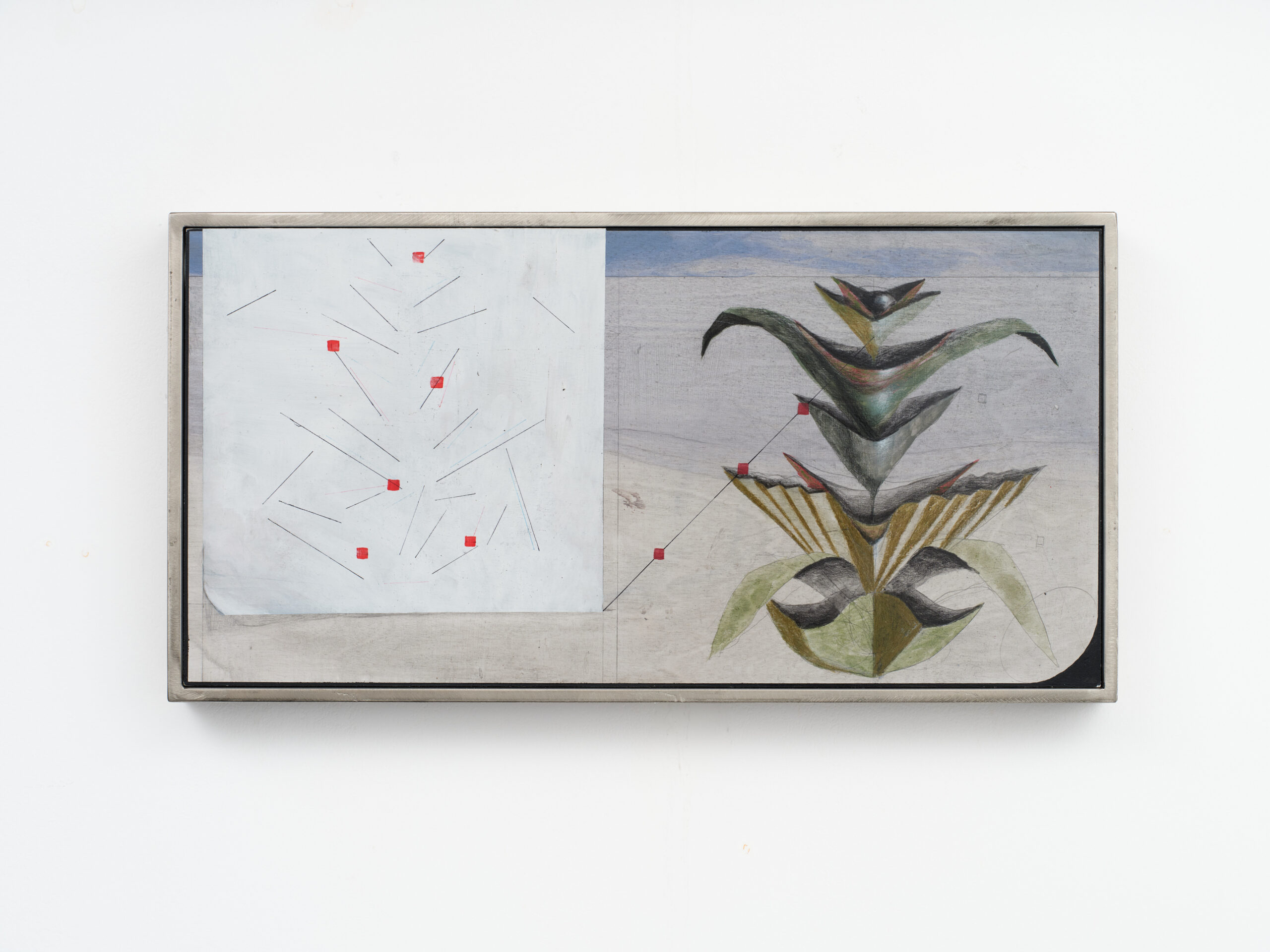
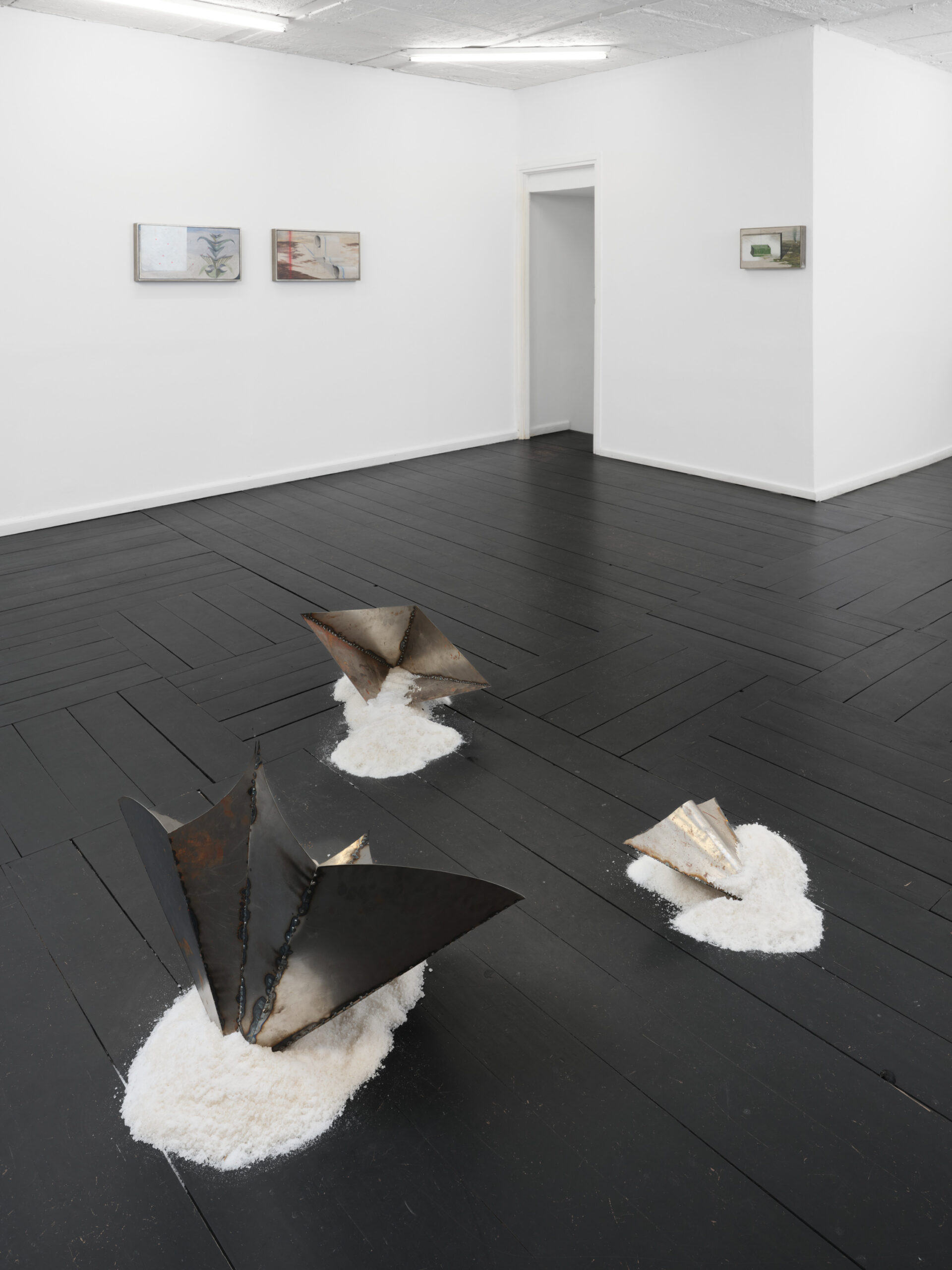
Flower, 2025 – Acrylic, pencil on wood, artist’s metal frame 32 x 62 x 5 cm
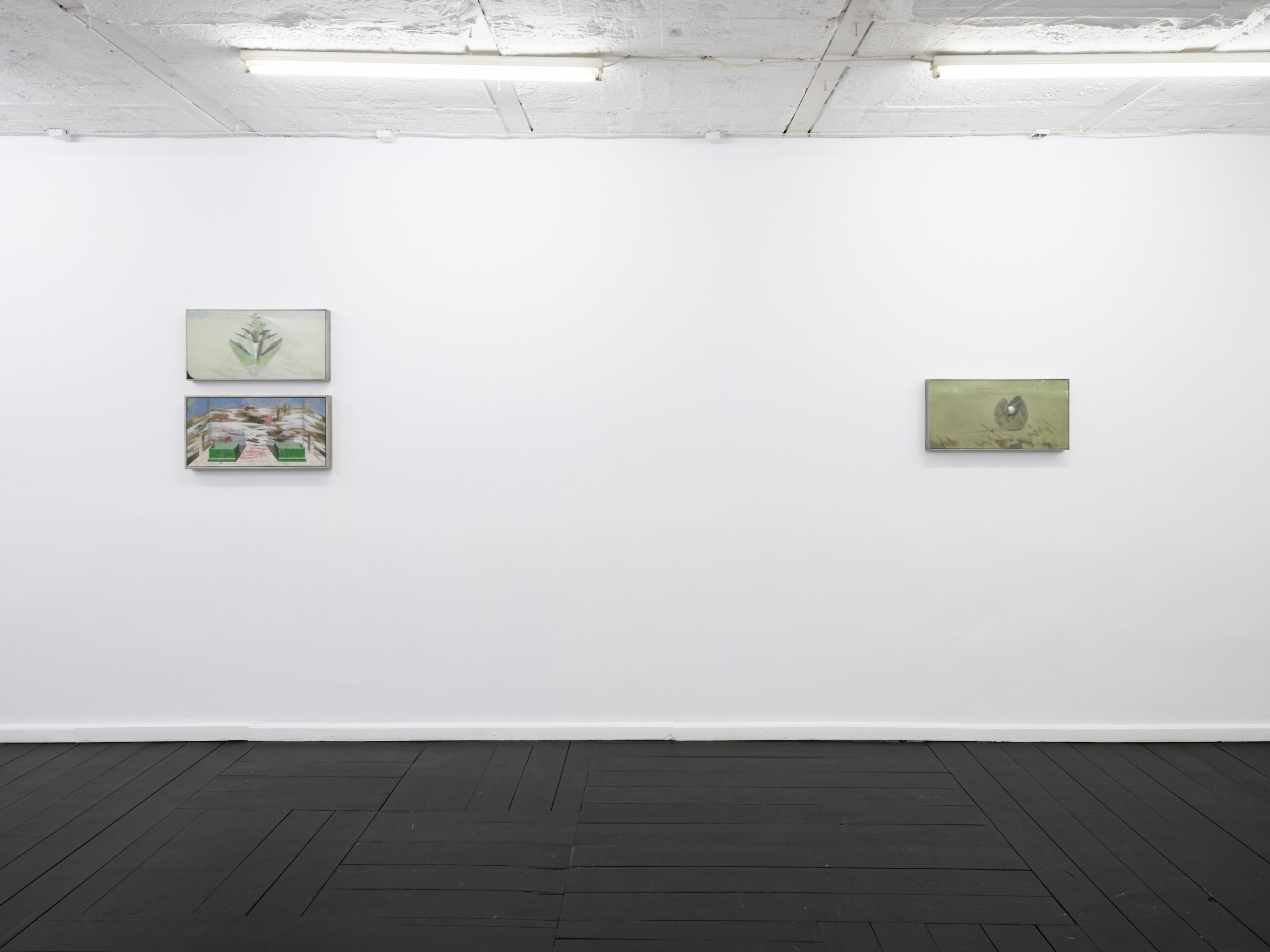
Insight, 2025 – Acrylic, pencil on wood, artist’s metal frame 32 x 62 x 5 cm
Untitled, 2025 Acrylic, pencil on wood, artist’s metal frame, 32 x 62 x 5 cm
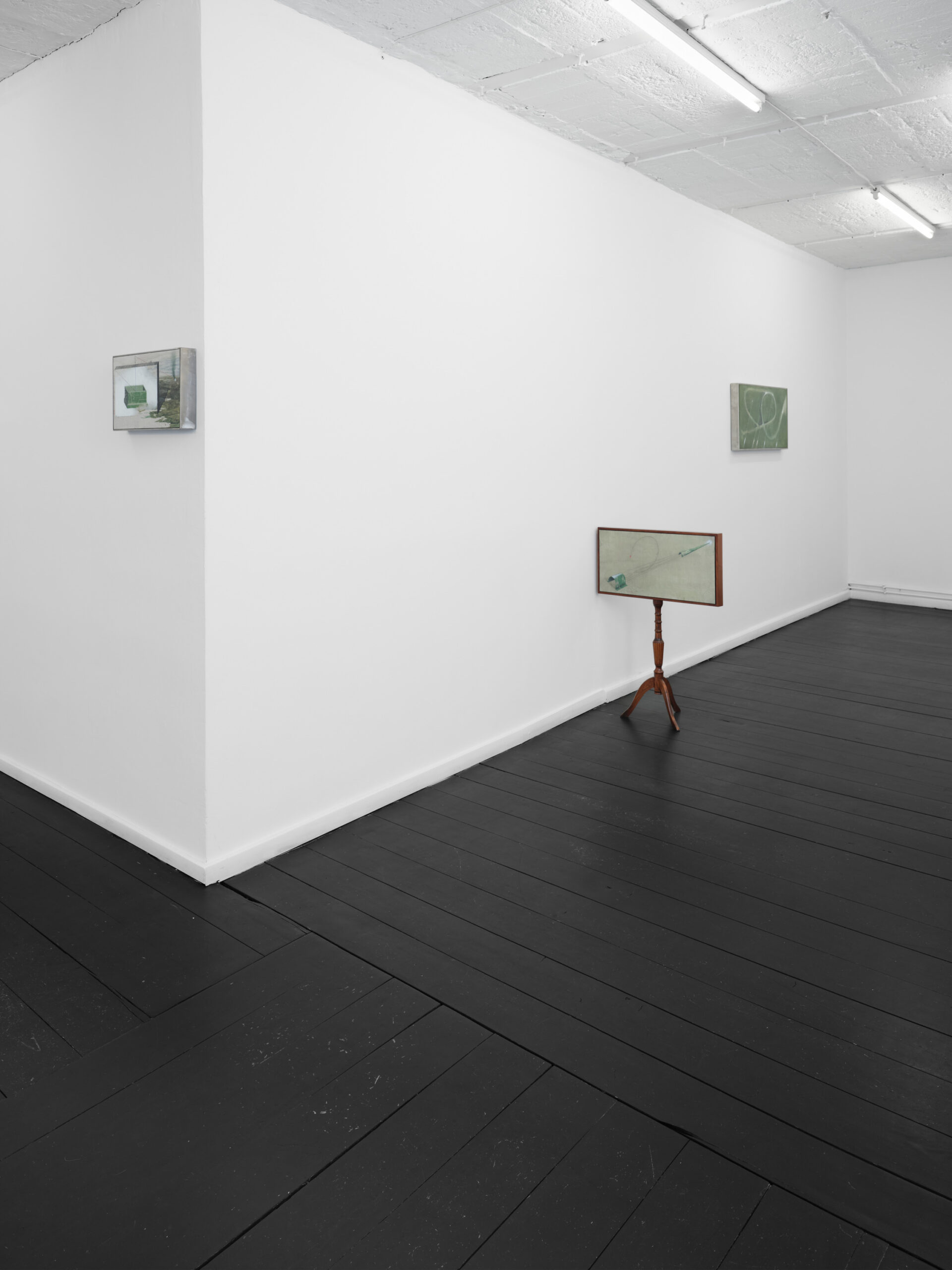
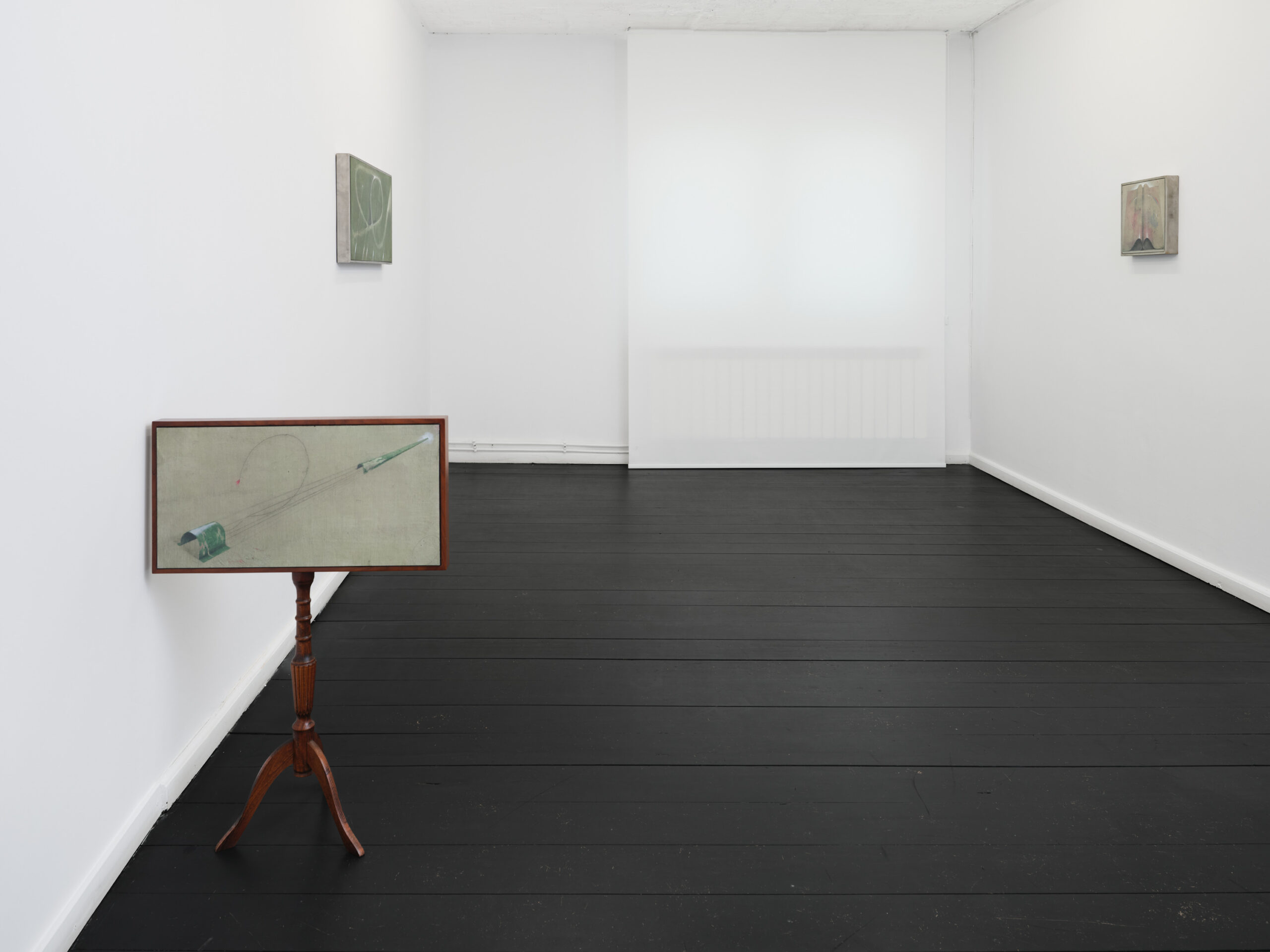
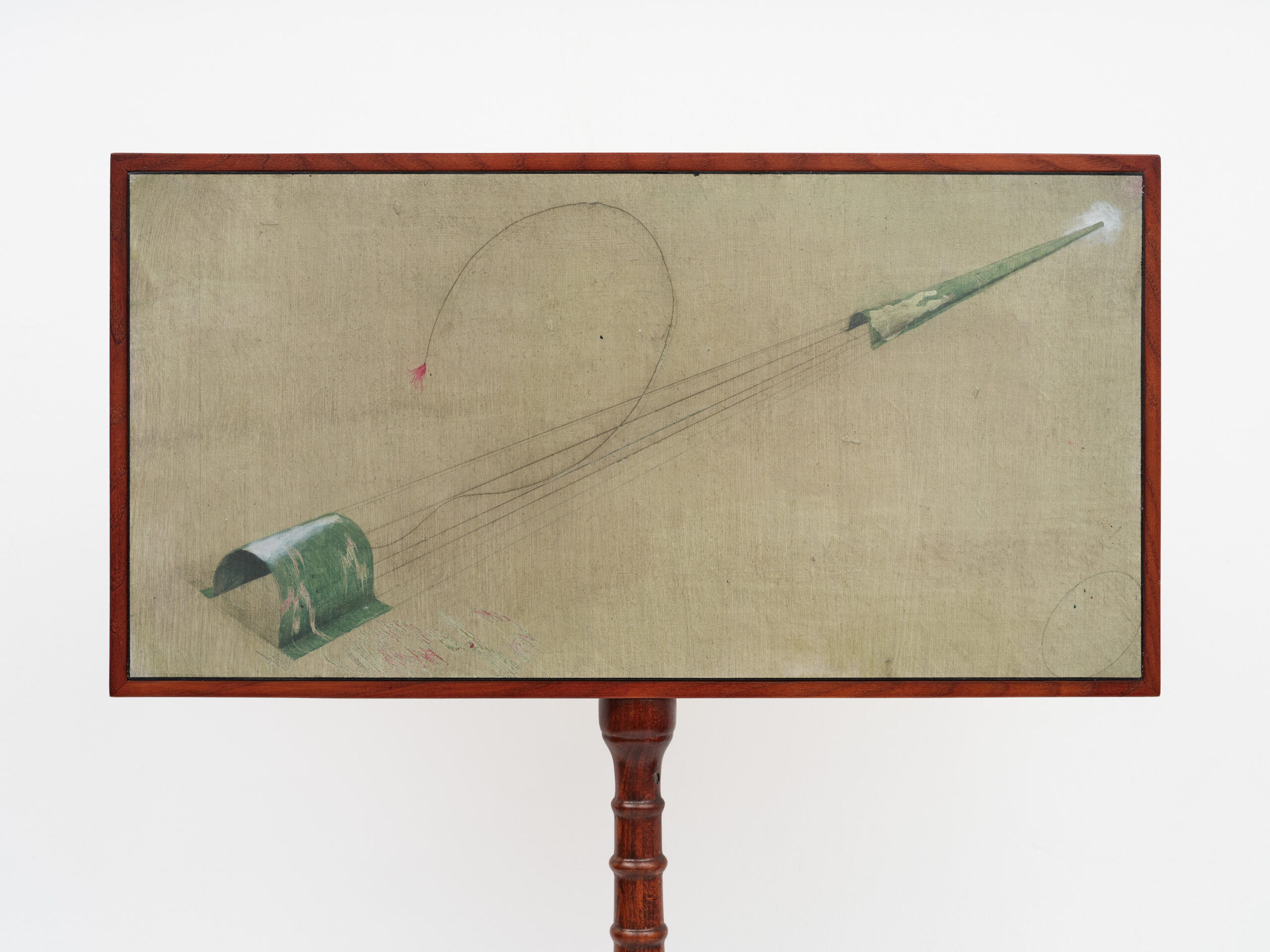
Instrument, 2025 – Acrylic, pencil on wood, artist’s wooden frame, variable dimensions
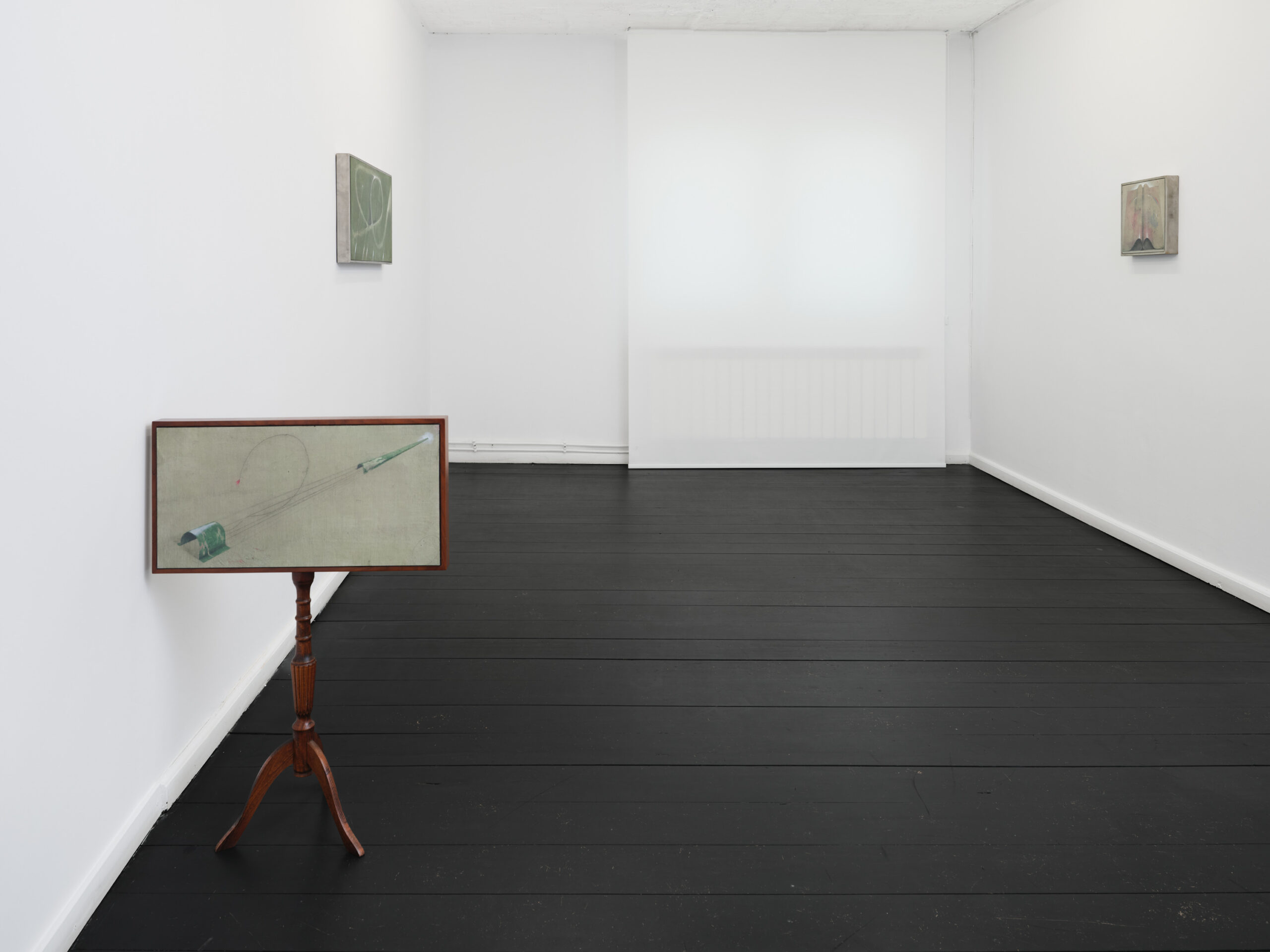
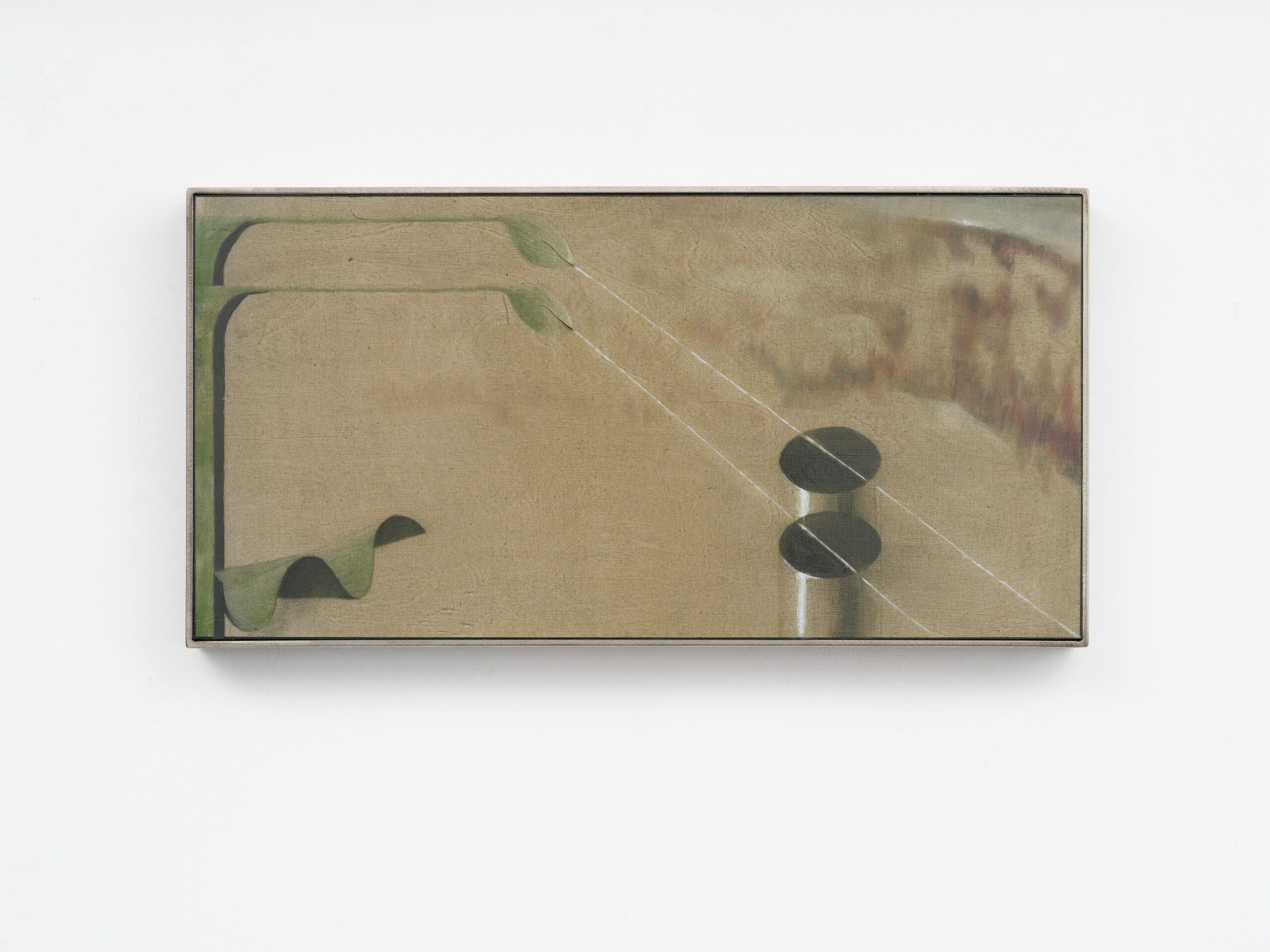
Untitled, 2025 Acrylic, pencil on wood, artist’s metal frame, 32 x 62 x 5 cm