Lines, Edges, and Thresholds
In this exhibition, the cube is not a closed form. It is neither a block nor a mass, but a constructed and displaced solid — something that can be inhabited, moved, penetrated, broken apart, rendered legible as transparent, or transformed into an image. Lines, Edges, and Thresholds speaks of lines of thought and transgression, of edges where the gaze comes to rest, of physical, spatial, and perceptual thresholds. It is precisely within this space of transition that the works of Wiktor Gutt, Joachim Koester, and Jakub Michalak resonate with one another without merging.
In the collaborative work of Wiktor Gutt and Waldemar Raniszewski, the cube appears as a form in circulation. In The Great Conversation, begun in 1972, transformation is not merely formal but dialogical and collective. Form is built through exchange — through response, repetition, and attunement. This situation is inscribed through the body: the cube is never given here as a stable structure, but as something that transforms through interaction, gesture, and lived time.
It is precisely this instability that allows us to grasp — almost in contrast — another, more systematic way of thinking about the cube, as it appears in Sol LeWitt. In his Incomplete Open Cubes (1974/1975), the American artist begins with an elementary structure, subjecting it to methodical variations and exhaustively exploring all possible combinations of a deliberately incomplete cube. Here, form is defined by a rule and the set of its permutations.
The difference between these approaches is clear: while LeWitt stabilizes the cube as a system of variations, Gutt and Raniszewski allow it to transform within experience, relation, and time. Yet this difference is not merely oppositional — it opens a line of displacement. For it is from the cube understood as a structure — already disrupted, already incomplete — that Joachim Koester later departs, shifting its logic toward perceptual uncertainty and unknowing.
In The Great Conversation, the cube becomes an operator of transition between face, mask, solid, inhabited space, drawing, landscape, and snow. It does not present a finished form; rather, it stages the constant transformation of form. When a fragment of a shattered whole is preserved — the sculpture of the deceased brother (Head of Michał, 1970) — it does not resolve anything; on the contrary, it opens the question of presence and absence, of what disappears and what endures. In Gutt’s work, form is never fully autonomous. It is always entangled in relations of bodies, voices, loss, and transition.
Framing with the Body (1976) develops this logic in another way. The model does not merely pose; their body determines the frame. The image ceases to be the result of a sovereign gaze and becomes the outcome of negotiation between positions, distances, and angles. Photography becomes a protocol of mutual adjustment. Here too, the frame is not a simple technical tool: it becomes a condition of relation, attunement, and displacement.
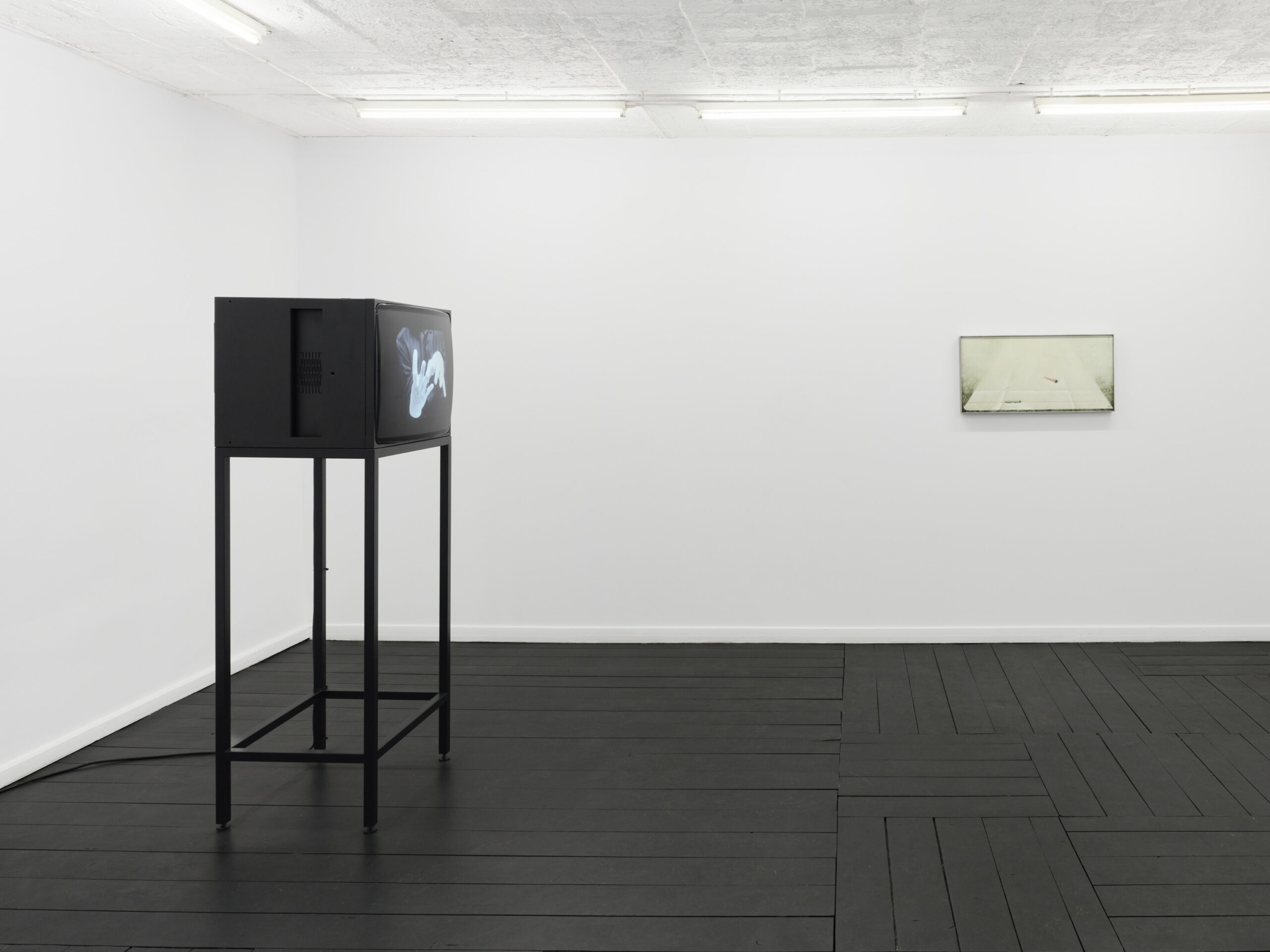
Joachim Koester later takes up this relation between structure and instability, but internalizes it further. In Variations of Incomplete Open Cubes (2011), he directly references Sol LeWitt’s work — not to repeat its combinatorial logic, but to shift its effects toward perceptual experience and instability. The film operates less through the clarity of a system and more through its transition into unknowing. We begin with recognizable frameworks — LeWitt, the cube, logic — and end in a zone where this logic can no longer be fully reconstructed. What is at stake is not opacity itself, but the fact that the system leads to a point where it no longer produces knowledge, but only the experience of a threshold. In this sense, one can speak of “failure as method”: not as an explicitly formulated principle, but as a mode of operation in which what escapes the system becomes the condition of the film’s experience.
Hands then become imperfect diagrams: they resemble a cube without ever being one. Mysticism (as Sol LeWitt wrote: “conceptual artists are mystics rather than rationalists; they reach conclusions that logic cannot reach”) is not a hidden transcendence here, but a visible form that remains irreducibly incomplete and compels the viewer to dwell in the gap between what appears and what escapes. The film does not “tell” LeWitt; it undermines the legibility of the system. The sequence of hands functions like a visual syntax — but one that cannot be translated into a stable sentence. We understand that a rule exists, yet it cannot be fully translated into discursive language. We move from explanation to attention, from reading to following, from meaning as content to meaning as rhythm.
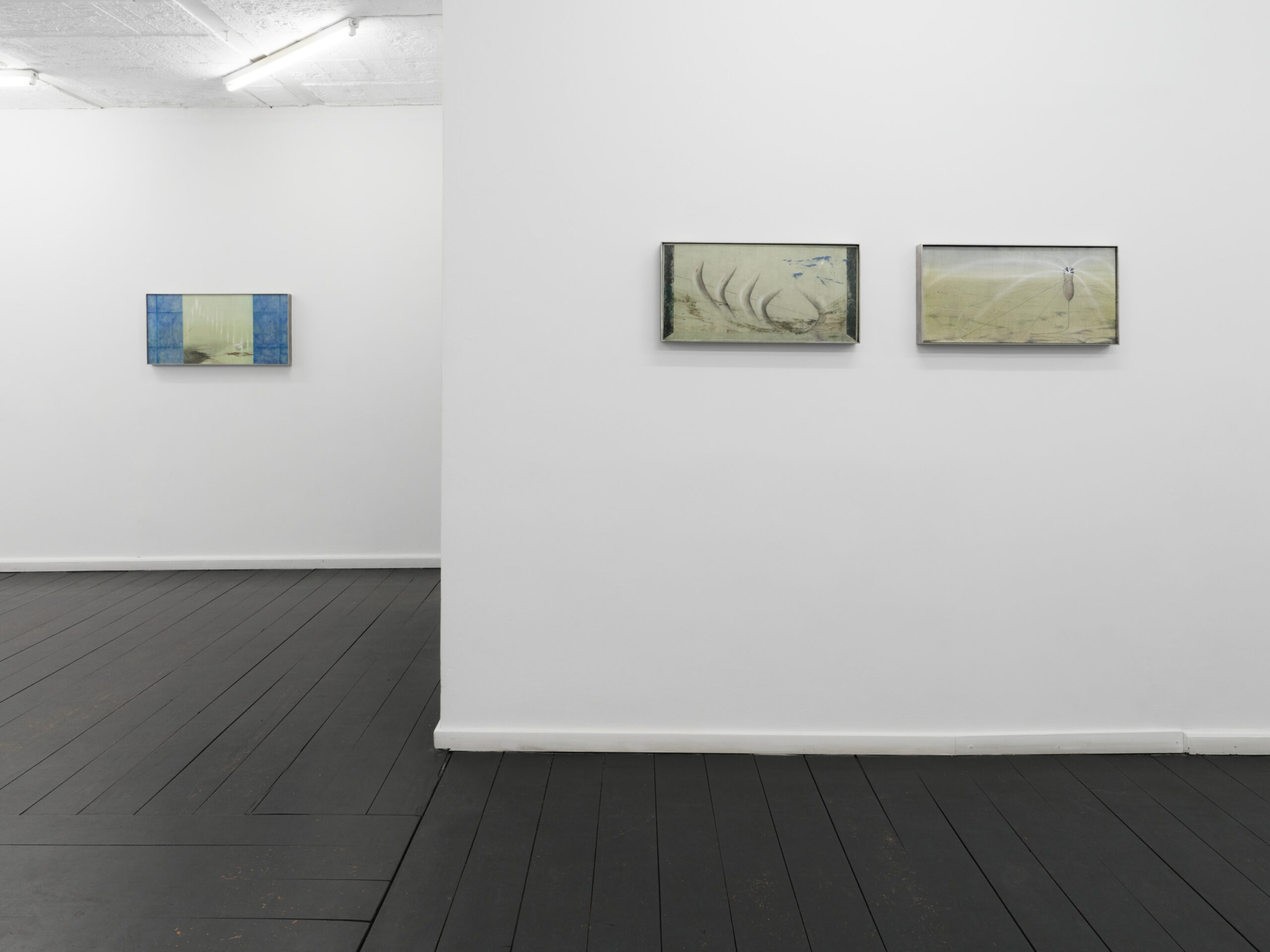
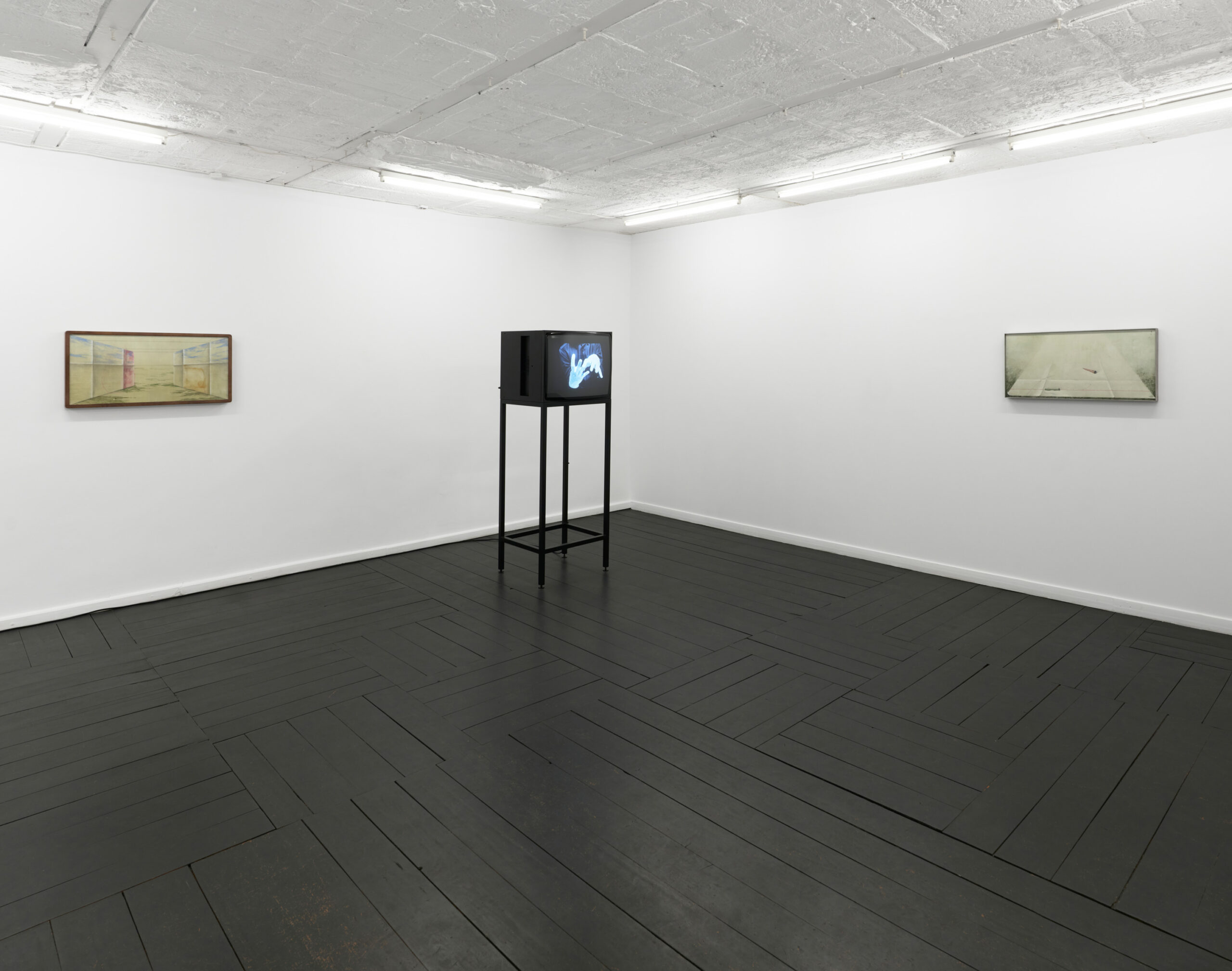
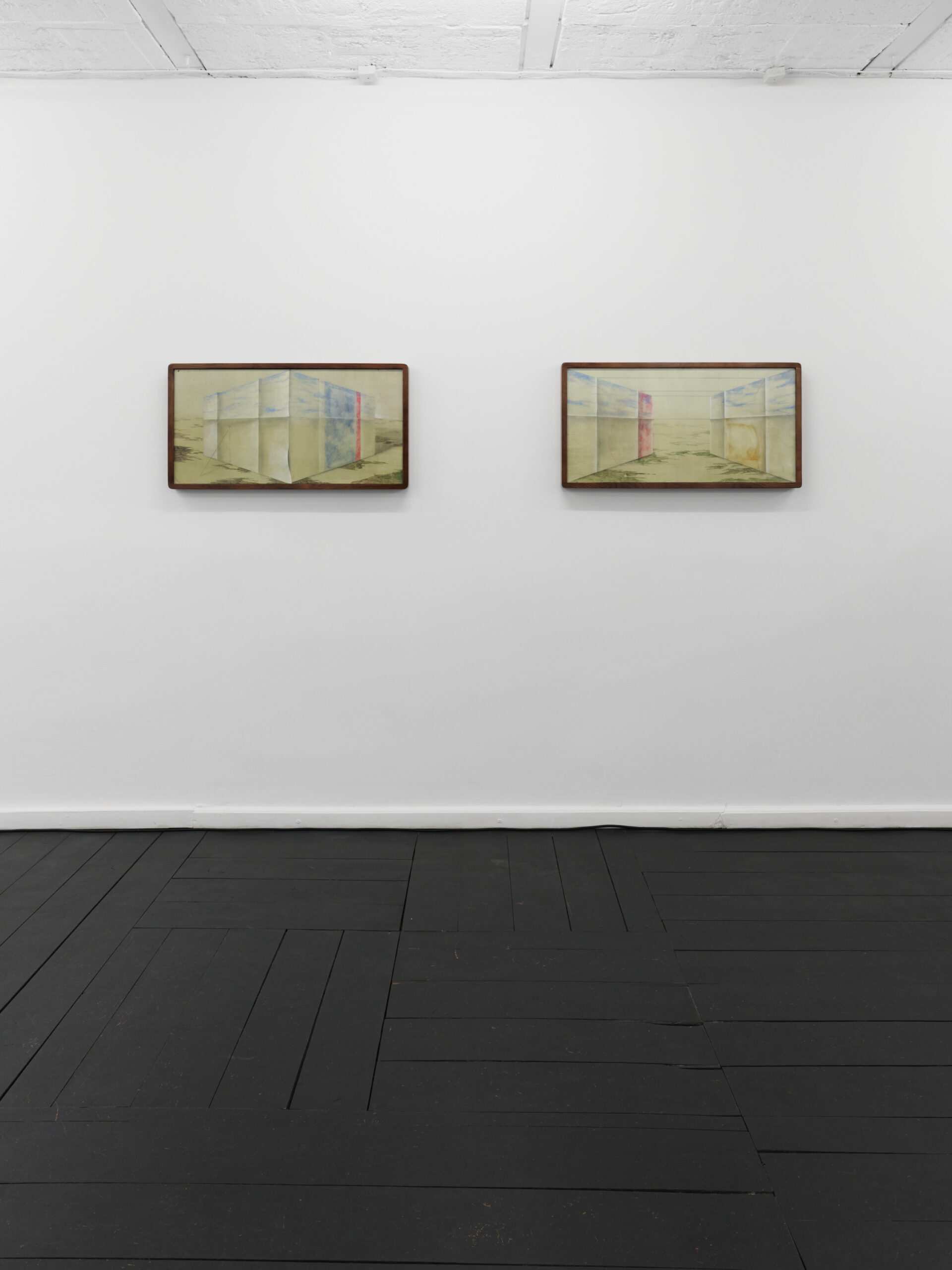
Jakub Michalak continues this movement at the level of the gaze itself. His cubes, plinths, grids, and transparencies do not serve to represent the landscape; they produce the conditions of its appearance. The horizon shifts through a glass cube, emptiness registers within an open plinth, and a lattice structure appears at once as screen, passage, and fracture. Form is never immediately graspable here. It reveals itself only partially, deflects light, slows the gaze. The landscape ceases to be a motif; it becomes a fragile emergence, sustained by devices that allow it to appear without fully yielding it.
In Jakub Michalak’s work, the cube ceases to be a simple solid and becomes a way of holding the gaze in suspension. His transparent surfaces, open plinths, grids, and slightly displaced horizons do not describe the landscape — they establish an expectation. Something seems about to appear, yet the image withdraws at the very moment it emerges. In this sense, the work approaches a more explicitly mystical dimension — in a secular sense of the term, close to what T. S. Eliot called the “still point of the turning world”: not a spectacular revelation, but an intensity of presence, a mode of attention in which the visible is never exhausted by what it shows. Michalak does not paint enigma as a subject; he organizes a situation of seeing in which the gaze is led toward dwelling in an interval — between appearance and disappearance, between recognition and expectation.
At this point, the mystical dimension acquires meaning, but in a secular understanding of aesthetic experience: not as religious spirituality, but as a way of inhabiting what never stabilizes. The term refers less to belief and more to a suspended, almost apophatic attention, in which the visible is never exhausted by what it reveals. In Gutt, form becomes a situation; in Koester, a procedure of experience; in Michalak, a device of the gaze. In each case, the cube signifies not stability, but transition.
Text: WHOISPOLA
Na tej wystawie sześcian nie jest formą zamkniętą. Nie jest blokiem ani masą, lecz bryłą konstrukcji i przemieszczenia, czymś, co może być zamieszkiwane, przesuwane, przenikane, rozbijane, uczytelniane jako przezroczyste lub przekształcane w obraz. Lines, Edges, and Thresholds mówi o liniach myślenia i przekroczenia, o krawędziach, na których zatrzymuje się spojrzenie, o progach fizycznych, przestrzennych i percepcyjnych. To właśnie w tej przestrzeni przejścia prace Wiktora Gutta, Joachima Koestera i Jakuba Michalaka współbrzmią, nie zlewając się ze sobą.
U Wiktora Gutta sześcian jawi się jako forma w obiegu. W Wielkiej rozmowie, rozpoczętej w 1972 roku we współpracy z Waldemarem Raniszewskim, przemiana nie jest wyłącznie formalna, lecz dialogiczna i kolektywna. Forma buduje się w wymianie, w odpowiedzi, w powtórzeniu, w dostrajaniu. Ta sytuacja zapisuje się poprzez ciało: sześcian nigdy nie jest tu dany jako stabilna struktura, lecz jako coś, co przekształca się w toku interakcji, gestów i przeżywanego czasu.
To właśnie ta niestabilność pozwala uchwycić, niejako w kontrze, inny sposób myślenia o sześcianie — bardziej systematyczny — jaki pojawia się u Sola LeWitta. W swoich Incomplete Open Cubes (1974/1975) amerykański artysta wychodzi od elementarnej struktury, którą poddaje metodycznym wariacjom, eksplorując w sposób wyczerpujący wszystkie możliwe kombinacje celowo niekompletnego sześcianu. Forma definiowana jest tu przez regułę oraz zbiór jej permutacji.
Różnica między tymi podejściami jest wyraźna: o ile LeWitt stabilizuje sześcian jako system wariacji, o tyle Gutt i Raniszewski pozwalają mu przekształcać się w doświadczeniu, relacji i czasie. Różnica ta nie jest jednak wyłącznie opozycją — otwiera ona linię przesunięcia. To bowiem od sześcianu rozumianego jako struktura — już naruszonego, już niekompletnego — Joachim Koester wychodzi później, by przesunąć jego logikę w stronę percepcyjnej niepewności i niewiedzy.
W Wielkiej rozmowie sześcian staje się operatorem przejścia między twarzą, maską, bryłą, przestrzenią zamieszkiwaną, rysunkiem, krajobrazem i śniegiem. Nie prezentuje formy ukończonej; inscenizuje raczej nieustanną transformację formy. Gdy zachowany zostaje fragment rozbitej całości, rzeźba zmarłego brata niczego nie domyka — przeciwnie, otwiera pytanie o obecność i nieobecność, o to, co znika i co trwa. U Gutta forma nigdy nie jest w pełni autonomiczna. Zawsze uwikłana jest w relacje ciał, głosów, straty i przejścia.
Kadrowanie ciałem (1976) rozwija tę logikę innym sposobem. Model nie tylko pozuje; jego ciało wyznacza kadr. Obraz przestaje być rezultatem suwerennego spojrzenia, a staje się wynikiem negocjacji między pozycjami, dystansami i kątami. Fotografia staje się protokołem wzajemnego dostosowania. Także tutaj kadr nie jest prostym narzędziem technicznym: staje się warunkiem relacji, dostrojenia i przesunięcia.
Joachim Koester podejmuje później ten związek między strukturą a niestabilnością, ale bardziej go uwewnętrznia. W Variations of Incomplete Open Cubes (2011) odwołuje się bezpośrednio do pracy Sola LeWitta, nie po to jednak, by powtórzyć jego logikę kombinatoryczną, lecz by przesunąć jej efekty w stronę doświadczenia percepcyjnego i niestabilności. Film pracuje mniej na klarowności systemu, a bardziej na jego przejściu ku niewiedzy. Zaczynamy od czytelnych ram — LeWitt, sześcian, logika — a kończymy w strefie, w której tej logiki nie da się już w pełni odtworzyć. Stawką nie jest tu sama nieprzejrzystość, lecz fakt, że system prowadzi do punktu, w którym nie produkuje już wiedzy, lecz jedynie doświadczenie progu. W tym sensie można mówić o „porażce jako metodzie”: nie jako o wyraźnie sformułowanej zasadzie, lecz jako o sposobie działania, w którym to, co wymyka się systemowi, staje się warunkiem doświadczenia filmu. Dłonie stają się wówczas niedoskonałymi diagramami: przypominają sześcian, nie mogąc nim być. Mistyka (jak pisze Sol LeWitt: „artyści konceptualni są raczej mistykami niż racjonalistami; dochodzą do wniosków, do których logika nie jest w stanie doprowadzić”) nie jest tu ukrytą transcendencją, lecz widzialną formą, która pozostaje nieusuwalnie niekompletna i zmusza widza do zamieszkania w szczelinie między tym, co się ukazuje, a tym, co się wymyka. Film nie „opowiada” LeWitta; podważa czytelność systemu. Sekwencja dłoni działa jak wizualna składnia, ale taka, której nie da się przełożyć na stabilne zdanie. Rozumiemy, że istnieje reguła, lecz nie daje się ona w pełni przetłumaczyć na język dyskursywny. Przechodzimy od wyjaśniania do uwagi, od czytania do podążania, od sensu jako treści do sensu jako rytmu.
Jakub Michalak kontynuuje ten ruch na poziomie samego spojrzenia. Jego sześciany, cokoły, siatki i przezroczystości nie służą przedstawianiu krajobrazu; wytwarzają sposób jego pojawiania się. Horyzont przesuwa się przez szklany sześcian, pustka zaznacza się w otwartym cokole, a kratownicowa struktura wydaje się jednocześnie ekranem, przejściem i załamaniem. Forma nigdy nie daje się tu uchwycić od razu. Pozwala się dostrzec częściowo, odchyla światło, spowalnia spojrzenie. Krajobraz przestaje być motywem: staje się kruchym pojawieniem, podtrzymywanym przez urządzenia, które pozwalają mu się wyłonić, nie wydając go w pełni.
U Jakuba Michalaka sześcian przestaje być prostą bryłą, a staje się sposobem utrzymywania spojrzenia w zawieszeniu. Jego przezroczyste powierzchnie, otwarte cokoły, siatki i lekko przesunięte horyzonty nie opisują krajobrazu — ustanawiają oczekiwanie. Coś zdaje się mieć się pojawić, lecz obraz uchyla się dokładnie w momencie, gdy się ukazuje. W tym sensie praca ta zbliża się do wyraźniej mistycznego wymiaru, w świeckim znaczeniu tego słowa, bliskiego temu, co T. S. Eliot nazywa „nieruchomym punktem w ruchu”: nie chodzi o spektakularne objawienie, lecz o intensywność obecności, o formę uwagi, w której widzialne nigdy nie wyczerpuje się w tym, co pokazuje. Michalak nie maluje zagadki jako tematu; organizuje sytuację widzenia, w której spojrzenie zostaje prowadzone ku trwaniu w odstępie — między pojawieniem a zanikiem, między rozpoznaniem a oczekiwaniem.
W tym miejscu wymiar mistyczny nabiera sensu, lecz w świeckim rozumieniu doświadczenia estetycznego: nie jako religijna duchowość, lecz jako sposób zamieszkiwania tego, co nigdy się nie stabilizuje. Słowo to odsyła mniej do wiary, a bardziej do zawieszonej uwagi, niemal apofatycznej, w której widzialne nie wyczerpuje się w tym, co ukazuje. U Gutta forma staje się sytuacją; u Koestera — procedurą doświadczenia; u Michalaka — urządzeniem spojrzenia. W każdym z tych przypadków sześcian nie oznacza stabilności, lecz przejście.
Tekst: WHOISPOLA
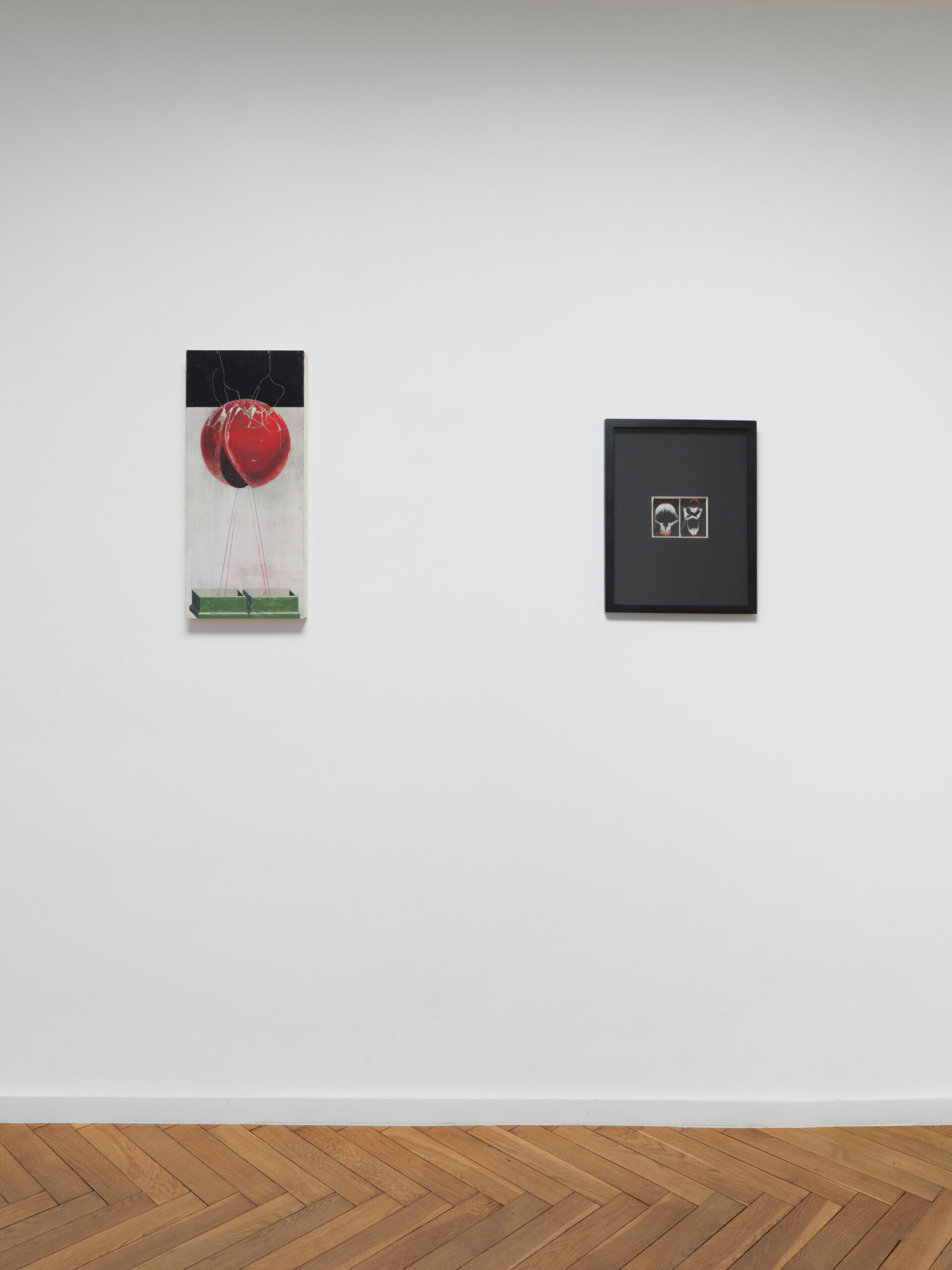
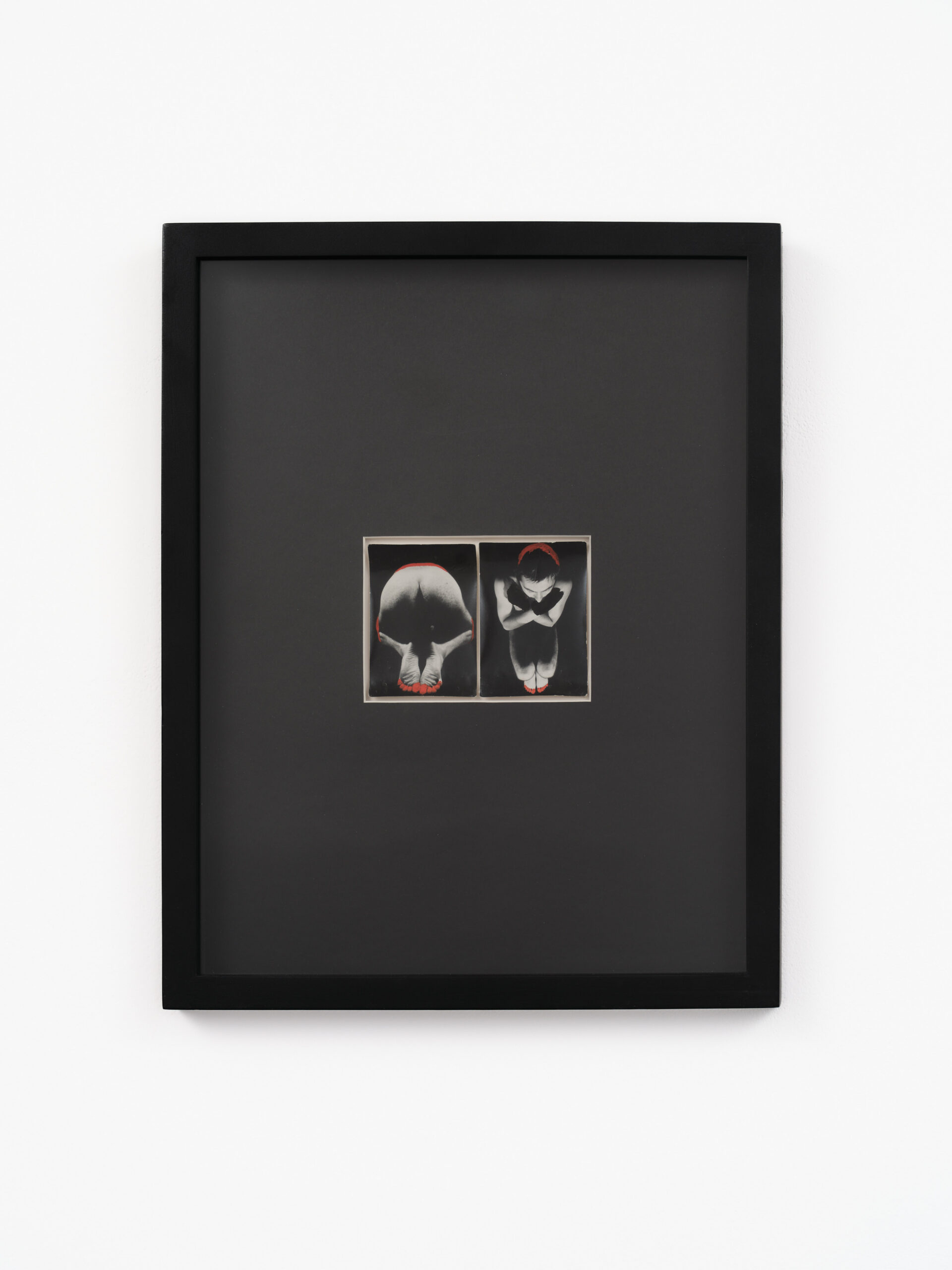
Wiktor Gutt, Framing the Body, 1976 – Black and white gelatin silver prints, acrylic, 9 x 12 cm
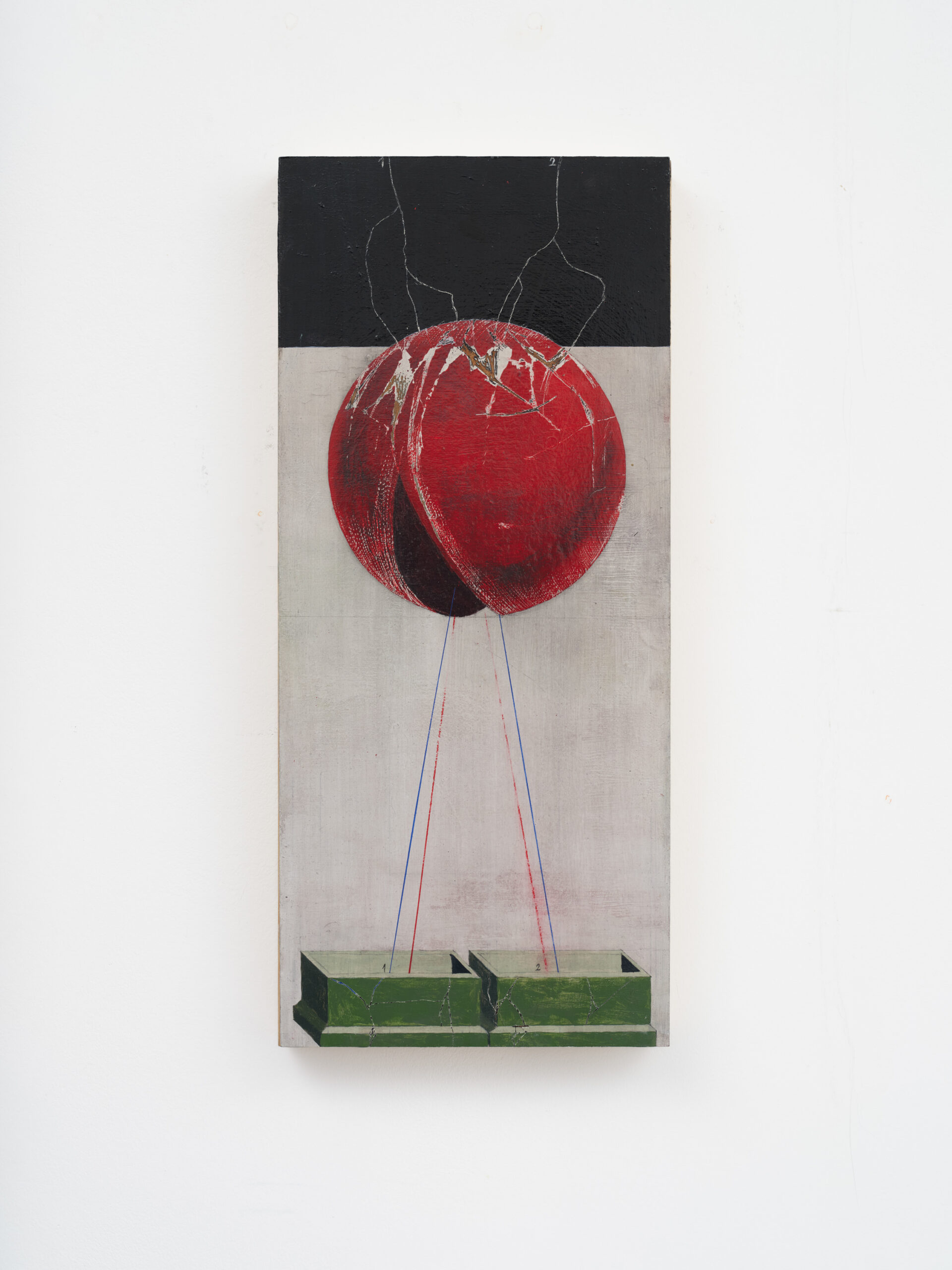
Jakub Michalak, picturarumori, 2025 – Acrylic, pencil on wood, 80 x 40 x 5 cm
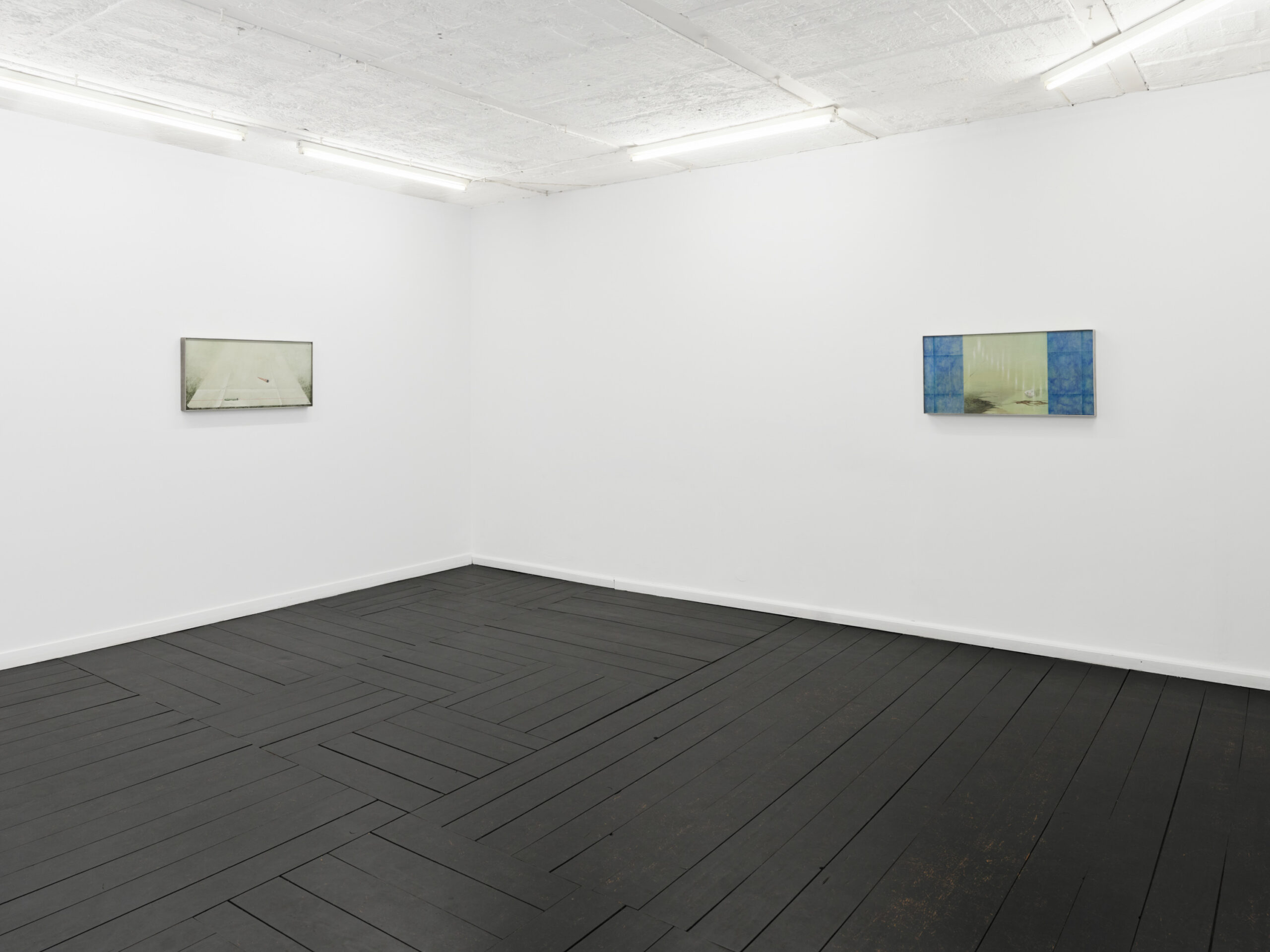
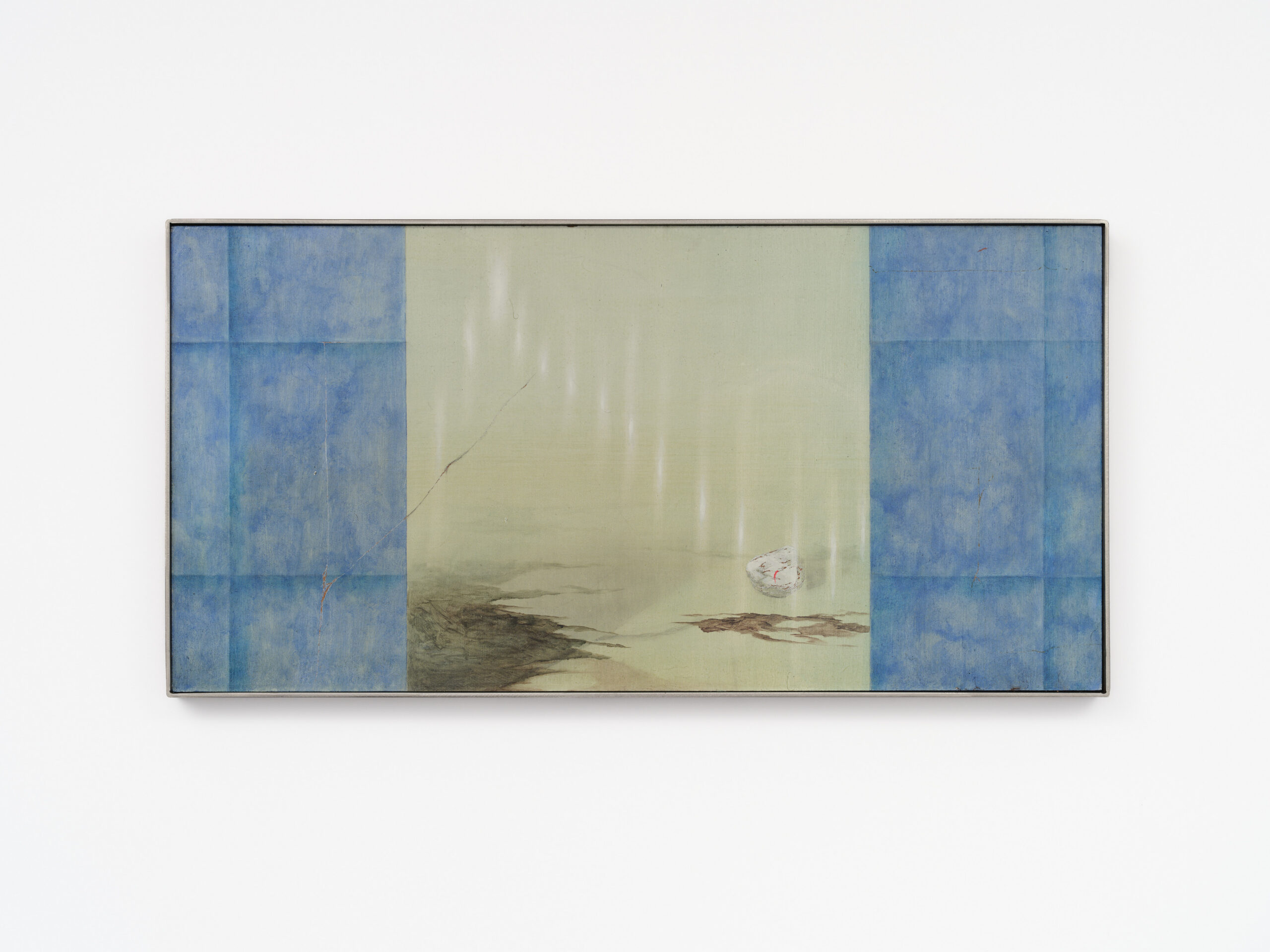
Jakub Michalak, Stone, 2026 – Acrylic, pencil on wood, artist’s metal frame, 41 x 81 x 5 cm
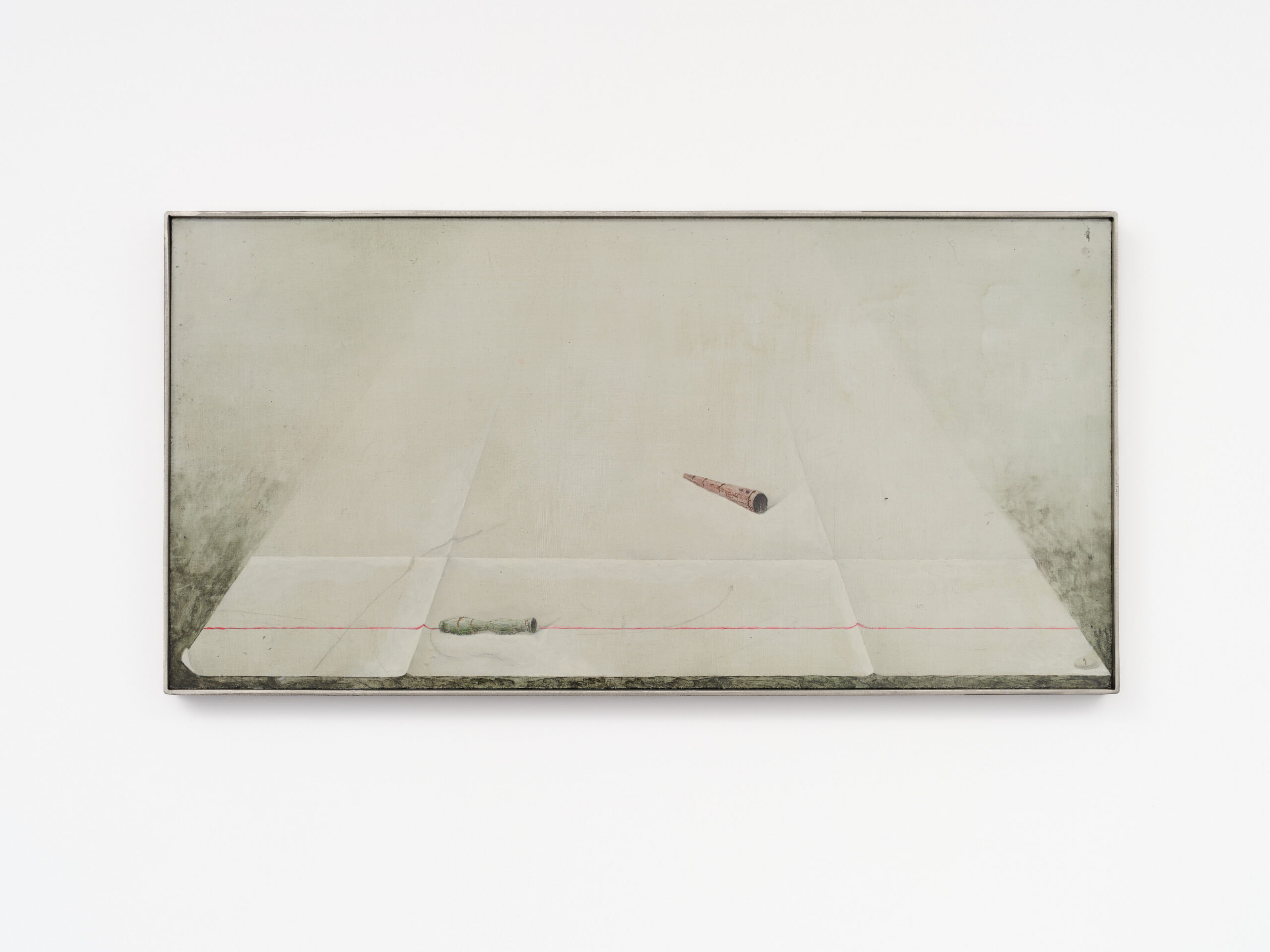
Jakub Michalak, Untitled, 2026 – Acrylic, pencil on wood, artist’s metal frame, 41 x 81 x 5 cm
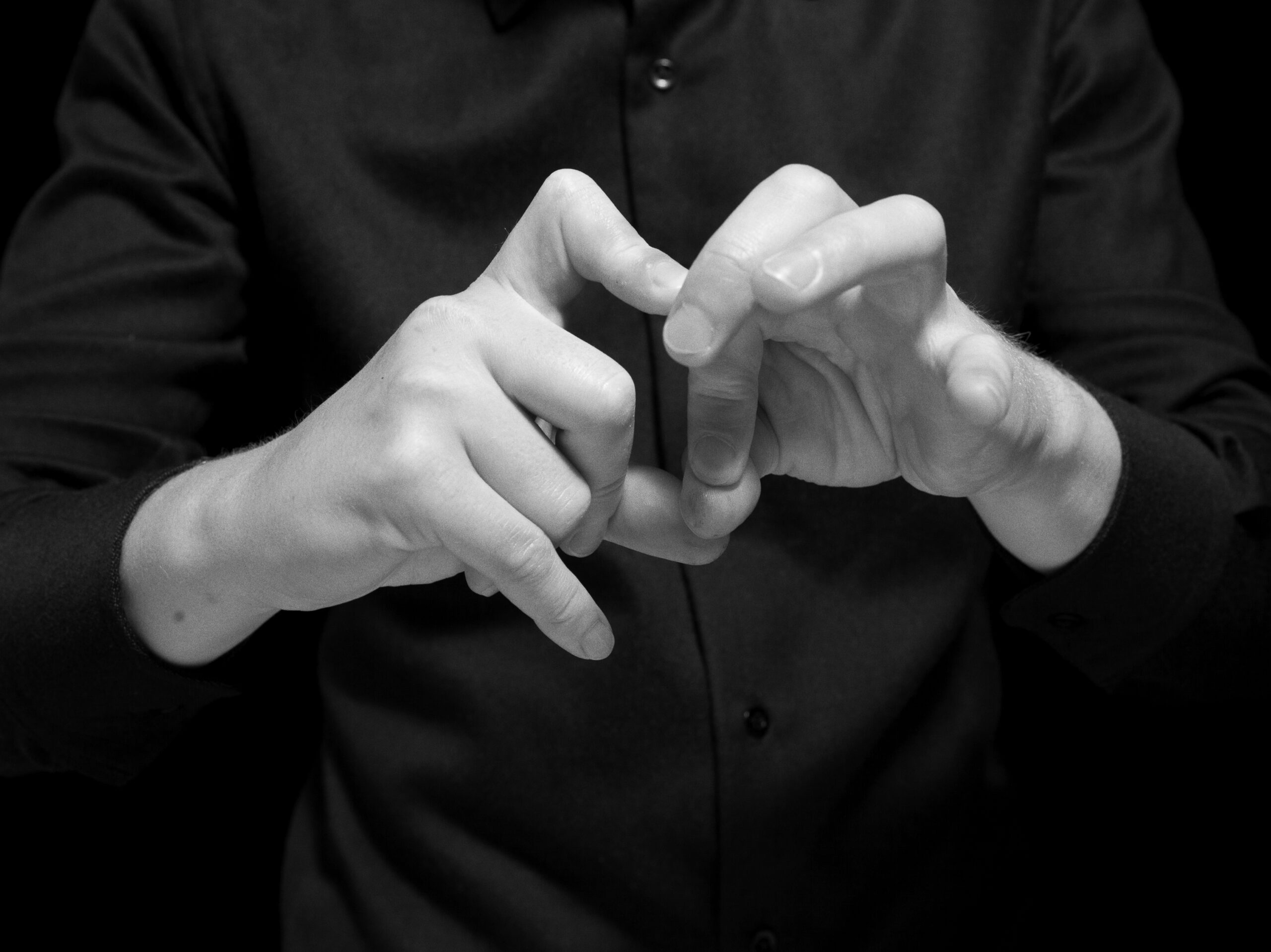
Joachim Koester, Variations of Incomplete Open Cubes, 2011 – Film still, 16 mm film, black and white, silent, 8 min. 15 sec. – courtesy the artist and Jan Mot, Brussels
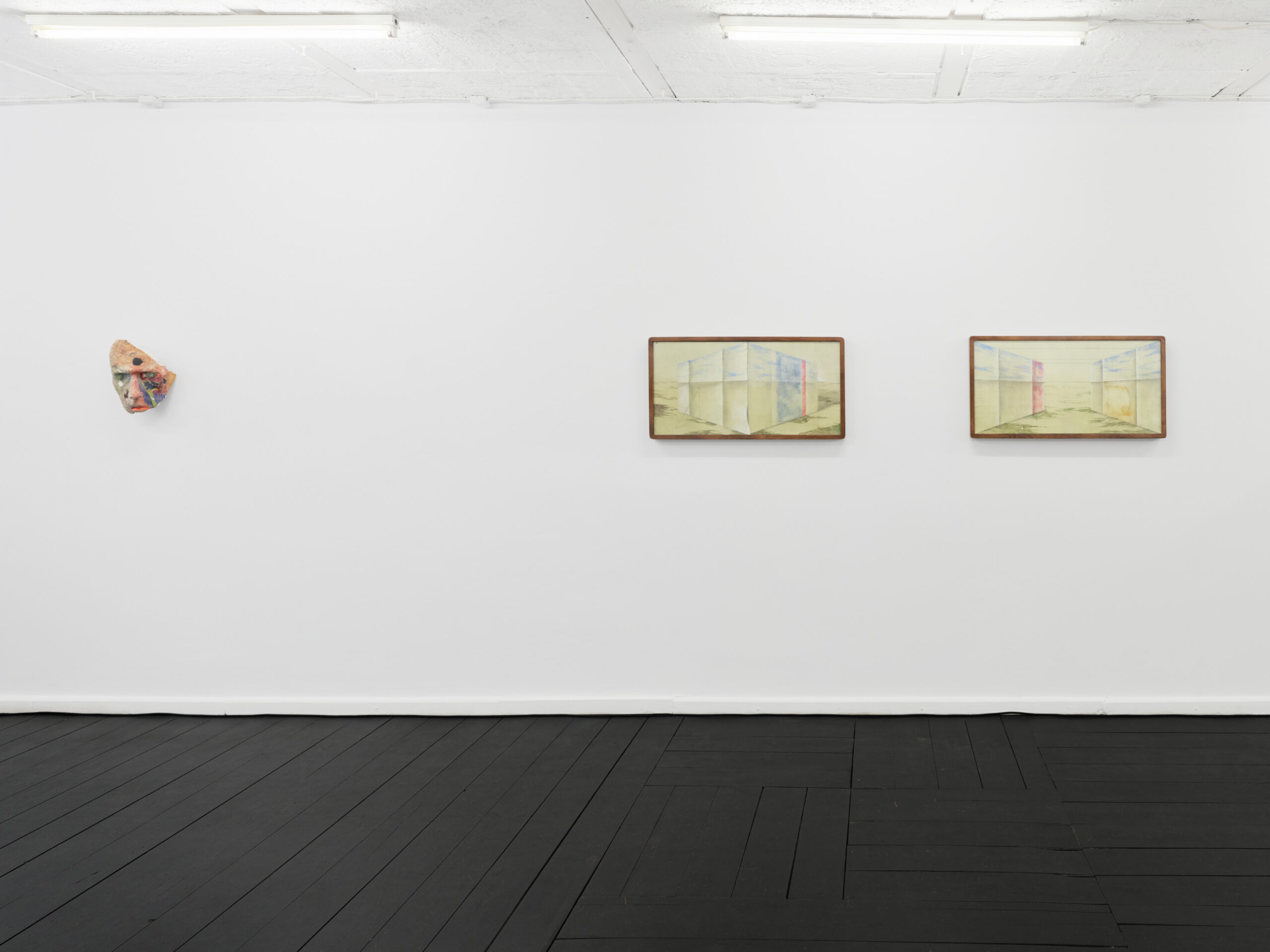
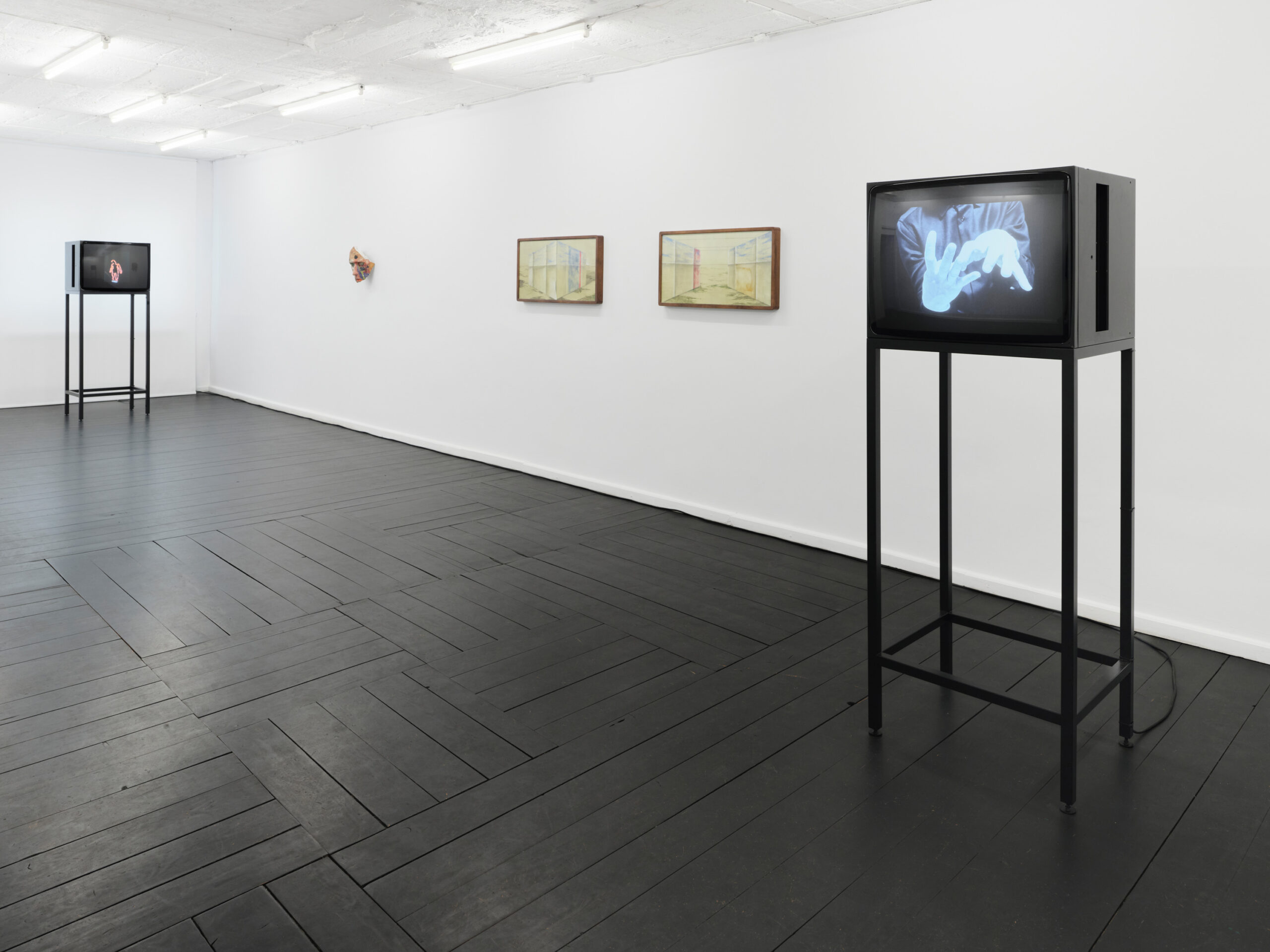
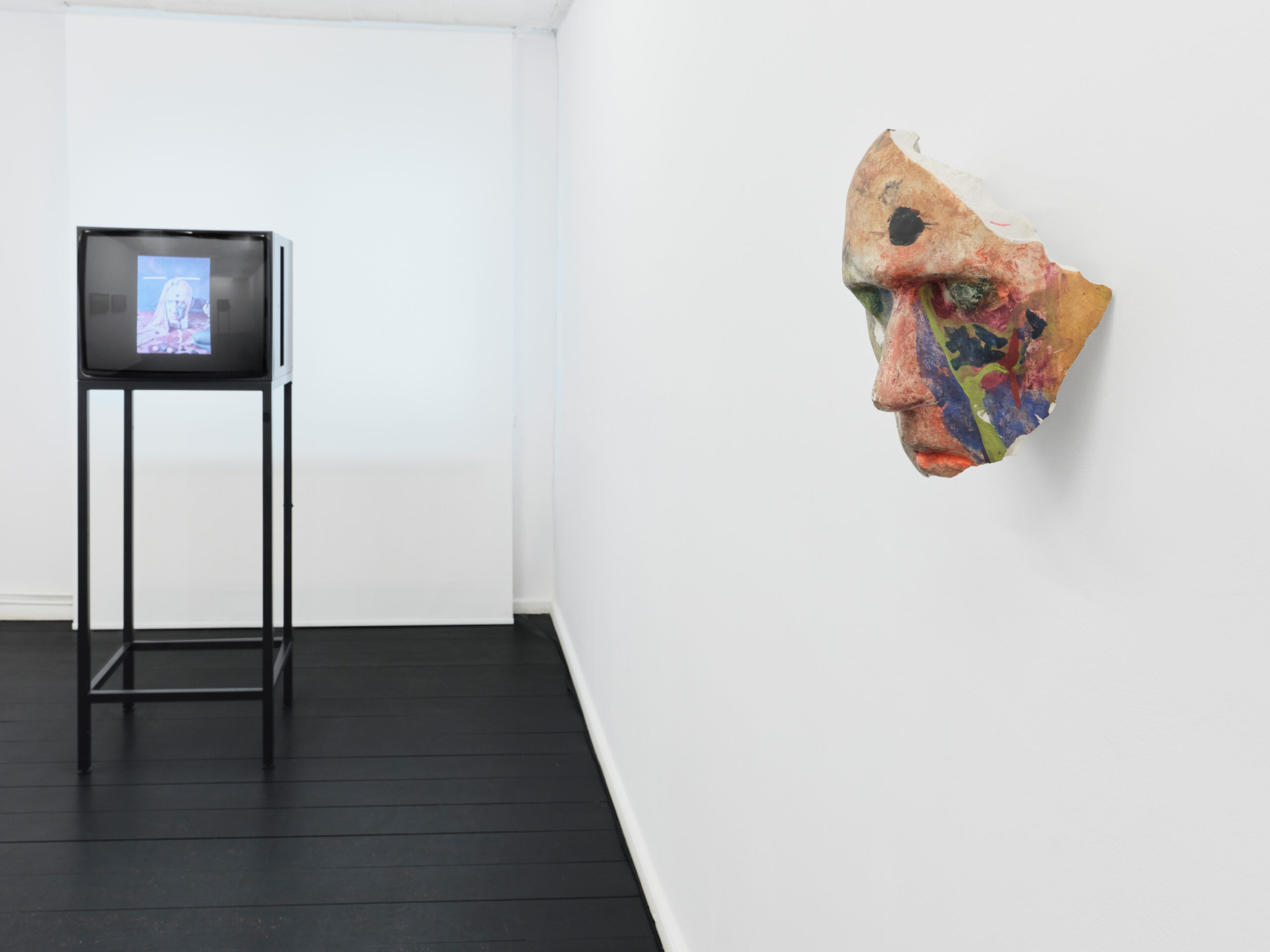
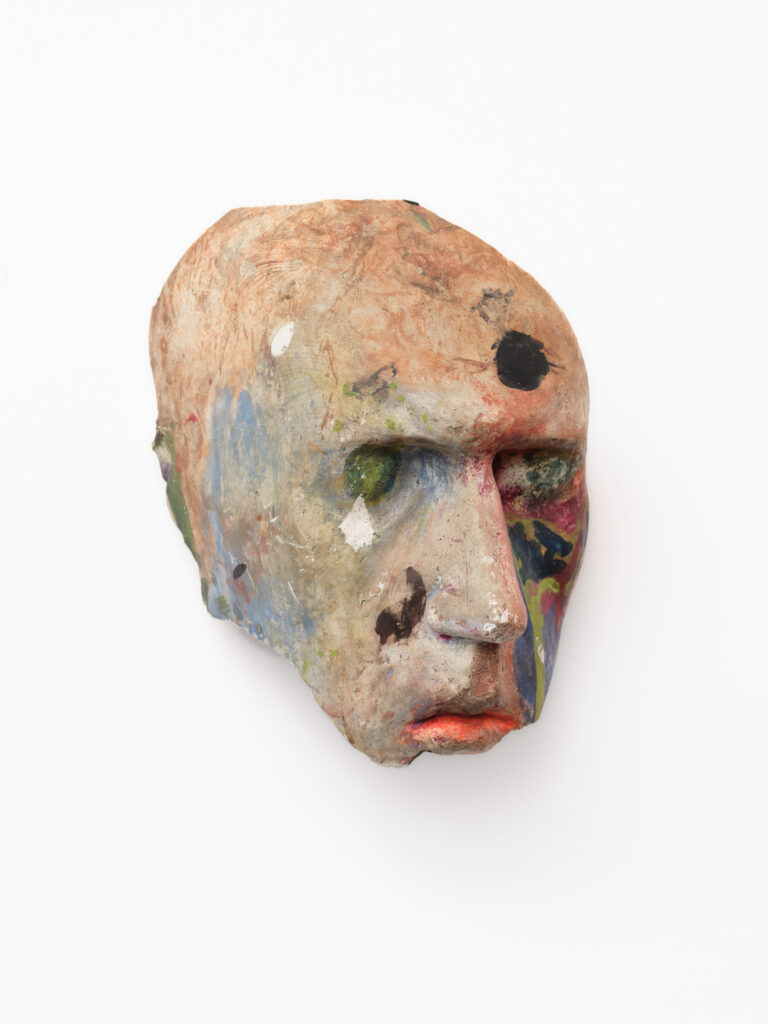
Wiktor Gutt, Head of Michał (The Great Conversation), 1969-1972 – Plaster, acrylic, 33 x 27 x 19 cm
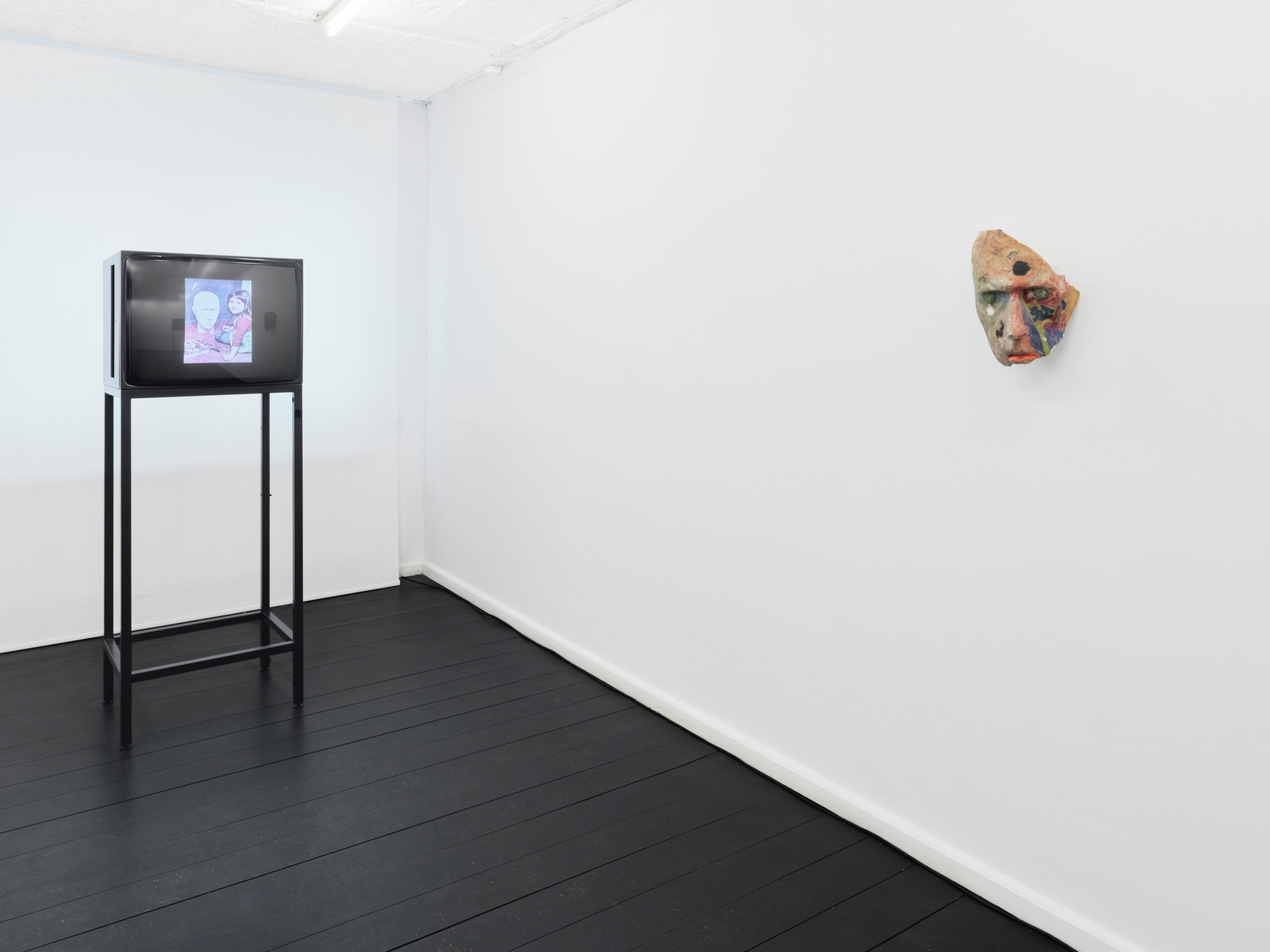
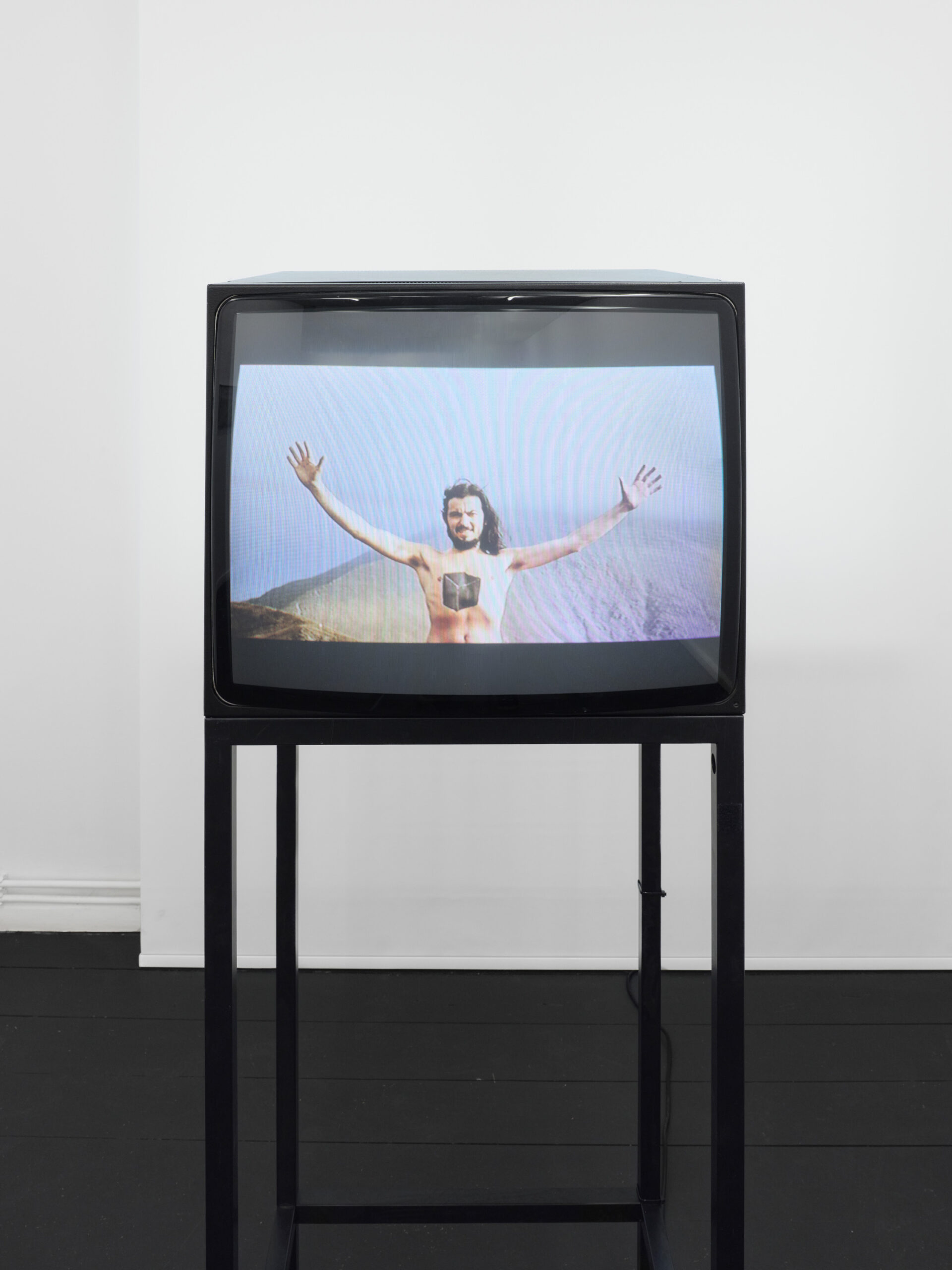
Wiktor Gutt, Waldemar Raniszewski, The Great Conversation, 1972-2008 – Slideshow, color, 5 min. 43 sec.
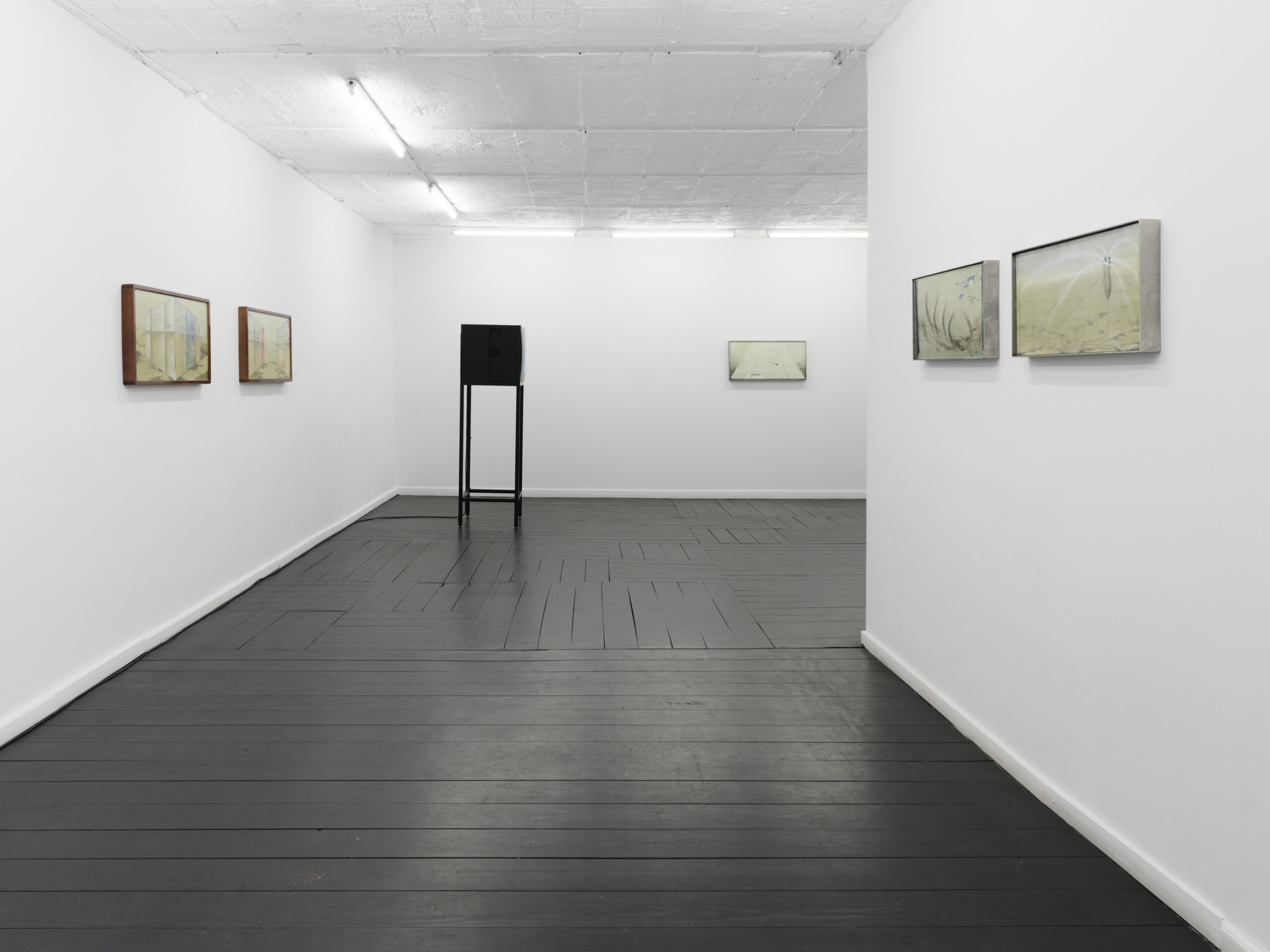
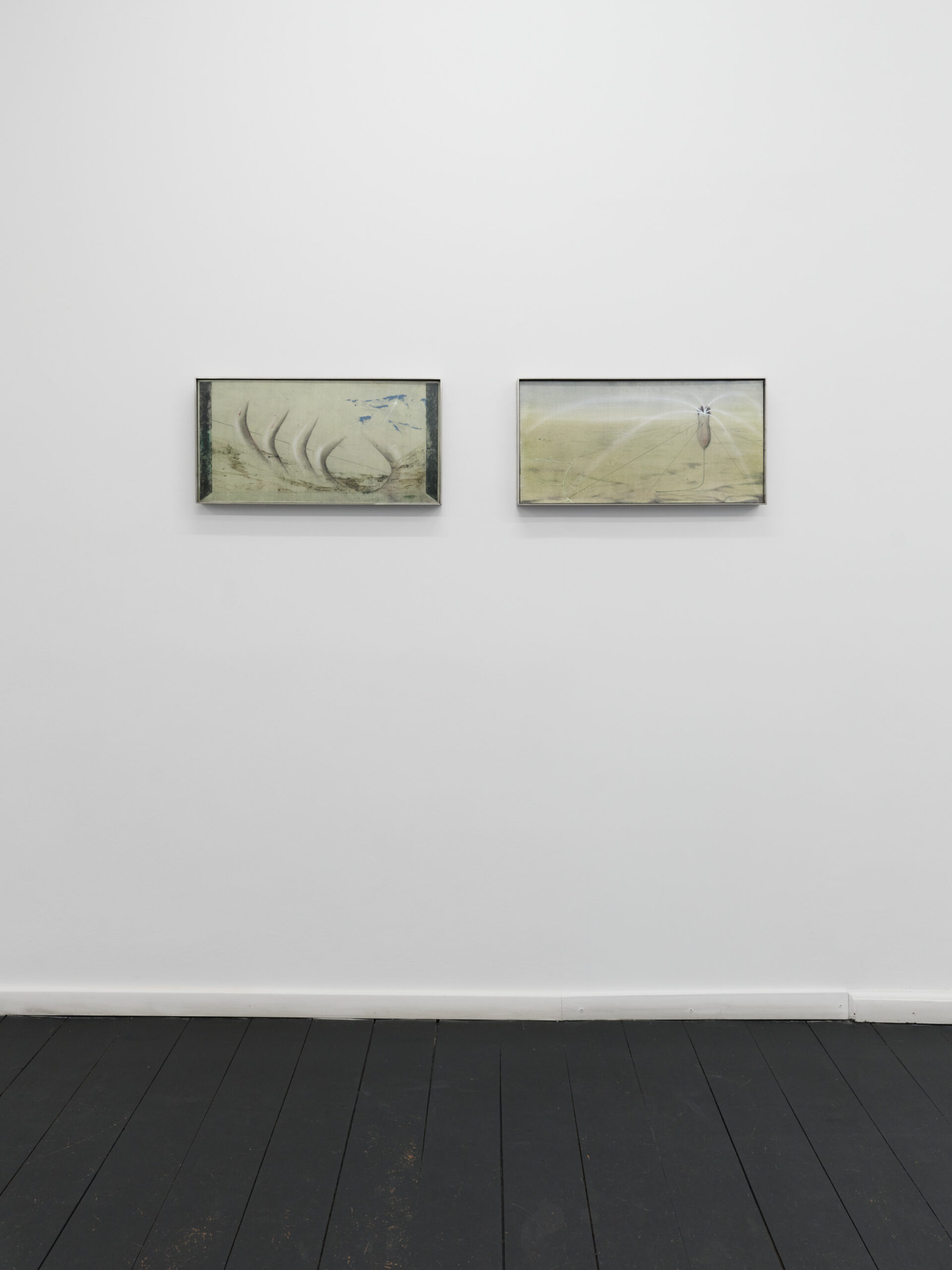
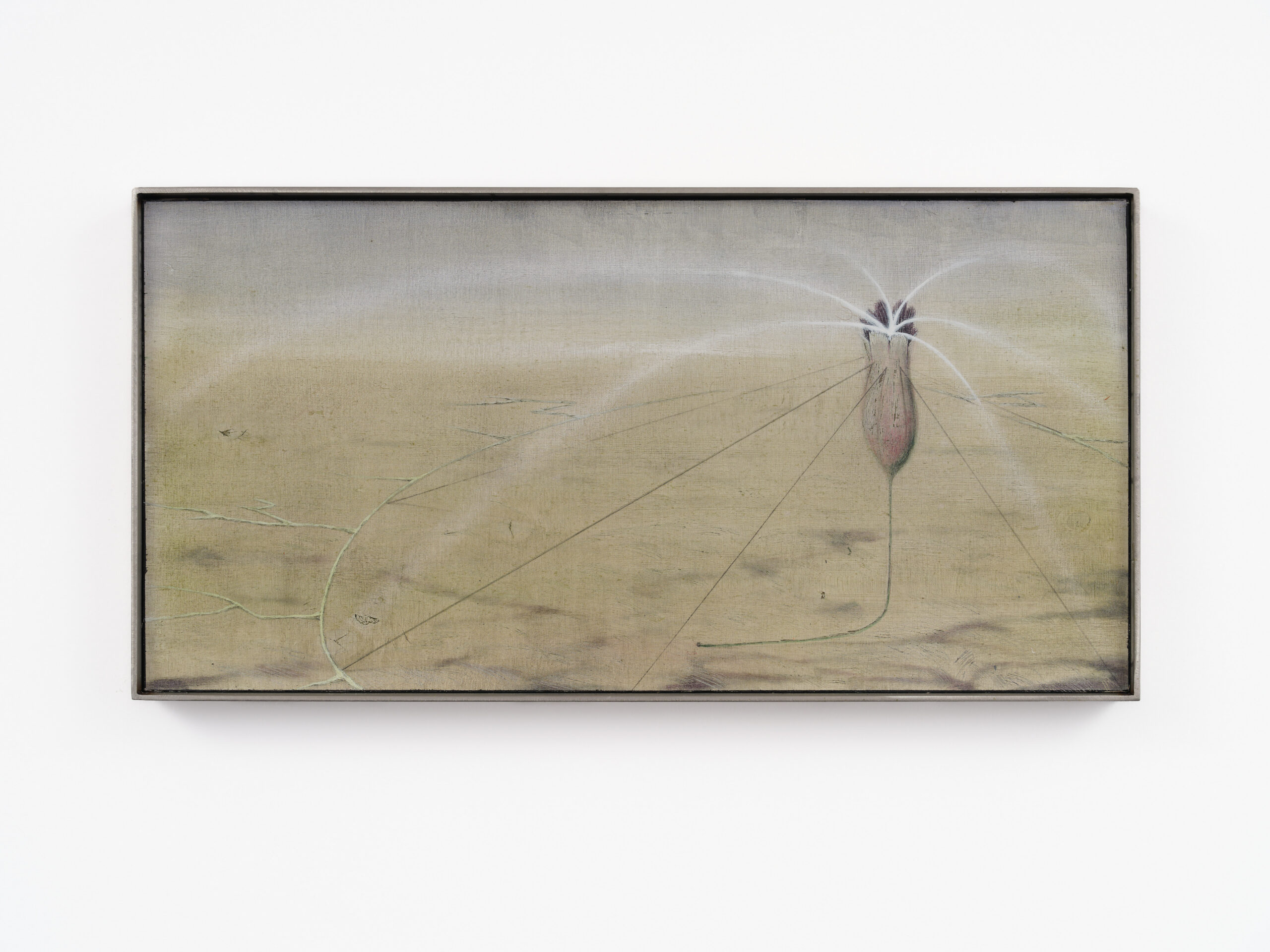
Jakub Michalak, Untitled, 2026 – Acrylic, pencil on wood, artist’s metal frame, 41 x 61 x 5 cm