Submission of the Human Spider
The submissiveness evident in these works is linked to their collage form. Jack Halberstam associates the technique of collage with passivity, highlighting the masochistic nature of such images [1]. Following the American theorist, one can interpret these fragmented representations as eluding simple binary oppositions, in which a queer person is expected to follow a pattern of inversion against the norm. If constructing a coherent vision of the Other relies on fueling their desire for respect and justice, then perverse submissiveness and the pleasure of disintegration emerge as forms of resistance. However, these are not so much about empowering the sense of agency among the excluded as they are about dismantling the norm as an unattainable object of aspiration—about cutting oneself off from the image of oneself as one who is perpetually seeking recognition.
The figure of the Human-Spider, drawn from an American blockbuster, fits into the framework of thinking about collage as a queer technique. In this context, reflecting on visuals allows me to observe their potential role in attempts to conceive of a model of non-heteronormative subjectivity based on evading claustrophobic regimes of visibility. Hito Steyerl notes that representation is always entangled in power structures: it is subject to negotiation and optimization, and thus remains distorted. Similarly to Halberstam, Steyerl proposes a cut off: abandoning representation in favor of invisibility, which she understands as the reclamation of subjectivity [2]. Following this line of thought, the works presented in the exhibition should be considered not as a construction of representation, but as an attempt to dismantle it. Through their jagged nature and their intention to capture the movement of visual fragments, the collages direct the audience’s attention to gaps, cracks, and blank spots.
The idea of escaping representation, as formulated by Steyerl, is very difficult to put into practice. This is because we are, in a sense, bound to images, since we live in a culture constructed according to rules imposed by the sense of sight. Images surround us every day. For marginalized communities, they are an essential tool in the political struggle; at the same time, however, they carry the risk of stifling the public imagination and even reinforcing the status quo.
The photographic lens appearing in the presented images is directed at the images themselves, as if in a gesture of self-reflection. The flash, intended to ensure the fullest possible exposure of the photographed object, also serves as a surgical lamp—exposing the images to the sharpness of a critical eye. While awaiting the results of these operations, we are left with a modest, temporary alternative: looking at ourselves through representations whose otherness manifests in disintegration, dissection, and incompleteness.
This exhibition features a presentation of the latest series of collage works, which is a part of a doctoral dissertation supervised by prof. Maciej Duchowski at the Academy of Fine Arts in Warsaw, as well as a sculpture that was previously exhibited and has been reworked for this new exhibition.
Sebastian Winkler
[1] Jack Halberstam, The Queer Art of Failure, Wydawnictwo Krytyki Politycznej, Warsaw, 2018
[2] Hito Steyerl, The Spam of the Earth: On Withdrawal from Representation, Widok. Theories and Practices of Visual Culture, no. 5: Queer Images, 2014
Wystawa prezentuje prace ukazujące postaci pozlepiane ze zdjęć ciała, obiektywu i flesza. Przedstawione pozy charakteryzują się brutalnym rozczłonkowaniem, które zarazem umożliwia oddanie ruchu. Łączą więc w sobie przeciwstawne stany: zastygnięcie obrazowanych ciał i ich dynamiczną kinetykę. Plastyczność kolaży oraz wyłaniająca się z niej dialektyka przylepienia (rozumianego jako bezruch) i cięcia (umożliwiającego mobilność) przywodzą na myśl zasadę poruszania się człowieka-pająka z filmu Spider-Man (2002, reż. Sam Raimi), które możliwe jest dzięki przyczepianiu ciała do elementów architektury oraz zrywaniu elastycznej przędzy w odpowiednim momencie.
Tytułowa uległość pokazywanych na wystawie prac powiązana jest z ich kolażową formą. Jack Halberstam kojarzy zagadnienie kolażowego cięcia z biernością i wydobywa masochistyczny charakter tego typu obrazów [1]. Za amerykańskim teoretykiem można interpretować pocięte reprezentacje jako wymykające się prostej binarności, w której osoba queerowa ma realizować schemat inwersji wobec normy. Jeżeli konstruowanie pewnej spójnej wizji Innego polega na podsycaniu jego pragnienia szacunku i sprawiedliwości, perwersyjna uległość i rozkosz dezintegracji jawią się jako formy oporu. Idzie w nich jednak nie tyle o wzmocnienie poczucia sprawczości u wykluczonych, co o zdemontowanie normy jako niedoścignionego obiektu dążeń – o odcięcie się od obrazu siebie jako tego, który wiecznie zabiega o uznanie.
Zaczerpnięta z amerykańskiego blockbustera figura człowieka-pająka wpisuje się w myślenie o obrazach kolażowych jako technice queerowej. Refleksja nad wizualiami w tej perspektywie pozwala mi zaobserwować ich potencjalną rolę w próbach myślenia o modelu nieheteronormatywnej podmiotowości opartym na wymykaniu się klaustrofobicznym reżimom widzialności. Hito Steyerl dostrzega, że reprezentacja zawsze jest uwikłana w schematy władzy: podlega negocjacjom i optymalizacjom, przez co pozostaje zafałszowana. Podobnie jak Halberstam, artystka i badaczka proponuje więc odcięcie się: rezygnację z reprezentacji na rzecz niewidzialności, którą rozumie jako odzyskiwanie podmiotowości [2]. Podążając za tym sposobem myślenia, prezentowane na wystawie prace należałoby rozpatrywać nie jako konstrukcję reprezentacji, a jako próbę jej rozbiórki. Poprzez swój poszarpany charakter i intencję oddania ruchu obrazowych strzępów, kolaże kierują uwagę publiczności na szczeliny, pęknięcia i braki.
Sformułowaną przez Steyerl ideę ucieczki od reprezentacji bardzo trudno jest realizować. Wynika to z faktu, że jesteśmy niejako skazani na obrazy, ponieważ żyjemy w kulturze konstruowanej według zasad narzucanych przez zmysł wzroku. Wizualia oblepiają nas każdego dnia. Dla społeczności wykluczonych są one niezbędnym przedmiotem walki politycznej, jednocześnie jednak niosą ze sobą ryzyko unieruchomienia wyobraźni społecznej, a nawet głębszego uwikłania w status quo.
Pojawiające się na prezentowanych obrazach szkło obiektywu jest skierowane na nie same, jak gdyby na znak autorefleksji. Lampa błyskowa, służąca jak najpełniejszej ekspozycji fotografowanego obiektu, pełni zarazem funkcję lampy chirurgicznej – wystawia obrazy na cięcia ostrza krytyki. W oczekiwaniu na rezultaty tych operacji pozostaje nam skromna, prowizoryczna alternatywa: przeglądanie się w przedstawieniach, których odmieńczość realizuje się w rozpadzie, rozcięciu i niepełności.
Wystawa obejmuje najnowszy cykl prac kolażowych, powstający w ramach rozprawy doktorskiej realizowanej pod opieką dr. hab. Macieja Duchowskiego w Akademii Sztuk Pięknych w Warszawie. Towarzyszy mu rzeźba, wcześniej prezentowana i przepracowana na potrzeby tej ekspozycji.
Sebastian Winkler
[1] Jack Halberstam, Przedziwna sztuka porażki, Wydawnictwo Krytyki Politycznej, Warszawa, 2018
[2] Hito Steyerl, Spam Ziemi. O wycofaniu się z reprezentacji, Widok. Teorie i praktyki kultury wizualnej, nr 5: Queer obrazy, 2014
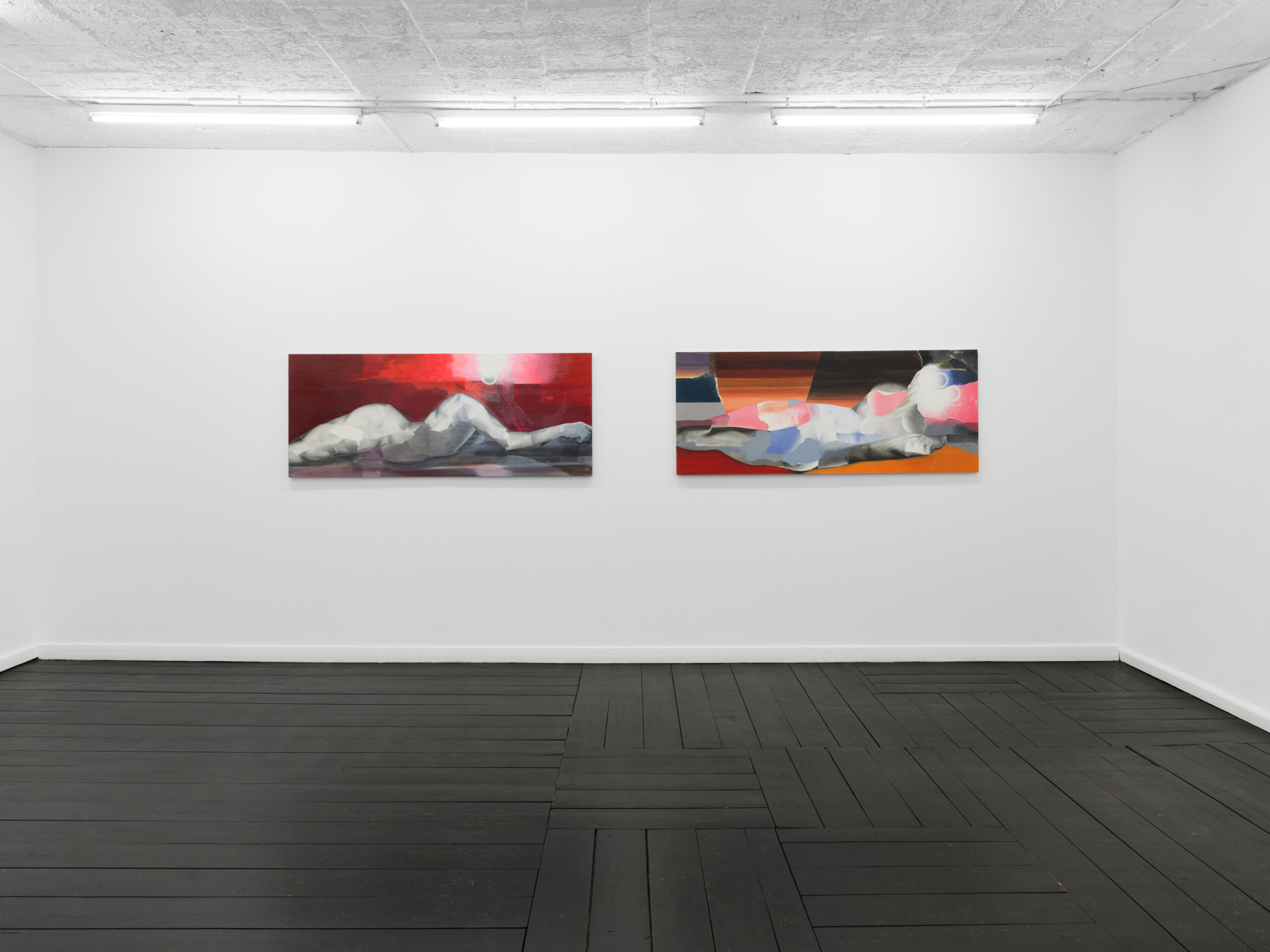
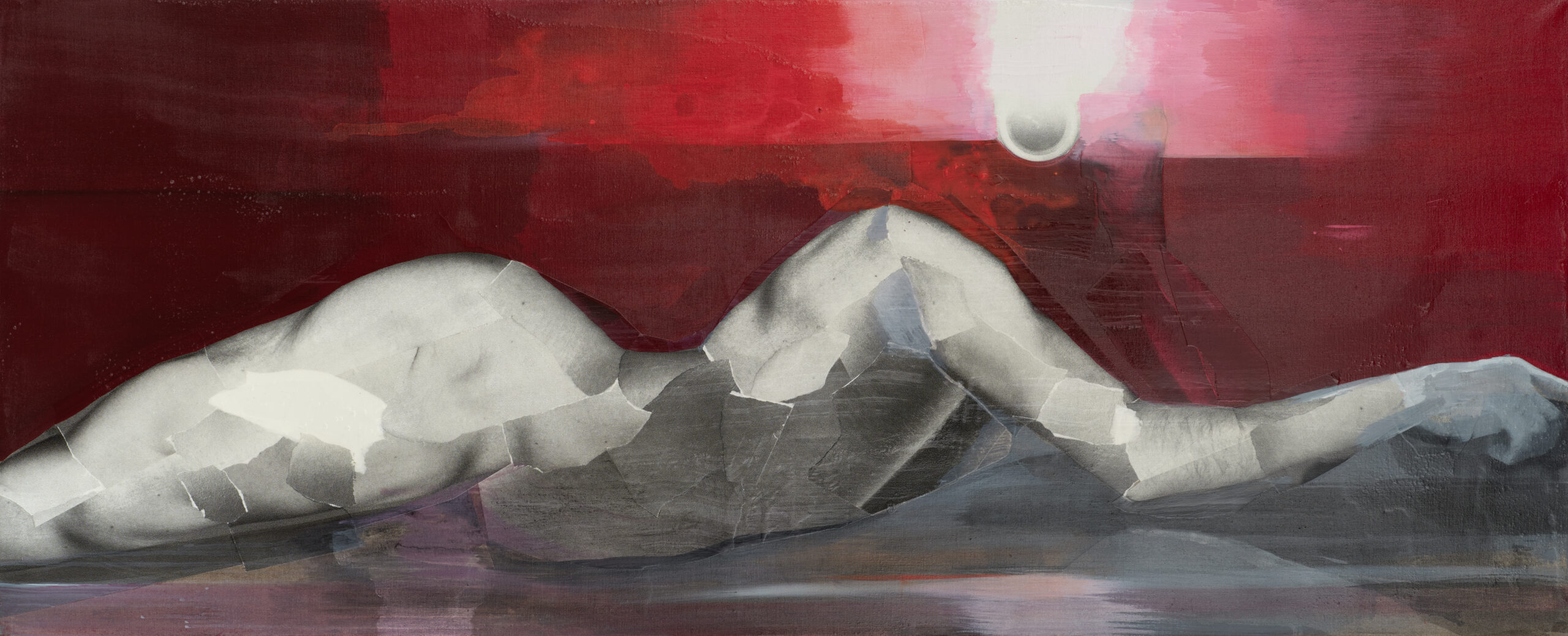
Sophie, 2026 – Silkscreen, acrylic, acrylic gel, paper Munken Pure 120 g on canvas, 65 x 160 cm
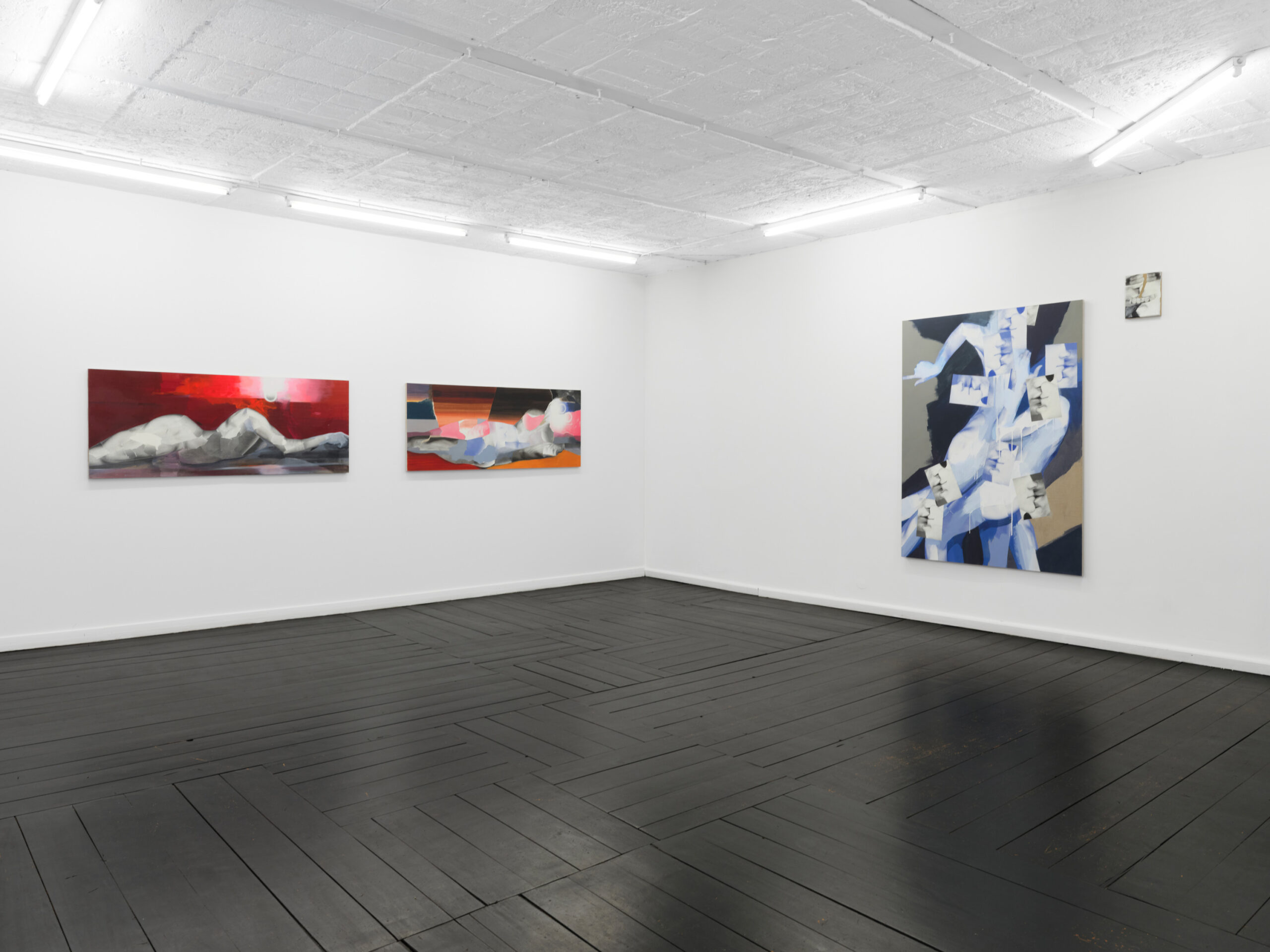
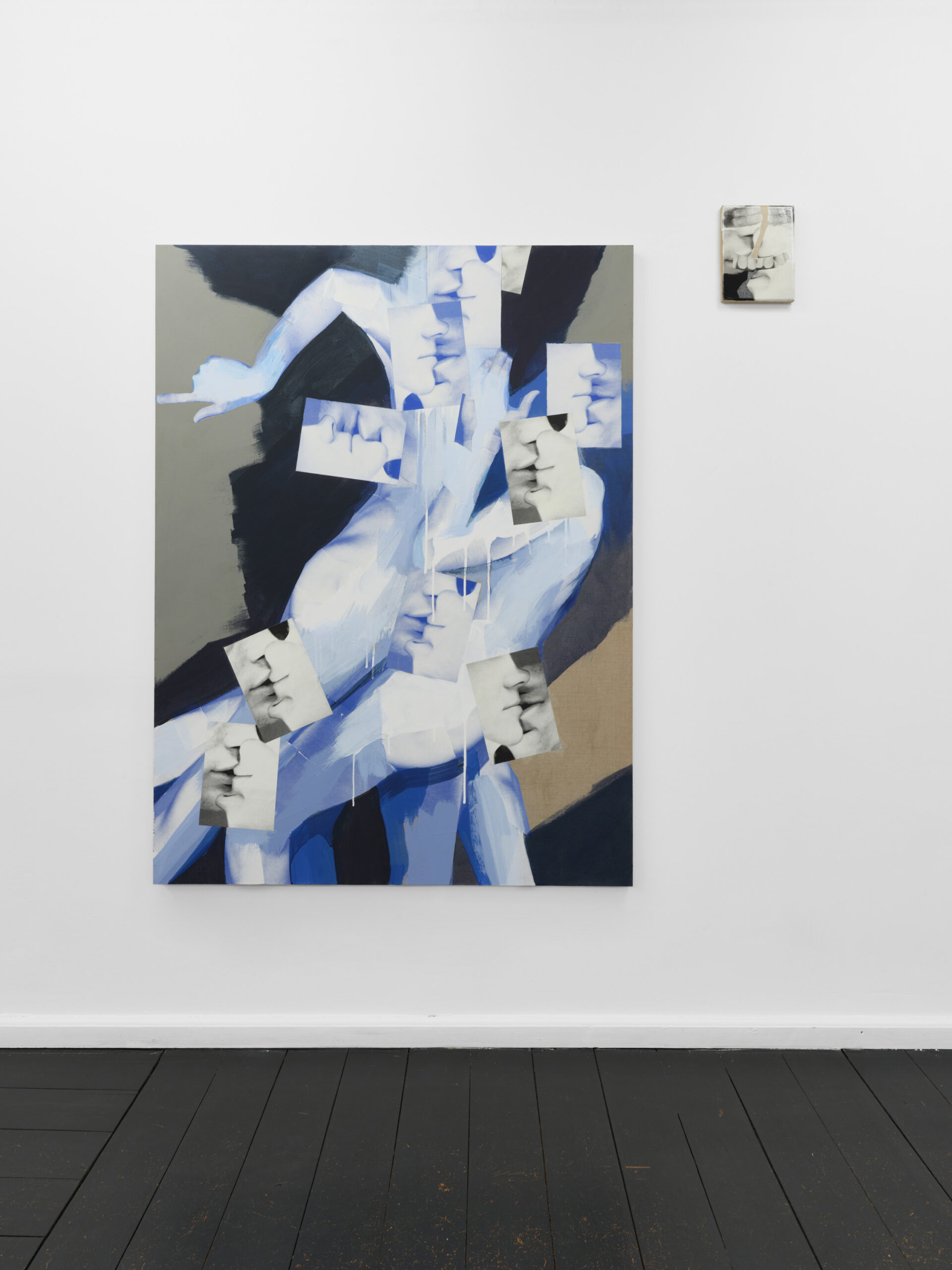
Hercules and Antaeus | Kiss of the Spider-Woman, 2026 – Silkscreen, acrylic, acrylic gel on canvas, 160 x 120 cm
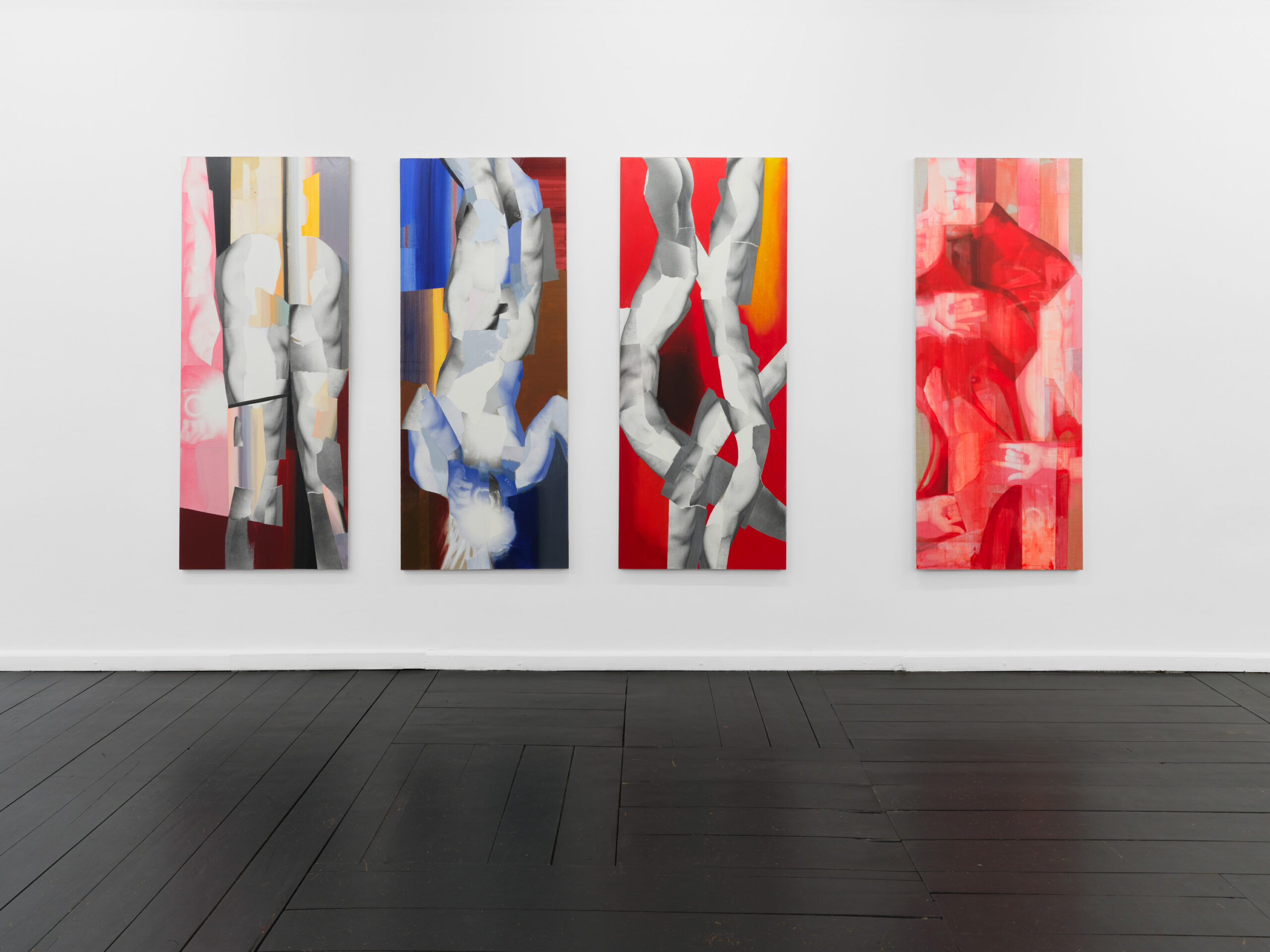
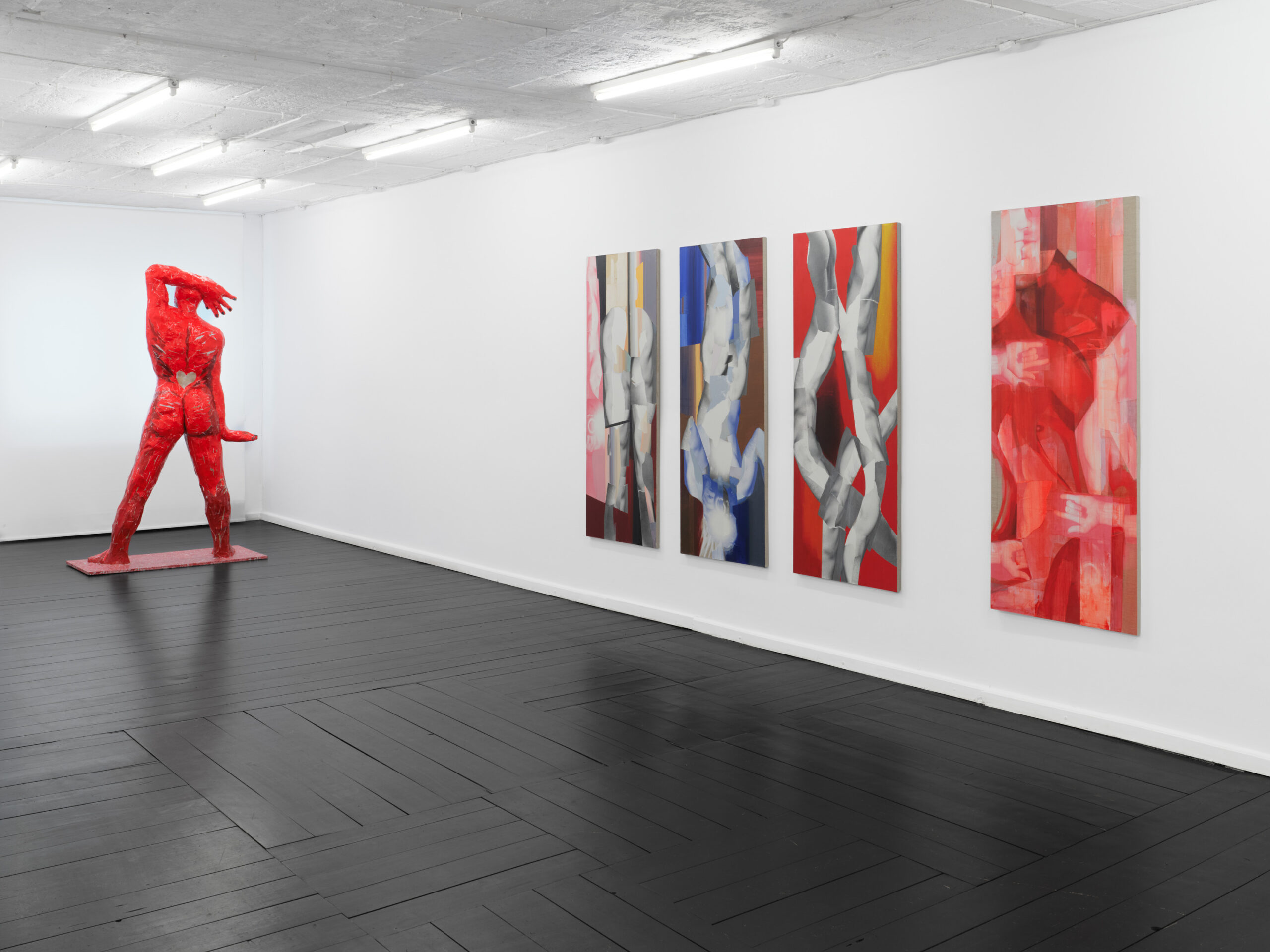
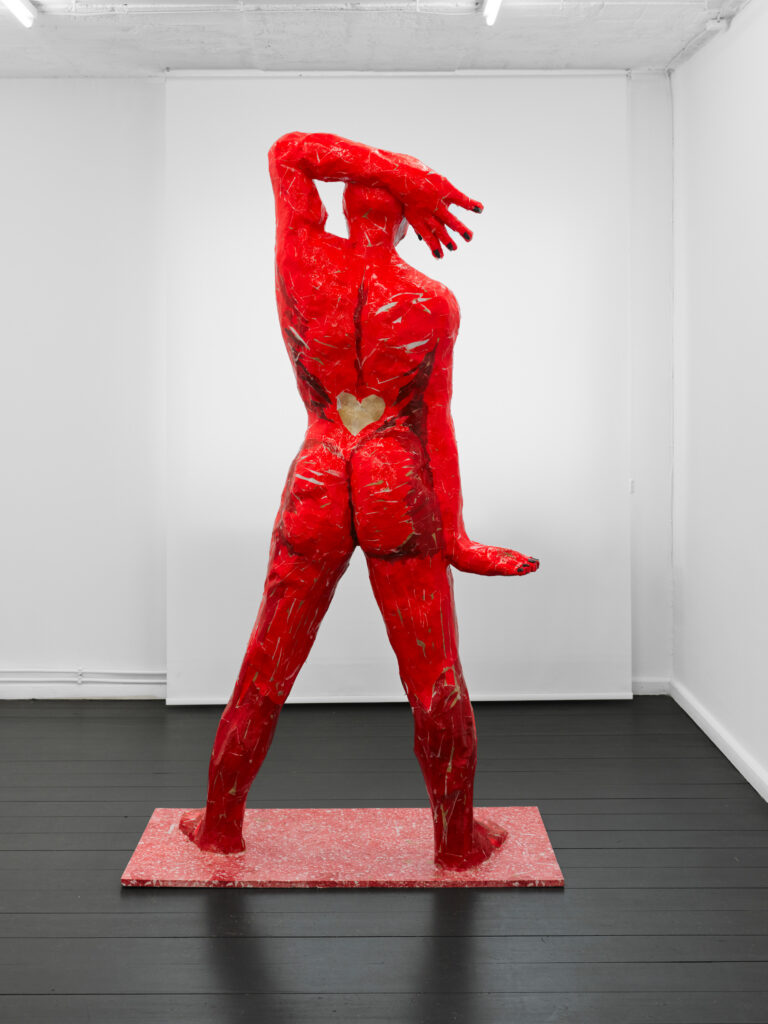
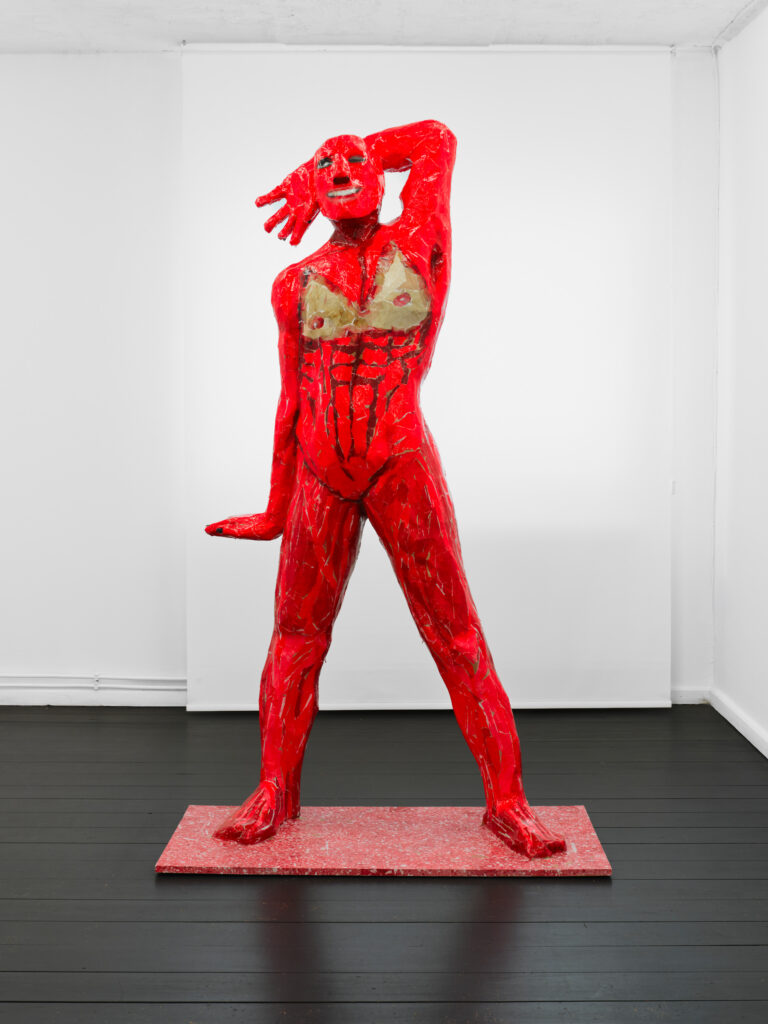
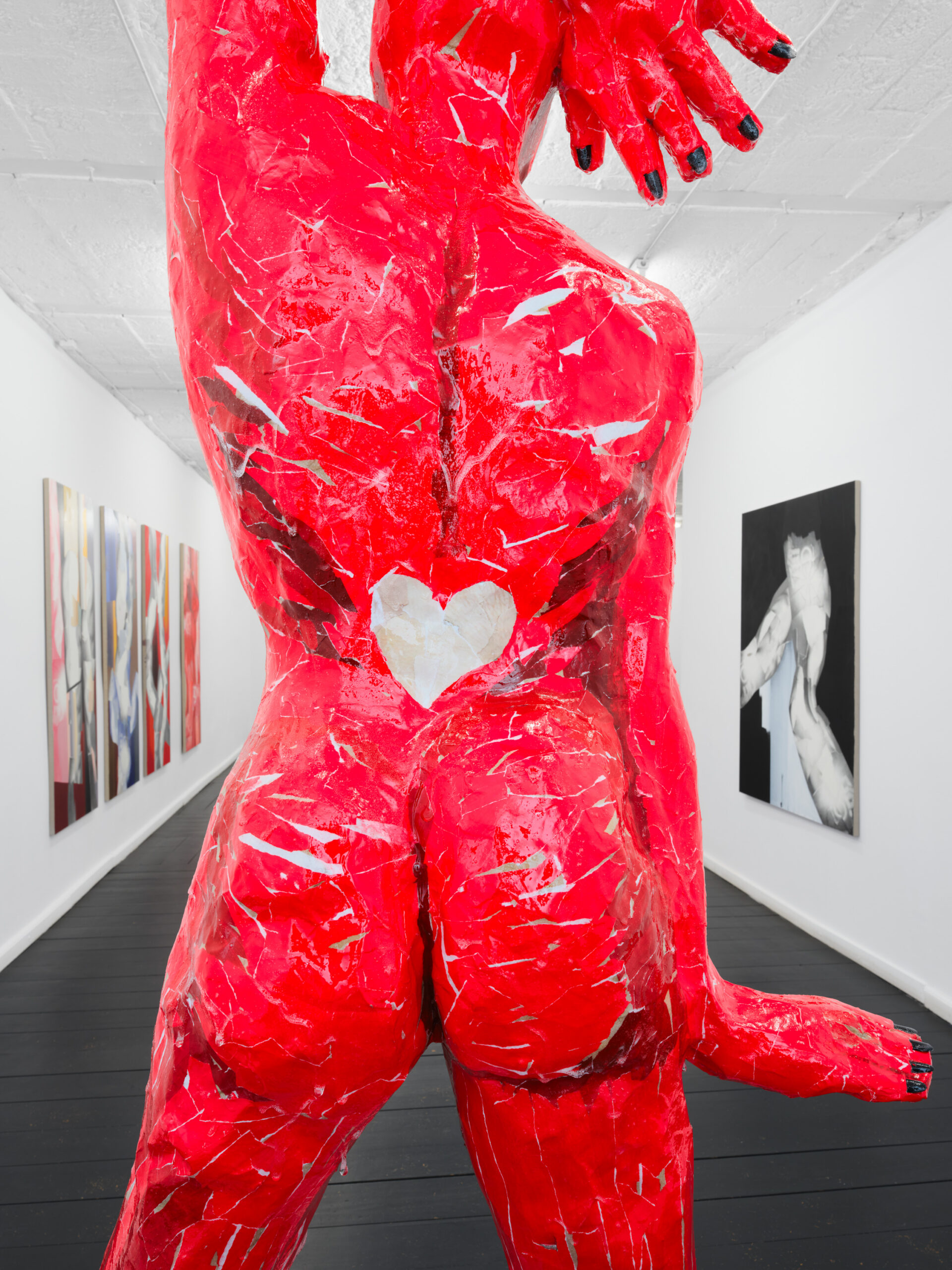
Erotic Dance, 2025/2026 – Polyurethane foam, wood, paper, pigment print, laser print, PVA glue, polymer glue, variable dimensions
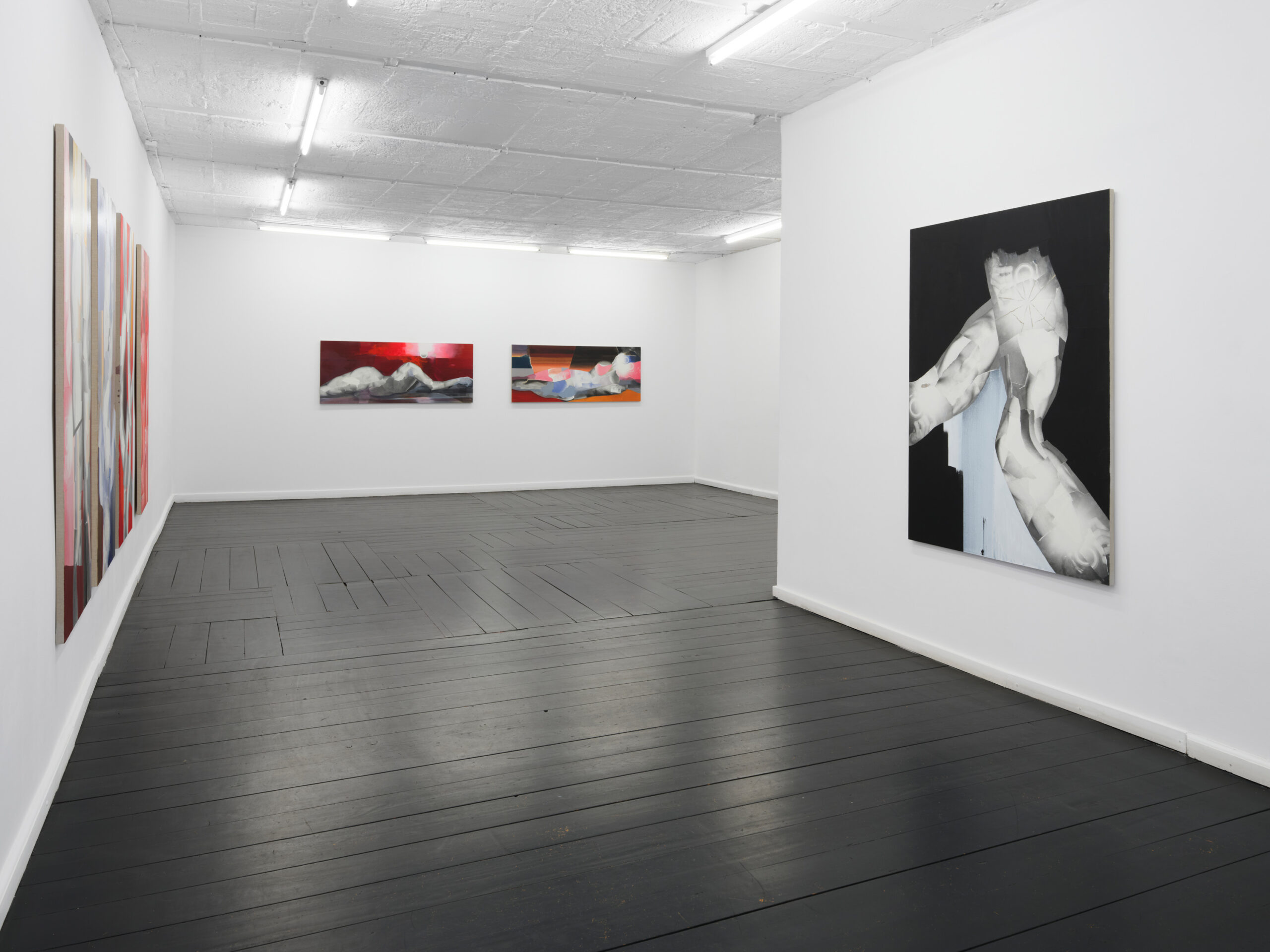
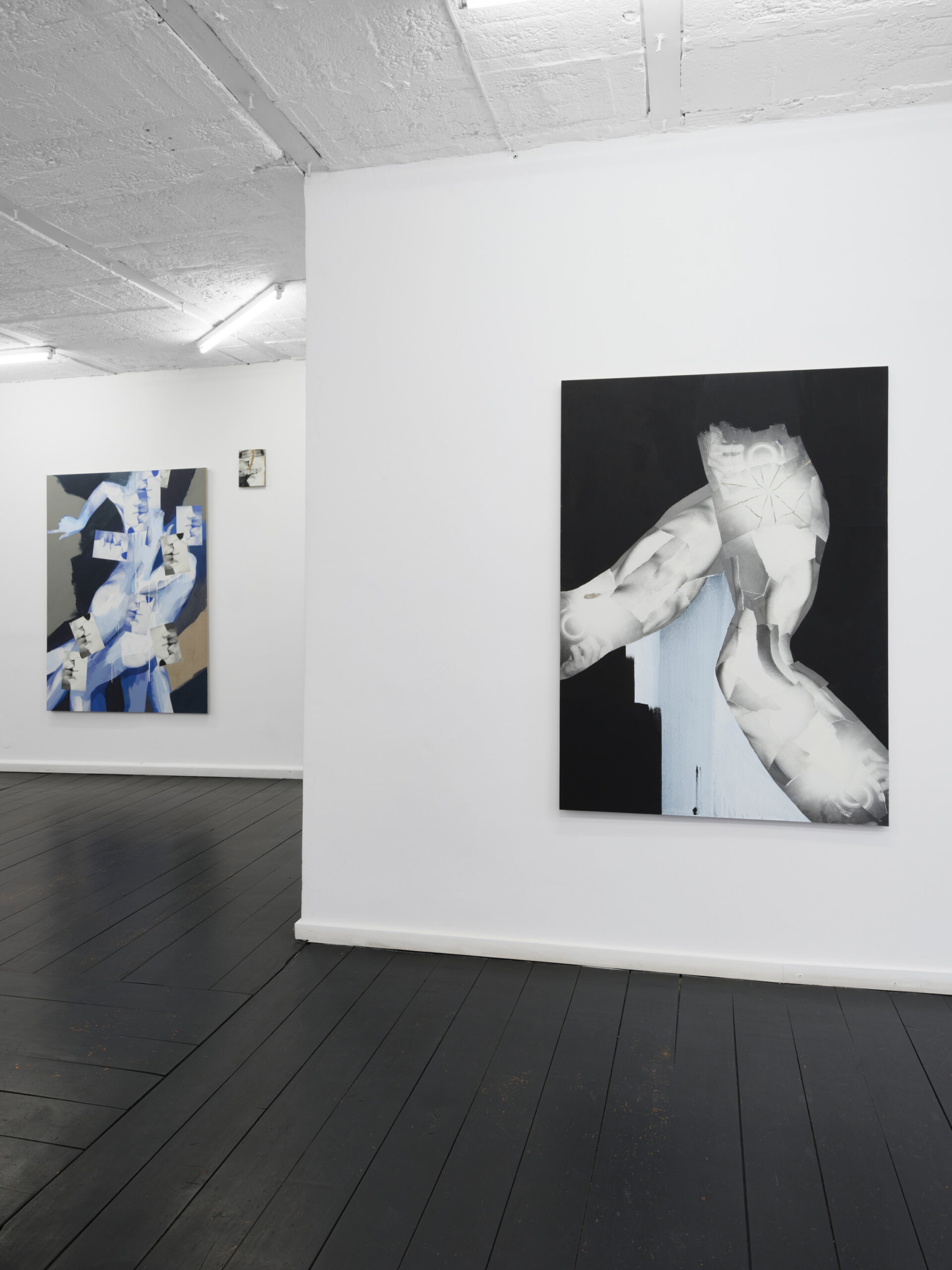
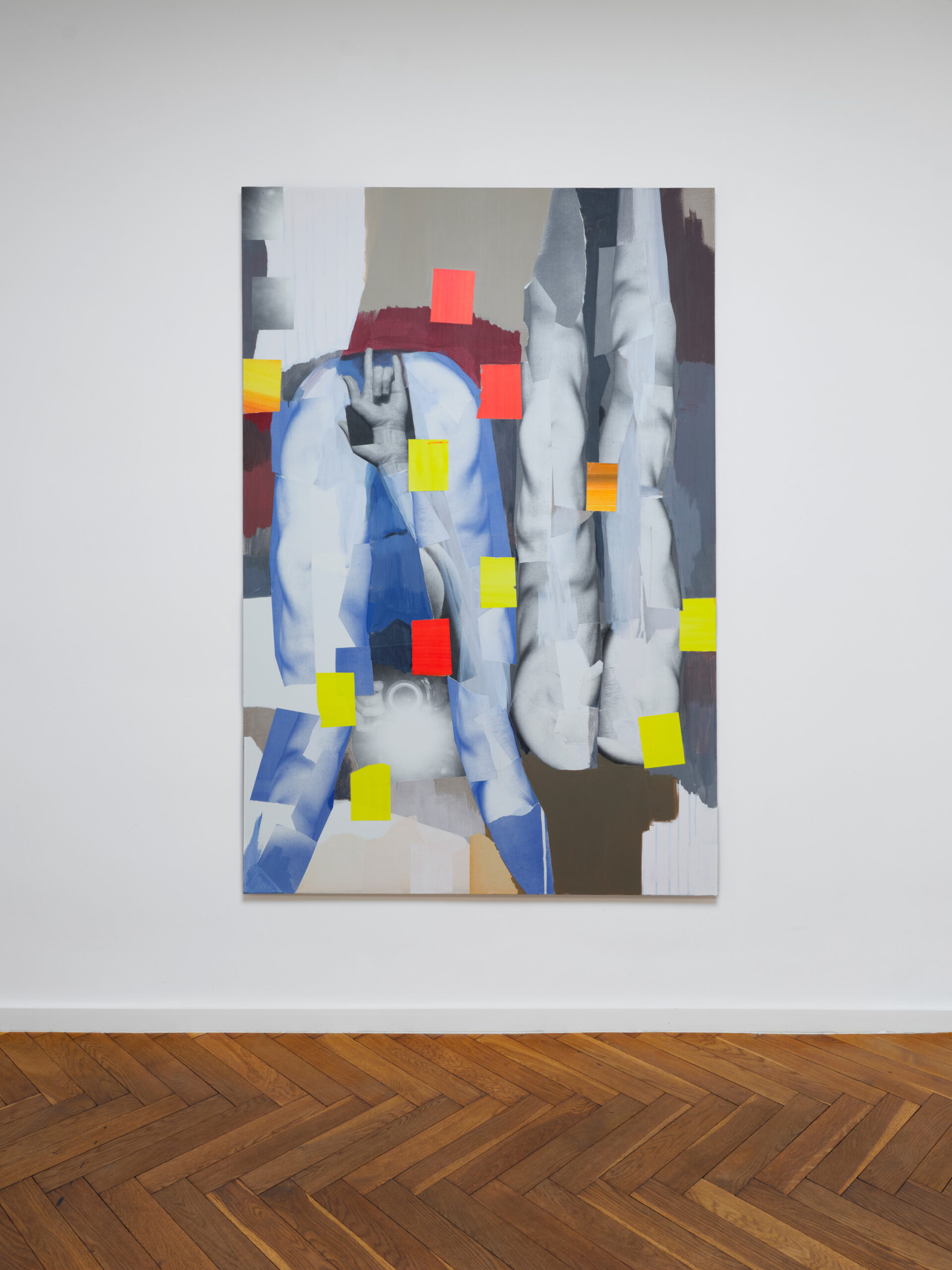
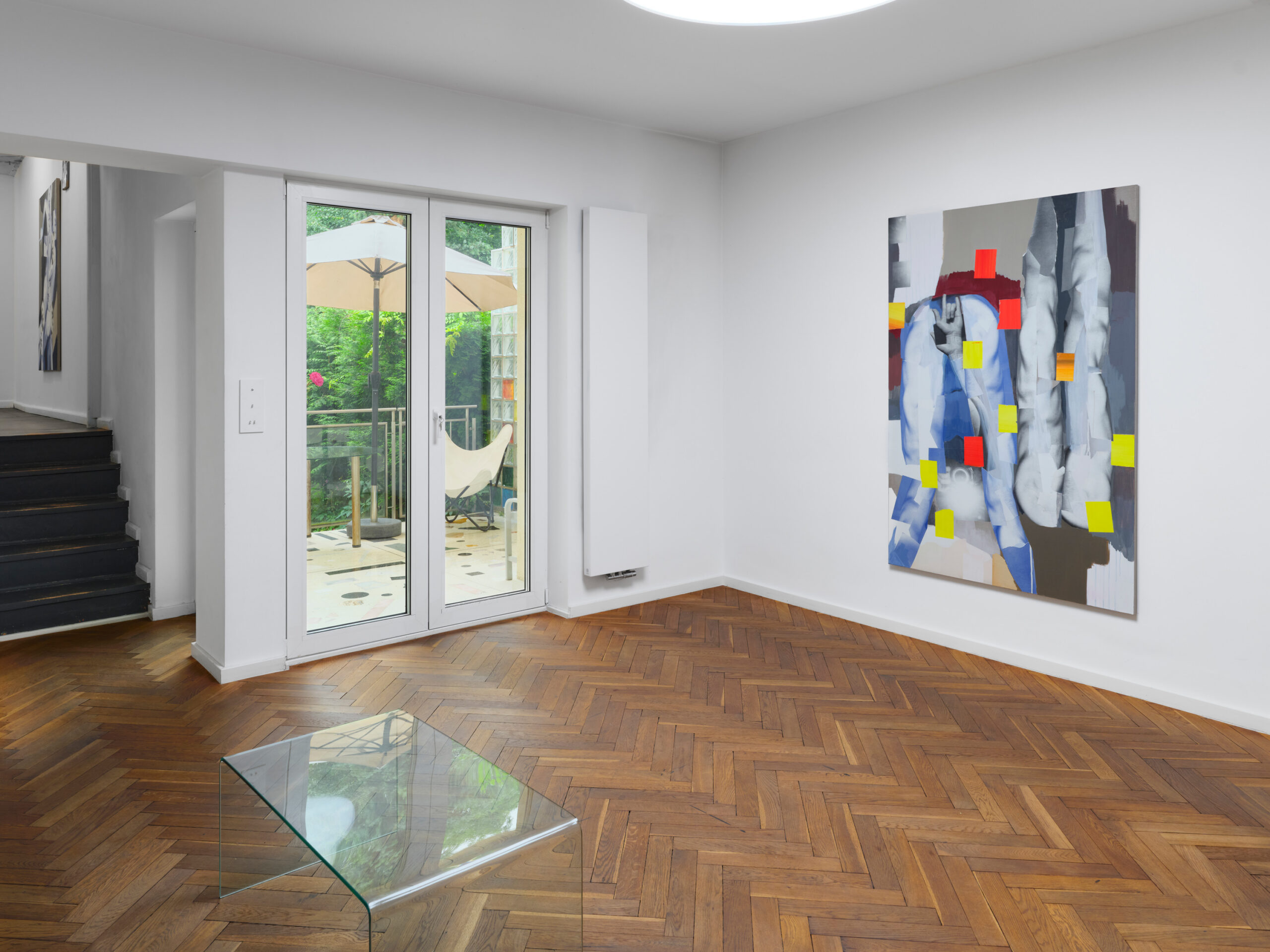
Sticky Surfaces, 2026 – Silkscreen, acrylic, acrylic gel, paper Munken Pure 120 g on canvas, 180 x 120 cm
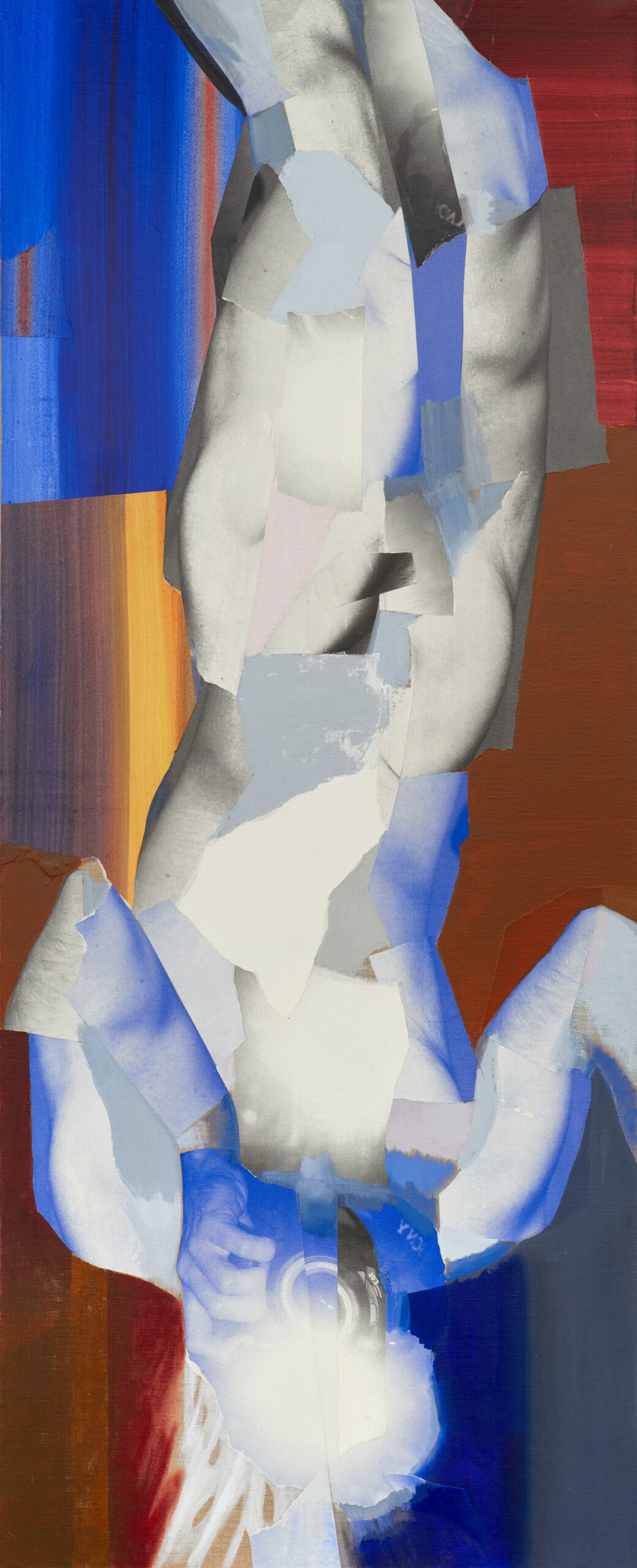
Sticky Surfaces, 2026 – Silkscreen, acrylic, acrylic gel, paper Munken Pure 120 g on canvas, 160 x 65 cm